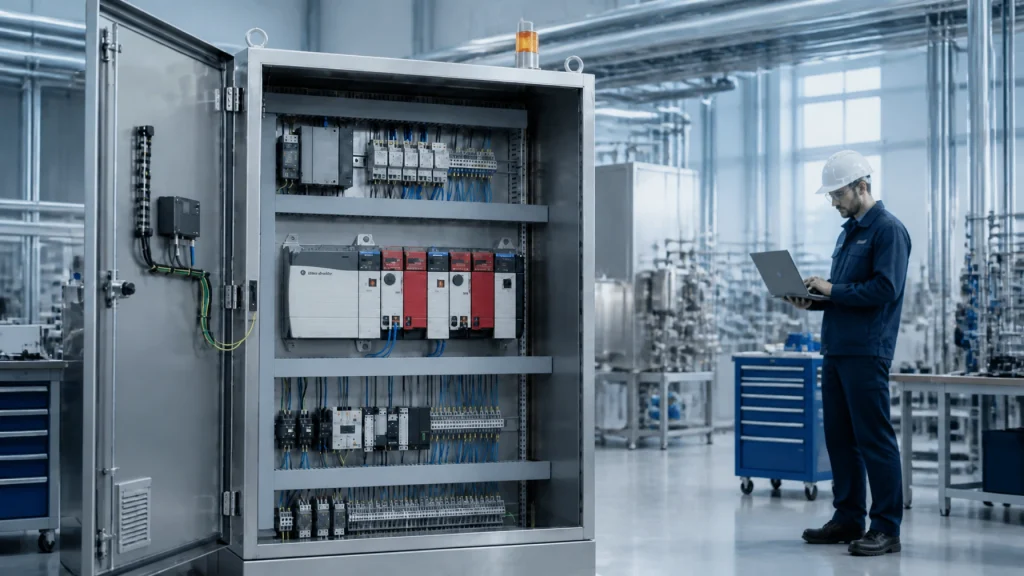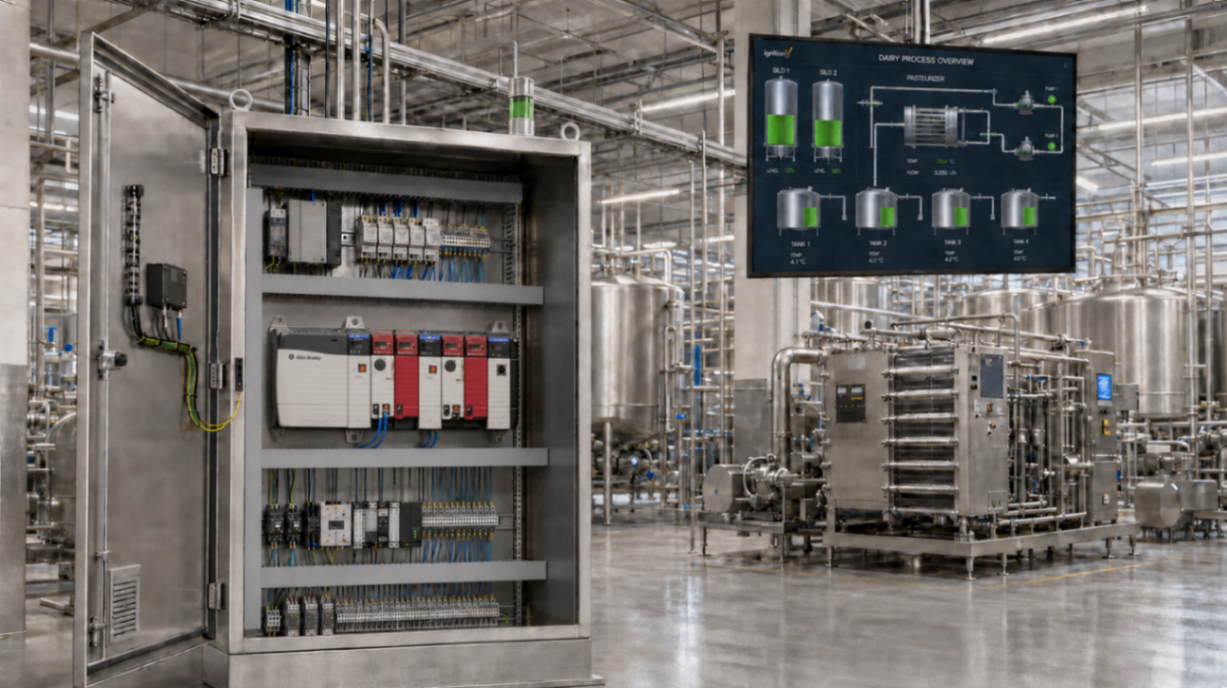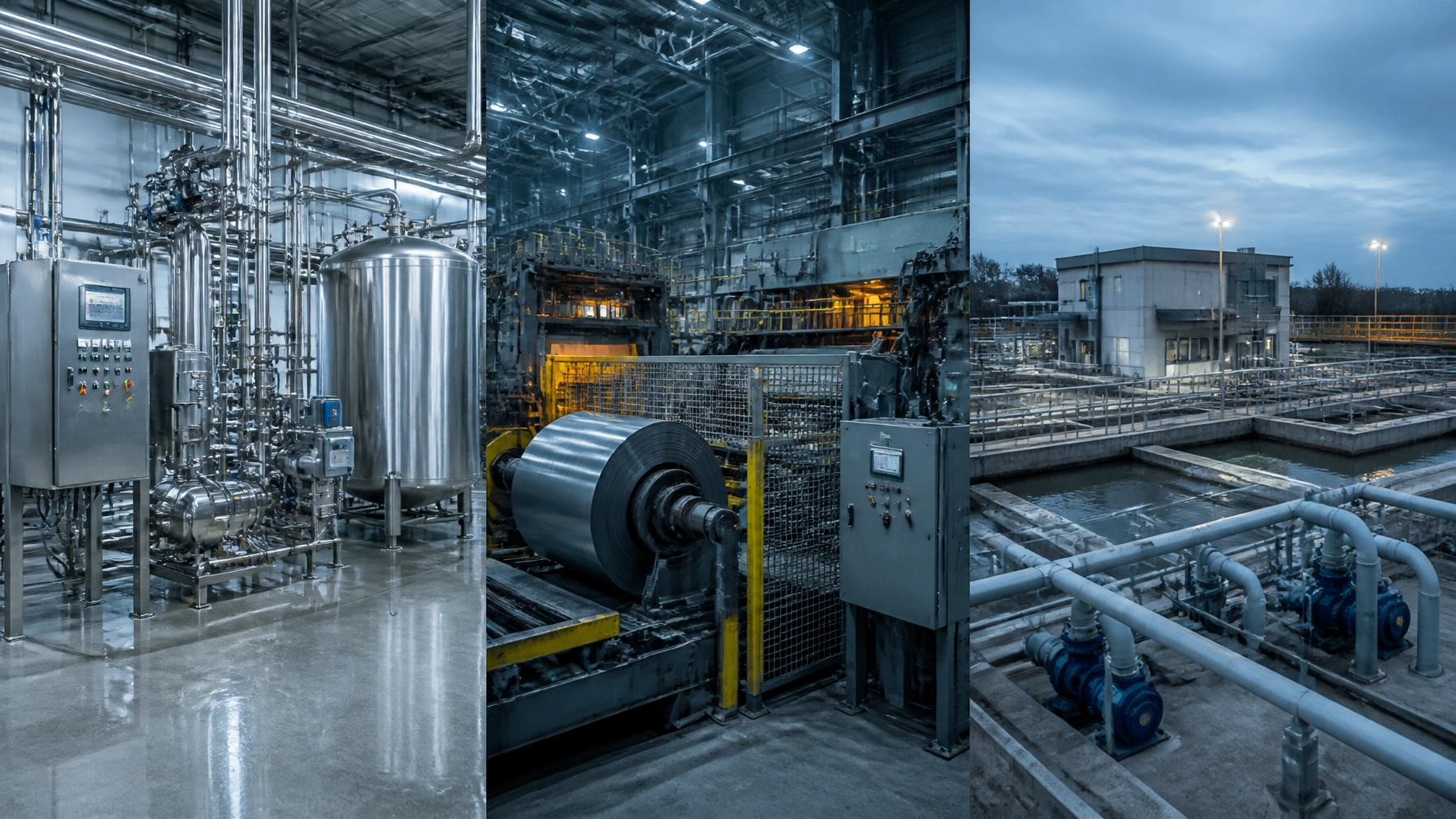
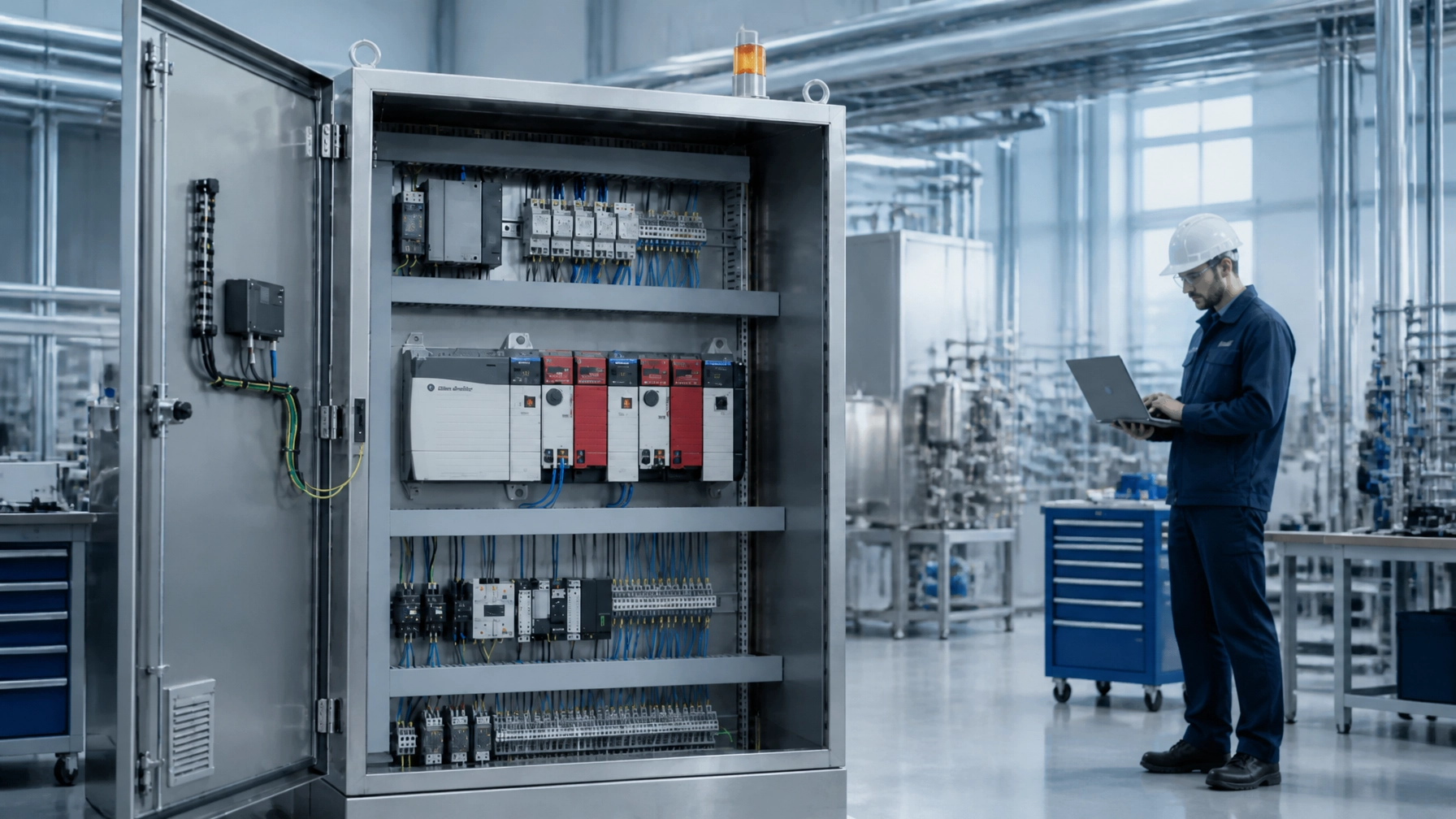
An industrial control panel is more than an enclosure filled with electrical components. It is the central point where power distribution, control logic, field devices, operator interfaces, and industrial networks come together. When the panel is designed correctly, it supports reliable production, safe operation, efficient troubleshooting, and future system upgrades.
When manufacturers search for industrial control panel design in Pennsylvania, they are often looking for more than fabrication. They need a partner who can analyze the application, select appropriate hardware, develop accurate drawings, build the panel, test the completed assembly, and support installation from start to finish.
At Complete Control Solutions (CCS), we design and build both standard and custom industrial control panels for manufacturers, OEMs, and process facilities throughout Central Pennsylvania and the Mid-Atlantic region. Our approach aligns each panel with your equipment, production goals, safety requirements, and future needs.
If you are deciding between a repeatable design and an application-specific solution, review our comparison of standard and custom industrial control panels.
Begin With the Application and Operating Environment
Effective panel design begins before any components are selected. Our engineers first evaluate how and where the panel will be used.
Important considerations include:
- Available incoming voltage and fault current
- Connected loads and motor requirements
- PLC, I/O, HMI, and networking needs
- Indoor or outdoor installation
- Exposure to dust, moisture, chemicals, oil, or washdown
- Ambient temperature and heat generation
- Vibration and available installation space
- Required safety functions and emergency stops
- Future expansion or retrofit requirements
The enclosure must protect internal components while also supporting safe access for operators and maintenance personnel. A general indoor application may require a different enclosure than a food-processing facility exposed to frequent washdown or corrosive cleaning chemicals.
Enclosure material is also important. Painted carbon steel may be appropriate for many general industrial environments, while stainless steel or other corrosion-resistant materials may be better suited to damp, sanitary, or chemically challenging locations. The enclosure rating, construction, cable entries, door hardware, and cooling accessories must all work together to preserve the intended level of protection.
Select the Right Enclosure Size and Rating
Choosing an enclosure that is too small can create long-term problems. Crowded components restrict airflow, complicate wiring, increase heat buildup, and make future service more difficult. Choosing an enclosure that is unnecessarily large, however, may increase cost and require more floor or wall space than the application allows.
A properly sized enclosure accounts for:
- Component footprints and mounting clearances
- Wire duct and terminal-block space
- Cable bend radius
- Heat-generating equipment
- Door-mounted devices
- Incoming and outgoing cable routing
- Spare capacity for future modifications
The required NEMA or IP rating should be based on the actual environment rather than a general assumption. A panel installed in a clean electrical room may have different requirements than one located beside a production line, near a washdown area, or in an outdoor application.
Every penetration, including conduit entries, fans, HMI cutouts, and communication connections, must be planned carefully. Poorly designed openings can compromise the enclosure rating and expose components to conditions they were not designed to withstand.
Organize the Component Layout for Performance and Serviceability
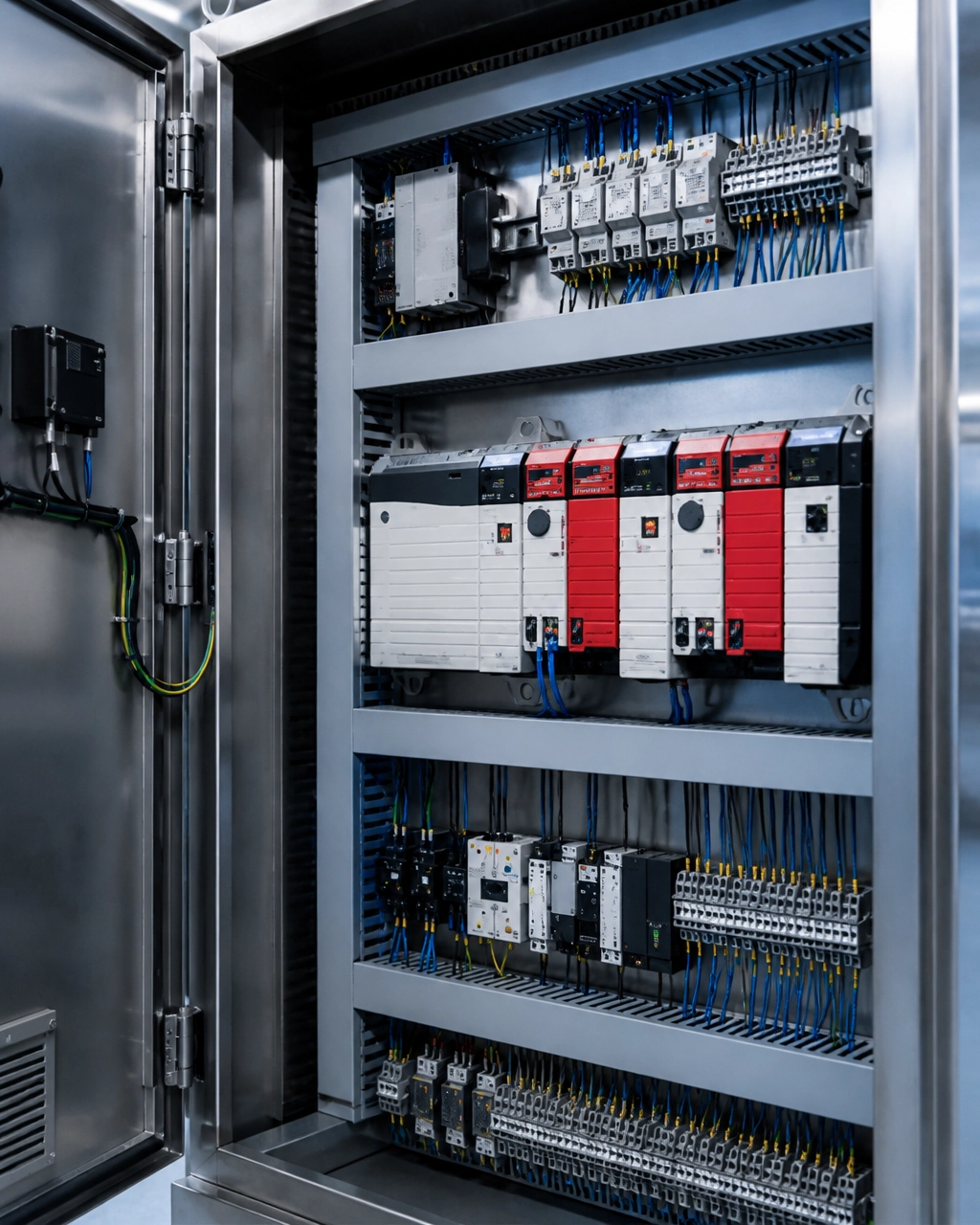
A strong industrial control panel design uses a deliberate internal layout. Components should be arranged logically, with attention to thermal performance, electrical separation, access, and the sequence in which technicians will diagnose the system.
Heat-generating components such as variable frequency drives, contactors, power supplies, and soft starters should be positioned with adequate clearance and separated from heat-sensitive devices when practical. PLC processors, I/O modules, communication hardware, and signal-level devices should be located according to manufacturer requirements and protected from unnecessary heat and electrical interference.
The layout should also separate different voltage and signal types. Main power, control power, analog signals, safety circuits, and communication wiring should have clear routing paths. This organization helps reduce electrical noise and makes the panel easier to understand during commissioning or troubleshooting.
Door-mounted components should be arranged for safe and intuitive operation. HMIs, selector switches, pushbuttons, pilot lights, and emergency-stop devices need to be visible, reachable, and clearly identified from the normal operator position.
Engineer Power Distribution and Protection
Power distribution is one of the most critical areas of panel design. The design must account for the available supply, connected loads, branch circuits, control voltages, protective devices, and short-circuit current rating.
Depending on the application, a panel may include:
- Main disconnects
- Circuit breakers and fuses
- Overload protection
- Transformers or DC power supplies
- Power distribution blocks
- Surge protection
- Motor starters and drives
- Grounding and bonding provisions
- Separate control and auxiliary circuits
Protective devices must be selected to match the system voltage, current, interrupting capacity, conductor sizes, and connected equipment. The panel’s short-circuit current rating, or SCCR, should be evaluated as part of the engineering process and documented appropriately.
Separating main power, control power, and auxiliary circuits improves safety and simplifies maintenance. It also allows technicians to isolate portions of the system during testing or service without unnecessarily affecting other circuits.
CCS designs and builds panels in accordance with applicable safety requirements. Our industrial control panels are UL 508A Listed, and our control-panel services address applicable NEC and NFPA requirements. The final installation must still be evaluated in the context of the facility, equipment, and authority having jurisdiction.
For additional information on listed panels and panel-shop requirements, review UL Solutions’ Industrial Control Panels and Panel Shop Program.
Choose PLC and I/O Hardware Around the Process
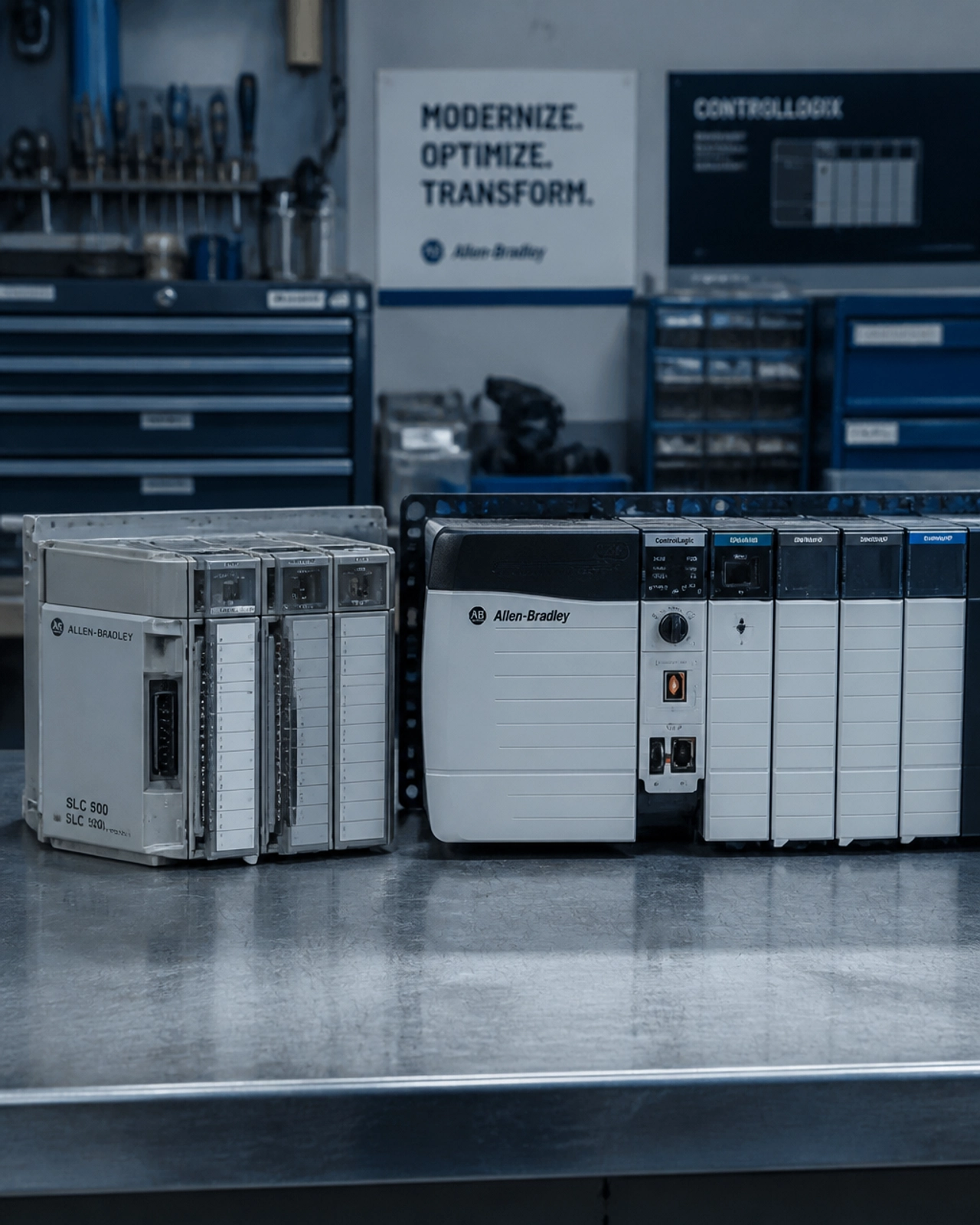
PLC and I/O selection should reflect the control strategy, not simply the hardware currently available. Our engineers consider the number and type of field devices, processing requirements, network architecture, safety needs, operator interfaces, and anticipated growth.
The design process may include decisions about:
- Digital and analog input/output capacity
- High-speed or specialty I/O
- Distributed I/O locations
- Safety I/O and safety controllers
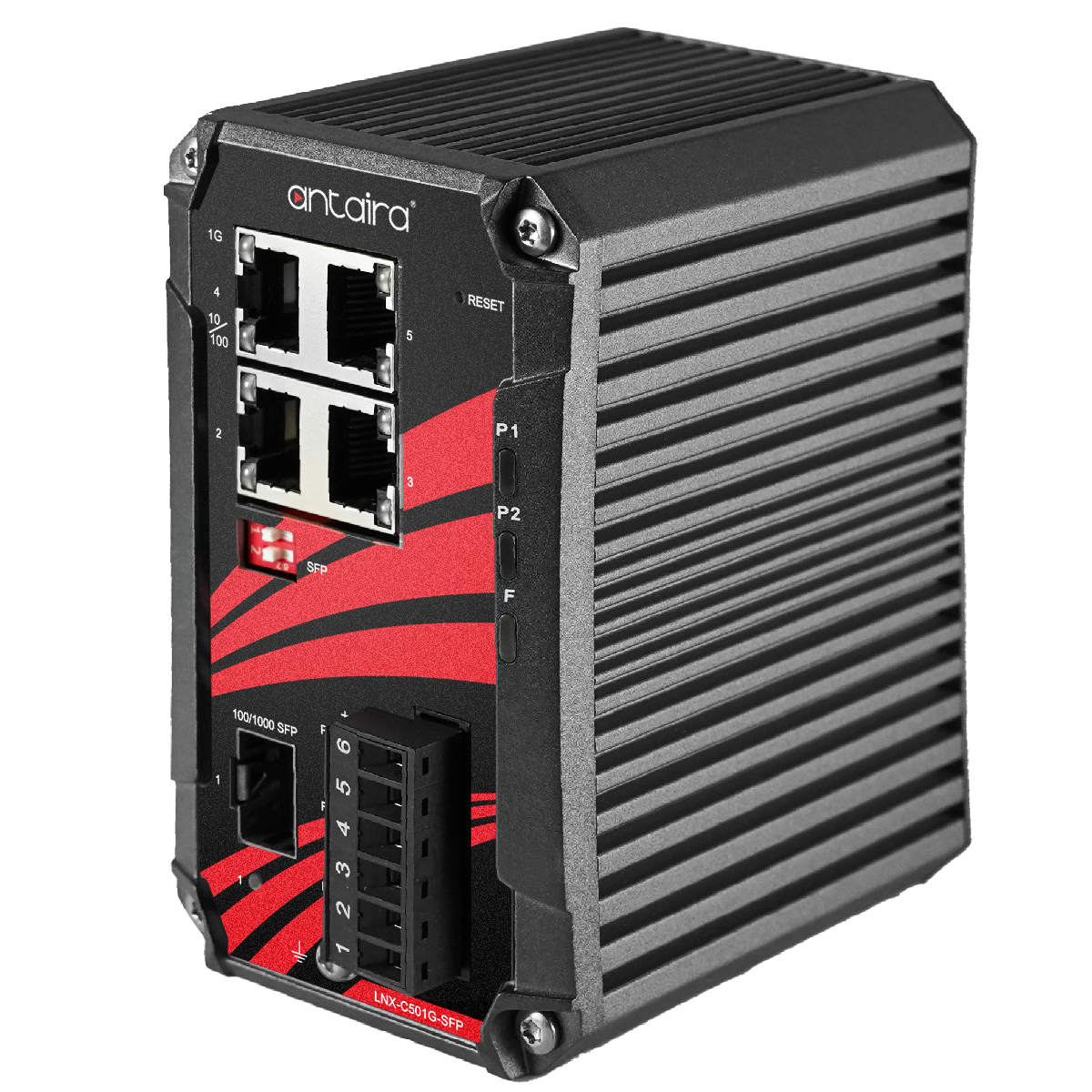
- Network communication modules
- Remote access and plant data requirements
- Spare I/O and future expansion
- HMI and SCADA integration
Providing reasonable spare capacity can reduce the cost and disruption of future changes. It may be more efficient to include reserved DIN rail space, spare terminals, or additional I/O capacity during the initial build than to redesign the panel later.
For manufacturers modernizing an existing system, PLC and I/O selection must also account for current field wiring, legacy communications, available downtime, and migration strategy. A retrofit may involve a complete panel replacement, a new enclosure installed beside the existing panel, or a phased approach that preserves selected field components.
Our engineering services include PLC program development, HMI application development, industrial networking design, and drawing-package development, allowing the panel design to align with the broader control system.
Use Consistent Wiring, Labeling, and Documentation
A professional panel should be easy to follow. Consistent wire routing, properly terminated conductors, organized terminal blocks, and durable labels reduce errors during startup and service.
Wiring practices should account for:
- Separation of power, control, and communication conductors
- Proper conductor sizing and protection
- Terminal-block organization
- Shielding and grounding for sensitive signals
- Cable entry and strain relief
- Adequate wire length for future re-termination
- Clear identification of field connections
Labels should correspond directly with the electrical drawings, bill of materials, I/O list, and device tags. When a technician can move from a physical wire or terminal to the correct drawing reference quickly, troubleshooting becomes more efficient and less disruptive to production.
The documentation package may include:
- Electrical schematics
- Single-line diagrams
- Panel layout drawings
- Wiring and termination schedules
- I/O lists
- Network architecture drawings
- Bill of materials
- Control narratives
- Panel test records
- As-built revisions
- Operation and maintenance information
At CCS, our drawing package development equips your team with the information required for general upkeep, troubleshooting, and future modifications.
Test the Panel Before It Reaches Your Facility
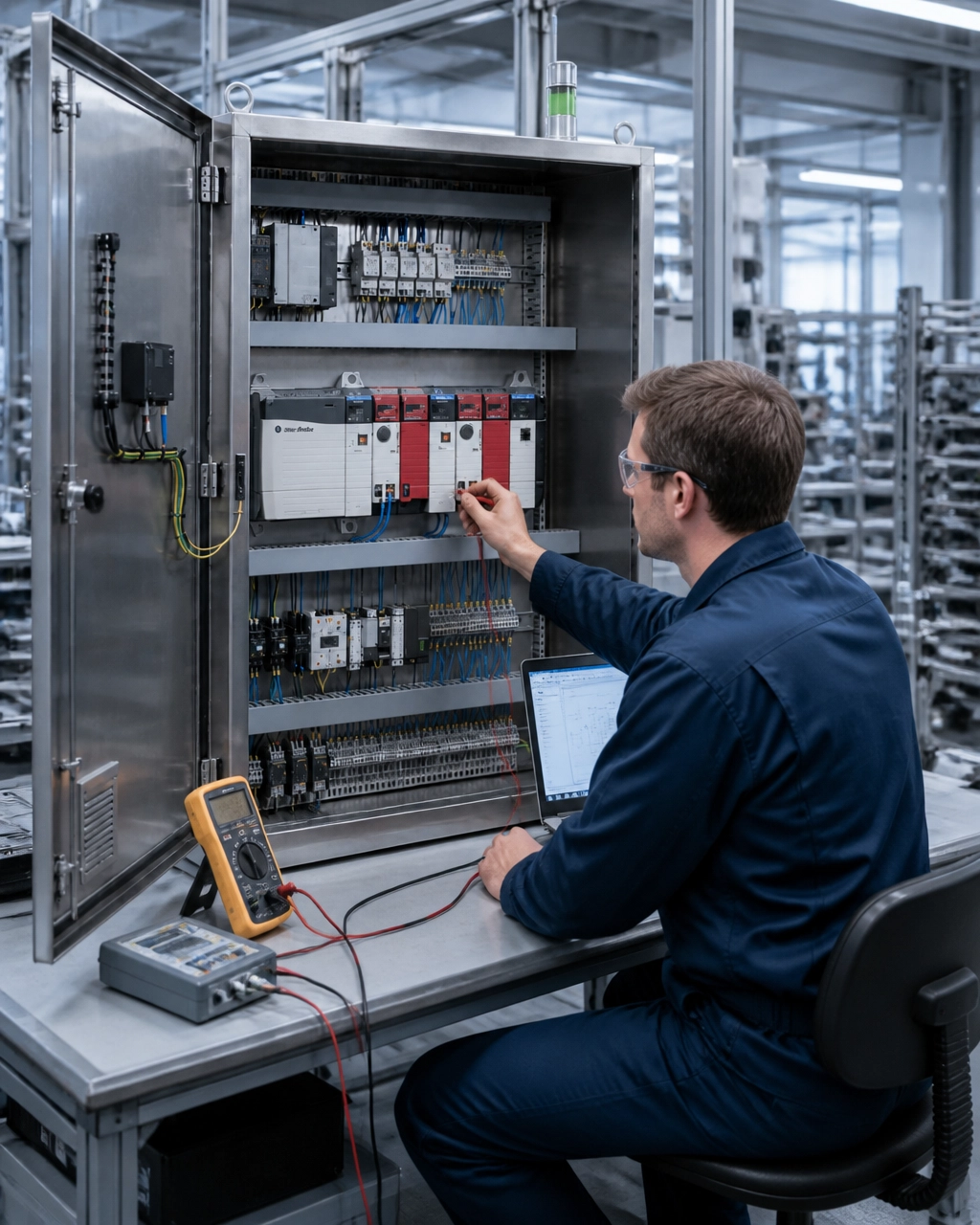
Testing should confirm that the completed panel matches the approved design and operates as intended. A thorough factory review can identify wiring, labeling, configuration, or component issues before installation begins.
Depending on the project, testing may include:
- Visual inspection
- Verification against schematics and the bill of materials
- Grounding and bonding checks
- Continuity testing
- Power-distribution verification
- PLC and I/O checks
- Network and communication checks
- HMI and alarm verification
- Interlock and safety-function testing
- Review of terminal and field-device connections
Factory acceptance testing can also provide an opportunity for your team to review the panel, confirm operator requirements, and resolve questions before the system reaches the production floor.
Design for Maintainability and Future Retrofits
A control panel should support the full lifecycle of the equipment. Accessibility, documentation, component availability, and expansion capacity all influence the long-term value of the design.
Whether you have a legacy panel with obsolete hardware or a new process that must accommodate future production growth, retrofit planning should begin during the initial design. Our engineers can reserve space for additional components, establish logical wire-routing paths, identify upgrade-ready hardware, and develop a phased modernization plan.
When an existing panel is being retrofitted, we analyze the current architecture and corroborate field conditions before recommending a solution. This helps prevent surprises related to undocumented wiring, unavailable parts, insufficient enclosure space, or outdated network infrastructure.
CCS supports manufacturers with control system upgrades, PLC migrations, legacy equipment upgrades, software updates, and on-site commissioning. We can also provide on-site services for installation support, troubleshooting, scheduled shutdowns, startup, and end-user training.
Custom Industrial Control Panel Design and Fabrication From CCS
The best panel is the one designed around your process, your facility, and your expectations. At CCS, we combine custom industrial control panel design and fabrication with controls engineering, programming, system integration, and field support.
Whether you need a small OEM panel, a replacement for an aging enclosure, or a complete control system for a new production line, our team can support the project from start to finish. We maintain clear communication and documented design reviews throughout design and fabrication so the finished panel aligns with your application requirements.
Our combination of broad technical resources and personalized service enables us to deliver robust, state-of-the-art solutions for manufacturers throughout Central Pennsylvania and the Mid-Atlantic region.
If you are planning a new control panel, replacing an outdated system, or evaluating a retrofit, contact CCS to discuss your application with our engineers. We can help you initiate the right design, equip your facility for future needs, and build a control solution focused on safety, reliability, and long-term performance.