
Manufacturers often use the term turnkey to describe an automation project that is delivered by one integrator. However, the term can mean different things from one proposal to the next. In some cases, “turnkey” covers only hardware installation and startup. In others, it includes the complete lifecycle: strategy, engineering, programming, fabrication, commissioning, training, documentation, and ongoing support.
A genuinely turnkey industrial automation services package should give you one coordinated path from initial analysis through long-term system upkeep. It should also define responsibilities clearly, provide access to the information your team needs, and align the solution with your specific production goals.
At Complete Control Solutions (CCS), we combine the resources of a large integrator with a highly personalized, client-focused experience. Whether you need a small programming project, a control system upgrade, or a complete distributed control system, we support your automation goals from start to finish.
What Should a Turnkey Automation Package Include?
A complete package should cover more than a PLC or a control panel. It should coordinate the electrical, controls, software, field, operational, and support requirements that determine whether an automation project produces long-term value.
1. Industrial Automation Consulting and Project Definition
Every successful project begins with a clear understanding of the process, the production environment, and the desired business outcome.
Industrial automation consulting should help you:
- Analyze current equipment, controls, and production bottlenecks.
- Identify safety, reliability, quality, and efficiency objectives.
- Corroborate the condition of legacy PLCs, HMIs, networks, instrumentation, and panels.
- Define a practical project scope and implementation strategy.
- Identify risks, dependencies, shutdown requirements, and future expansion needs.
- Establish measurable acceptance criteria before engineering begins.
Whether you are modernizing an existing line or developing a new process, the integrator should translate your operational requirements into a documented automation strategy. Open, fluent communication at this stage helps ensure that the final system aligns with your specific needs and expectations.
2. Controls Engineering and System Design
Engineering turns project goals into a workable technical design. This may include electrical schematics, control architecture, network design, instrumentation, safety systems, and equipment interfaces.
A comprehensive design package may include:
- PLC and remote I/O architecture.
- HMI and SCADA system design.
- Industrial network topology and communications.
- Electrical schematics and panel layouts.
- I/O lists and instrument schedules.
- Motor, drive, and actuator interfaces.
- Alarm, interlock, and sequence definitions.
- Safety circuits, guarding, emergency stops, and functional safety requirements.
- Provisions for future equipment and production expansion.
The design should reflect the process being controlled. A chemical facility may require careful attention to process hazards, containment, instrumentation, and safety requirements. A municipal water or wastewater application may prioritize reliable operation, remote monitoring, secure communications, alarm management, and long-term maintainability. The architecture should be shaped by the application rather than forced into a generic template.
3. PLC Programming, HMI Development, and SCADA Integration
Software is one of the most important deliverables in an automation project, yet it is often where turnkey scopes become unclear.
A complete industrial automation services package should identify who is responsible for:
- PLC programming and sequence development.
- HMI screen design and operator workflows.
- Alarm configuration and acknowledgment behavior.
- Recipe, setpoint, and batch management.
- Historian, trending, and reporting functions.
- SCADA server architecture and user management.
- Industrial communications and data exchange.
- Interfaces with MES, ERP, laboratory, or other business systems.
- Backup, version control, and change management.
The operator experience matters just as much as the underlying control logic. HMI and SCADA screens should present useful information clearly, helping operators recognize normal conditions, respond to alarms, and troubleshoot problems efficiently.
CCS is a Rockwell Automation Bronze Level System Integrator, an Ignition Credentialed Integrator, and an AVEVA Registered System Integrator. These credentials support our ability to work across established automation platforms and help manufacturers select an architecture that fits their existing systems, technical resources, and future roadmap.
4. Industrial Control Panel Design and Fabrication
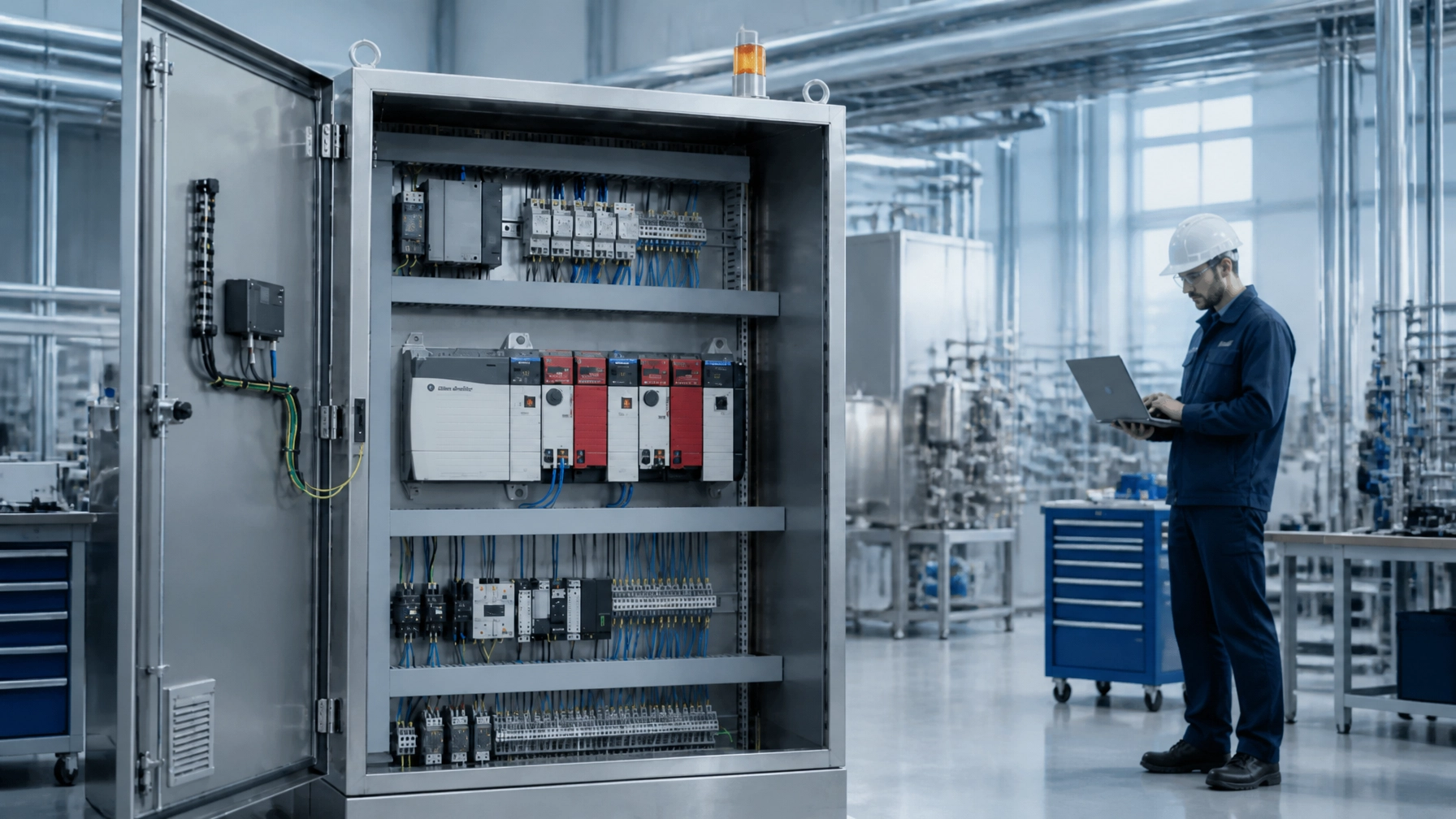
The control panel is where power distribution, control hardware, field wiring, networking, and operator interfaces come together. Panel design should therefore be coordinated with the controls program and the installation environment, not treated as a separate hardware transaction.
A true turnkey package may include:
- Electrical design and component selection.
- Enclosure sizing and thermal review.
- PLC, I/O, drive, power supply, and network layouts.
- Terminal blocks, wire numbering, labeling, and identification.
- Short-circuit current rating evaluation.
- Factory testing and quality checks.
- As-built drawings and panel documentation.
- Installation and field termination support.
CCS designs and fabricates UL 508A Listed industrial control panels for OEMs, manufacturers, and process facilities. Our panel services support new systems, retrofits, and control system upgrades, with attention to safety standards, maintainability, and future needs.
For projects involving robotics, CCS is an ABB Authorized Robotics System Integrator. Our engineers can coordinate ABB robotic cells with PLCs, safety systems, HMIs, conveyors, inspection equipment, and plant networks while maintaining one integrated controls strategy.
5. Control System Upgrades and Modernization
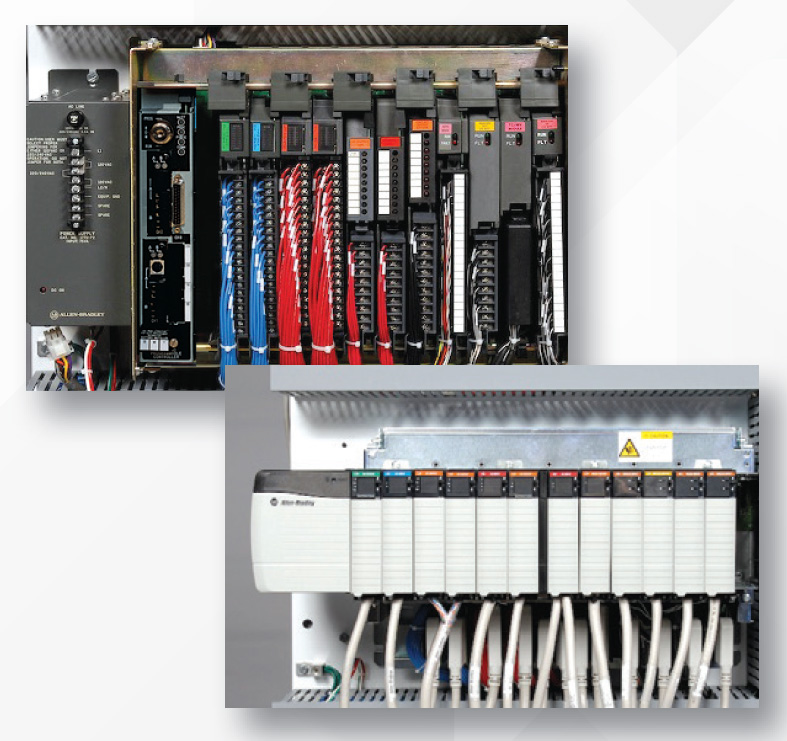
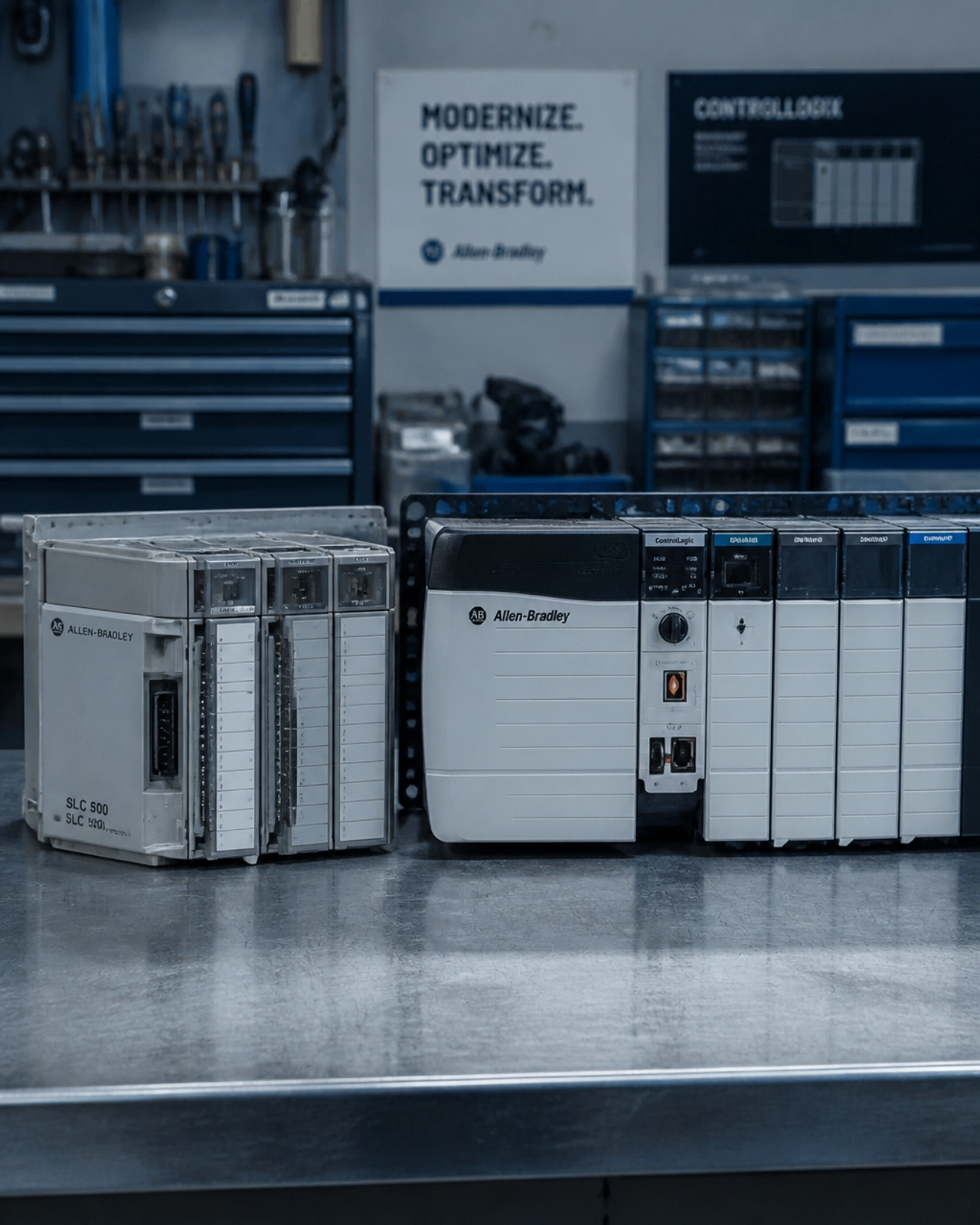
Many manufacturers do not need to replace an entire production line. They may need to modernize a legacy PLC, replace obsolete hardware, improve HMI visibility, add SCADA capabilities, or connect isolated equipment to plant-level data systems.
A turnkey upgrade should address both the technical work and the production constraints surrounding it. The integrator should:
- Evaluate existing drawings, programs, hardware, and field devices.
- Identify obsolete or difficult-to-source components.
- Develop a migration or phased implementation plan.
- Protect production data and configuration backups.
- Coordinate work around planned shutdowns.
- Test new logic before installation where practical.
- Confirm compatibility with existing equipment.
- Support cutover, troubleshooting, and performance verification.
Modernization is especially effective when it is planned around your future operating model rather than only the immediate failure of an aging component. A robust upgrade can improve reliability today while creating a foundation for additional equipment, data collection, and process improvements later.
6. Installation, Startup, and Commissioning
A system is not turnkey when the integrator ships a panel and leaves your team to complete the rest. On-site services are essential for verifying that the engineered solution performs correctly in the actual production environment.
Startup and commissioning may include:
- Panel installation and field wiring support.
- Device and instrument verification.
- I/O checkout and loop testing.
- Network and communications testing.
- Sequence, interlock, and alarm validation.
- Safety function testing.
- Drive, motion, and control-loop tuning.
- HMI and SCADA verification.
- Production trial runs.
- Performance testing against agreed criteria.
- Punch-list management and final acceptance.
Factory Acceptance Testing (FAT) can identify issues before equipment reaches your facility. Site Acceptance Testing (SAT) then confirms that the complete system performs as intended after installation and integration.
Commissioning should conclude with a documented handover, not simply a statement that the system is running.
7. Operator Training and Handover
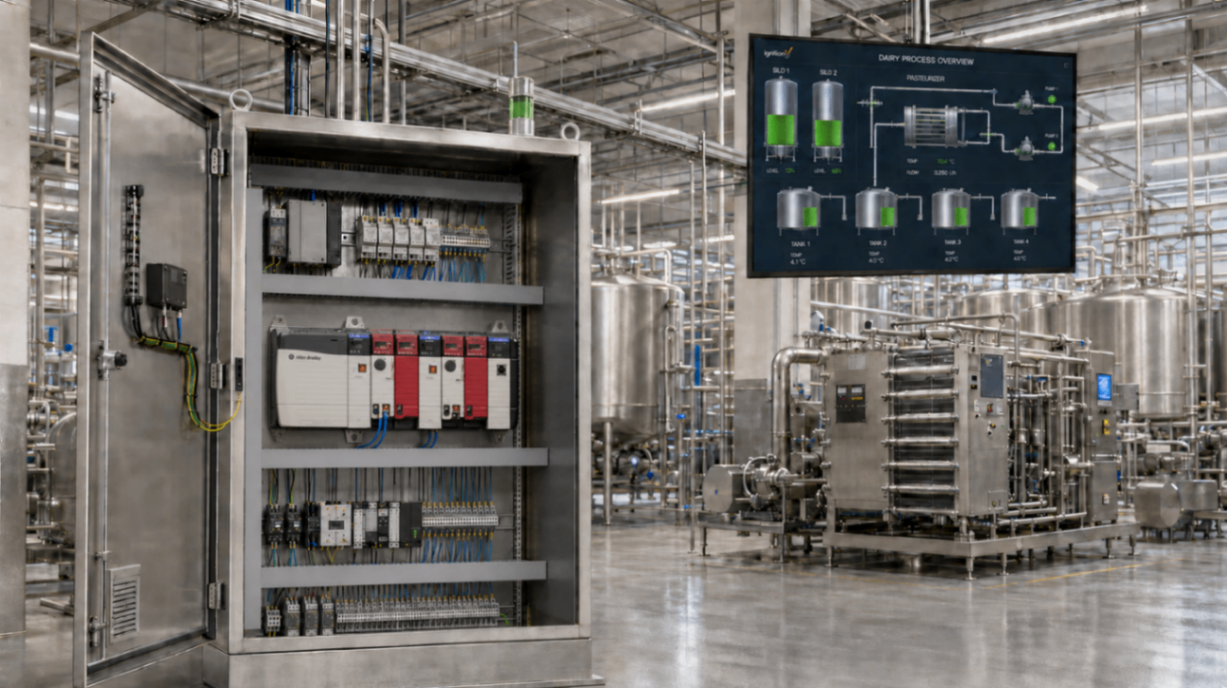
Your operators and maintenance personnel should understand how to use and support the system before the integrator leaves the site.
Training may cover:
- Normal startup and shutdown procedures.
- HMI and SCADA navigation.
- Alarm response and basic diagnostics.
- Recipe, setpoint, and user-management functions.
- Safe recovery from common faults.
- Maintenance access and escalation procedures.
- Backup and restore practices.
- System limitations and future expansion options.
The handover should also include the documentation needed for long-term upkeep. Ask for final electrical drawings, network diagrams, I/O lists, user manuals, alarm lists, spare parts recommendations, test records, and current backups of PLC, HMI, SCADA, and robot programs where applicable.
Where Turnkey Engagements Commonly Fall Short
A proposal may use the word “turnkey” while excluding critical responsibilities. Common gaps include:
- Undefined boundaries between the integrator, equipment OEM, electrician, and plant team.
- PLC programming included but HMI or SCADA development excluded.
- Panel fabrication included but field installation and wiring excluded.
- Startup included only for a limited number of hours.
- Training described generally without identifying the audience or deliverables.
- Documentation limited to basic panel drawings.
- Software source code delivered without configuration files or development access.
- Spares left to the customer to identify after startup.
- Support terms that do not define response times, availability, or costs.
- Change orders caused by an incomplete discovery process.
These gaps can create delays, unexpected costs, and long-term dependence on a single vendor. They can also make future upgrades more difficult if your team does not receive the drawings, code, licenses, and backups required to maintain the system.
Questions to Ask a Prospective Integrator
Before selecting a turnkey industrial automation partner, ask:
- How is the scope defined?
Does the proposal list engineering, programming, panels, installation, commissioning, training, documentation, and support as specific deliverables? - Who owns the drawings and software?
Will you receive editable electrical drawings, PLC source code, HMI and SCADA project files, configuration backups, and robot programs where applicable? - What third-party licenses are required?
Confirm software ownership, renewal requirements, user counts, and access to development environments. - What testing is included?
Ask whether FAT, SAT, I/O checkout, safety testing, and performance verification are included. - What is included in the handover?
Request a detailed list covering as-built drawings, manuals, backups, alarm lists, spare parts, and test records. - How are spares identified?
A reliable integrator should recommend critical spare components and explain which parts are standard, obsolete, or lead-time sensitive. - What happens after startup?
Clarify warranty coverage, response times, remote support, on-site support, preventive maintenance, and future upgrade services. - How will communication be managed?
Identify the project manager, engineering contacts, decision points, reporting process, and change-control procedure.
Manufacturers throughout Central Pennsylvania, including Harrisburg, Lebanon, Lancaster, Allentown, and Philadelphia, can benefit from an integrator that remains involved beyond initial installation. CCS also supports customers across surrounding Mid-Atlantic states with consulting, engineering, controls upgrades, panel fabrication, on-site services, and system support.
A true turnkey project equips your team for reliable operation, not just the first day of production. At CCS, we bring together engineering expertise, verified technology partnerships, UL 508A Listed panel fabrication, commissioning support, and long-term service through one collaborative relationship.
Discuss Your Turnkey Automation Project With CCS
Whether you are planning a new automated process, upgrading a legacy control system, or looking for ongoing support, our engineers can help you analyze your requirements and develop a robust path forward. Contact CCS to discuss your project, from initial consulting through commissioning and future system expansion.