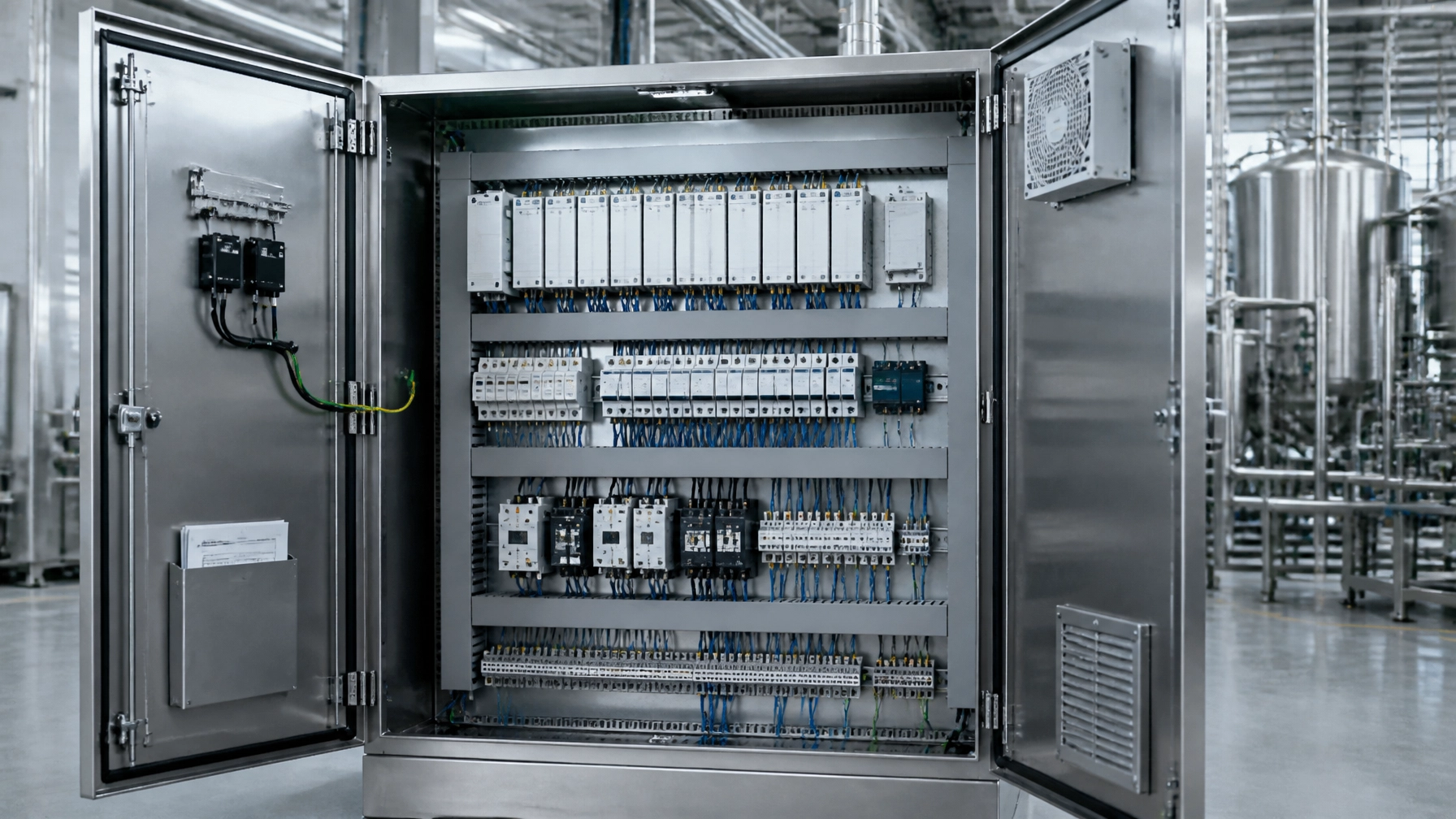
When a control panel is responsible for coordinating critical production equipment, design quality and compliance are essential. A properly engineered panel supports safe operation, simplifies troubleshooting, protects valuable components, and helps manufacturers maintain reliable production over the long term.
UL 508A is the primary standard used for industrial control panels intended for general industrial applications in ordinary locations. However, building a compliant panel involves much more than installing components inside an enclosure. The design must account for the application, available fault current, environmental conditions, electrical ratings, wiring methods, documentation, inspection, and testing.
Whether you need a new panel for an automated machine, a retrofit for an existing system, or a complete control system upgrade, working with a qualified industrial control panel integrator can help ensure that the final product aligns with your specific needs and expectations.
For a broader overview of enclosure selection, component layout, PLC and I/O architecture, wiring, testing, and documentation, read our Industrial Control Panel Design Guide.
What UL 508A Covers
UL 508A establishes construction and performance requirements for industrial control panels generally rated at 1,000 volts or less and intended for ordinary, non-hazardous locations. The standard addresses how components are selected, mounted, wired, marked, and evaluated.
A UL 508A Listed panel is not a substitute for proper field installation. The completed system must still be installed according to the National Electrical Code, applicable local requirements, and the conditions established by the authority having jurisdiction.
For manufacturers, the value of UL 508A compliance is both practical and operational. A panel designed and fabricated under the standard provides a documented approach to electrical safety and quality. It also helps reduce uncertainty during installation reviews, inspections, commissioning, and future upkeep.
Begin with Application-Specific Engineering
A reliable panel starts with a clear understanding of the process it will control. Before selecting an enclosure or laying out components, our engineers analyze the application, connected loads, control architecture, operating environment, maintenance requirements, and future expansion plans.
Important questions include:
- What voltage and current will the panel receive?
- Which motors, drives, heaters, valves, instruments, and automation devices will it control?
- Will the panel operate in a washdown, dusty, corrosive, hot, or cold environment?
- How will field devices connect to the panel?
- What communication networks and safety circuits are required?
- Will the system need additional capacity in the future?
- How will operators and maintenance personnel access the equipment?
This early review helps prevent costly redesigns. It also allows the panel to be designed around the complete system rather than treated as an isolated electrical enclosure.
Through CCS engineering services, we can develop electrical schematics, panel layouts, component lists, networking requirements, and control system documentation that equip your team for installation and long-term maintenance.

Enclosure and Component Selection
The enclosure must protect the panel’s internal components from the surrounding environment while providing enough space for safe installation, heat management, wiring, and future service.
Selection may involve:
- Painted steel, stainless steel, or other appropriate materials
- NEMA or enclosure Type ratings
- Washdown and corrosion resistance
- Indoor or outdoor installation requirements
- Heat dissipation and thermal management
- Space for disconnects, breakers, PLCs, drives, terminal blocks, and network hardware
- Door-mounted operator interfaces and indication devices
- Cable entry, conduit, and field-wiring access
Component selection is equally important. Disconnects, circuit breakers, fuses, contactors, overload relays, power supplies, terminal blocks, motor starters, PLC equipment, and network devices must have ratings suitable for the circuit and environment.
Our engineers corroborate electrical ratings, product certifications, compatibility, and availability before initiating fabrication. This approach helps ensure that the panel functions as intended and that replacement or expansion planning remains practical.
Understanding SCCR
Short-Circuit Current Rating, or SCCR, identifies the maximum prospective fault current that a panel can safely withstand under specified conditions. The SCCR applies to the panel as an assembly, not simply to one individual component.
An SCCR evaluation typically considers:
- The short-circuit ratings of power-circuit components
- The ratings and arrangement of branch-circuit protective devices
- Any permitted component combinations
- Current-limiting fuses or circuit breakers
- The voltage and available fault current at the installation location
The overall panel SCCR is determined through the applicable UL 508A requirements and cannot exceed the limitations established by the panel’s power-circuit components and protective-device arrangements.
The marked SCCR must be appropriate for the available fault current where the panel will be installed. If the panel rating is too low, the equipment may not satisfy installation requirements or provide the expected level of protection.
A qualified panel builder should address SCCR during the design phase, not after fabrication is complete. CCS can review the incoming power information, select appropriate protective devices, document the calculation, and identify the SCCR on the panel nameplate and related drawings.
Overcurrent Protection and Circuit Coordination
Overcurrent protection helps protect conductors, components, and equipment from excessive current caused by overloads or faults. Its selection must account for conductor ampacity, connected loads, motor requirements, device ratings, and the applicable NEC provisions.
A complete design may include:
- Main disconnecting means
- Branch-circuit circuit breakers or fuses
- Motor branch-circuit protection
- Overload protection
- Control-circuit fusing
- Power supplies and supplementary protection
- Protection for transformers, drives, and other specialized equipment
Protective devices must be installed and applied correctly. A supplementary protector, for example, should not automatically be treated as a replacement for branch-circuit protection. The design must reflect the function and rating of each device within the circuit.
Our engineers review protection requirements as part of the complete panel design. This helps align the panel’s electrical architecture with safety standards, equipment requirements, and the operating expectations of your facility.
Spacing, Clearances, and Component Layout
Internal layout affects both safety and serviceability. UL 508A requirements address the spacing between energized parts, grounded metal, other conductive parts, and insulated surfaces.
The required distances depend on factors such as:
- Circuit voltage
- Component construction
- Enclosure design
- Overvoltage considerations
- Barriers and insulating materials
- The location of terminals and exposed conductive parts
A panel layout must preserve these clearances after wiring, cable ducts, terminal blocks, accessories, and field connections are installed. Components should also be arranged to support heat management, logical circuit flow, safe access, and efficient troubleshooting.
A well-organized layout separates high-voltage power components from sensitive control and communication equipment where appropriate. It also gives maintenance personnel enough room to inspect terminations and replace components without disturbing unrelated circuits.
Wiring, Terminations, and Labeling
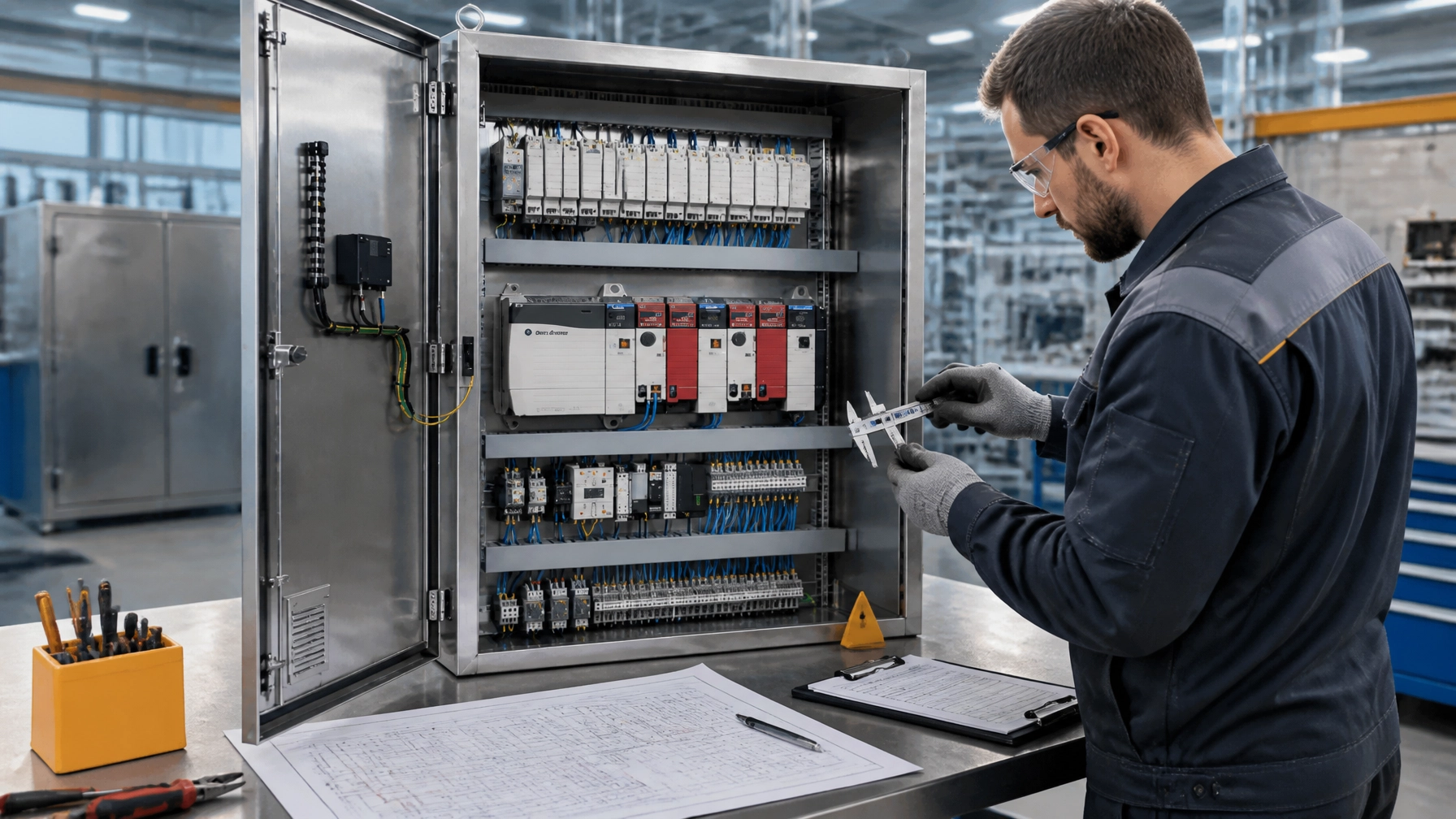
Wiring practices have a direct impact on safety, commissioning time, and future upkeep. Conductors must be selected according to the circuit, voltage, current, insulation rating, temperature, and applicable requirements.
During fabrication, wiring should be:
- Properly routed and supported
- Protected from sharp edges and mechanical damage
- Separated appropriately by circuit type
- Terminated using suitable devices
- Identified consistently with the drawings
- Arranged to support inspection and troubleshooting
Terminal blocks must be selected for the conductor size, voltage, current, and field-connection requirements. Wire numbers and component designations should correspond with the electrical schematics so that technicians can move efficiently between the physical panel and the documentation.
Required panel markings generally include the manufacturer or builder identification, supply characteristics, relevant current information, enclosure information, and SCCR. Labels should be durable, legible, and appropriate for the installation environment.
Clear labeling is a small detail with a significant operational effect. It can reduce troubleshooting time, support safer maintenance, and make future modifications more predictable.
Documentation Is Part of the Deliverable
A control panel is not complete when the enclosure is assembled. The documentation package is an important part of the finished system.
Depending on project scope, documentation may include:
- Electrical schematics
- Panel layout drawings
- Power and control circuit diagrams
- Field-wiring diagrams
- Terminal schedules
- Wire lists
- Component bills of material
- Device datasheets
- SCCR calculation records
- Nameplate information
- Torque requirements
- Inspection and test records
- Installation and maintenance guidance
Accurate documentation helps your electricians, operators, maintenance personnel, and future integrators understand how the system was designed. It also supports smoother startup and easier expansion when future needs change.
At CCS, we combine panel fabrication with engineering documentation so your team receives a more complete and maintainable solution from start to finish.
Inspection and Testing Before Shipment
Inspection and testing provide an opportunity to identify problems before the panel reaches your facility. A professional review should verify the construction, component selection, wiring, markings, and documentation.
Typical checks may include:
- Confirming components match the approved design
- Verifying conductor routing and terminal identification
- Reviewing spacing and clearances
- Checking protective-device ratings
- Confirming SCCR calculations and markings
- Inspecting grounding and bonding
- Verifying wire terminations and torque
- Performing point-to-point checks
- Testing control power and I/O circuits
- Confirming PLC, HMI, network, and device operation
- Documenting test results
The exact testing requirements depend on the panel design, equipment, and project specifications. Functional testing may be performed with simulated or connected devices before installation, helping reduce startup delays and allowing open, fluent communication between the panel builder, controls team, and customer.
Why Work with a Qualified UL 508A Control Panel Builder in Pennsylvania?
Choosing a qualified UL 508A control panel builder in Pennsylvania gives manufacturers access to more than fabrication capacity. It provides a partner who can analyze the application, select suitable components, develop the design, manage compliance considerations, test the assembly, and support installation.
CCS designs and builds both standard and custom industrial control panels for manufacturers, OEMs, and process facilities. Whether you have a small machine-control project or a larger distributed control system, our engineers can align the panel design with your production requirements, safety standards, budget, and future plans.
We serve customers throughout Central Pennsylvania and the broader Mid-Atlantic region with engineering, control system upgrades, panel fabrication, on-site services, and ongoing system support. If your facility needs a new UL 508A Listed panel, an existing-panel retrofit, or a complete controls modernization project, we can support the work from initial concept through commissioning and upkeep.
Plan Your Next Control Panel Project with CCS
The right panel design improves more than compliance. It can enhance safety, simplify maintenance, support reliable production, and provide a strong foundation for future automation improvements.
Contact Complete Control Solutions to discuss your application with our team. We can review your existing system, identify design requirements, and develop a robust, state-of-the-art control panel solution aligned with your specific needs and expectations.
For additional context, review the UL 508A Third Edition Summary of Requirements and the UL Industrial Control Panels and Panel Shop Program.