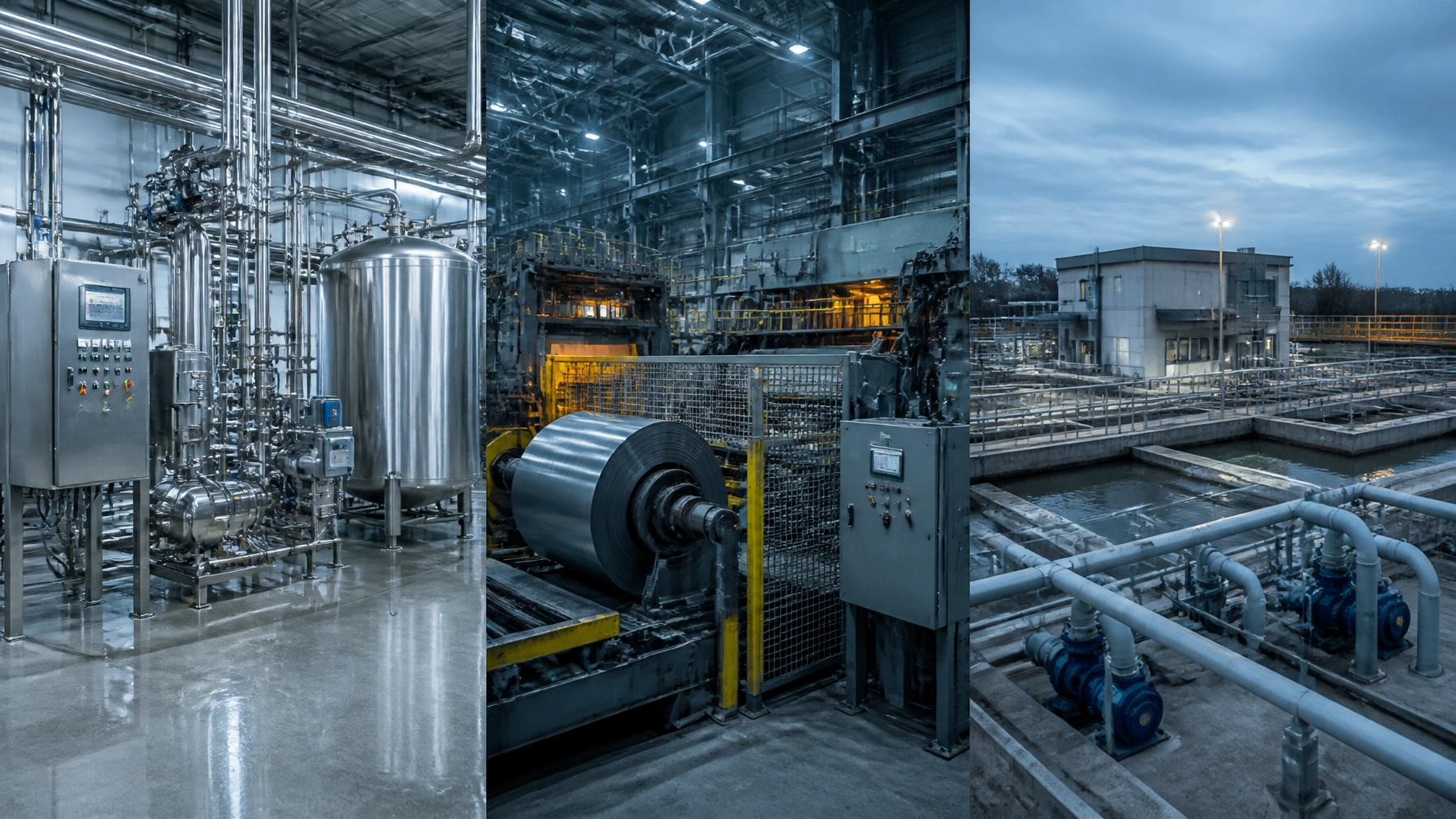
Industrial automation delivers the greatest value when it is designed around the realities of your process. Industry-specific automation integration aligns control-system design with the operating, regulatory, safety, and reliability demands of each process. A dairy processor, metals manufacturer, and municipal water utility may all rely on PLCs, HMIs, industrial networks, and SCADA, but the requirements behind those systems are fundamentally different.
Sanitation, traceability, and product protection define dairy automation. Heat, dust, vibration, and functional safety shape metals manufacturing. Water and wastewater systems depend on dependable remote monitoring, distributed assets, regulatory accountability, and cybersecurity.
For organizations evaluating an automation project, choosing an integrator with industry-specific experience is critical. At Complete Control Solutions (CCS), we analyze your process, equipment, safety requirements, and future needs before recommending a solution. From a focused programming project to a complete control system modernization, our engineers provide support from start to finish.
Why Industry-Specific Integration Matters
A control system should do more than start motors and display process values. It should reflect how your facility operates, how your team makes decisions, and how your industry defines quality and risk.
Whether you are upgrading a legacy PLC, integrating a new production line, or developing plant-wide visibility, the right system should:
- Control critical process variables accurately
- Protect employees and equipment
- Produce reliable and accessible operating data
- Support regulatory and quality requirements
- Reduce waste, downtime, and manual intervention
- Remain maintainable as your operation grows
The technology may overlap between industries, but the engineering decisions do not. A system designed for a sanitary food process cannot simply be transferred to a foundry or a remote lift station without significant changes in architecture, instrumentation, enclosure design, safety, and support.
Dairy Processing Automation: Sanitation, Process Control, and Traceability
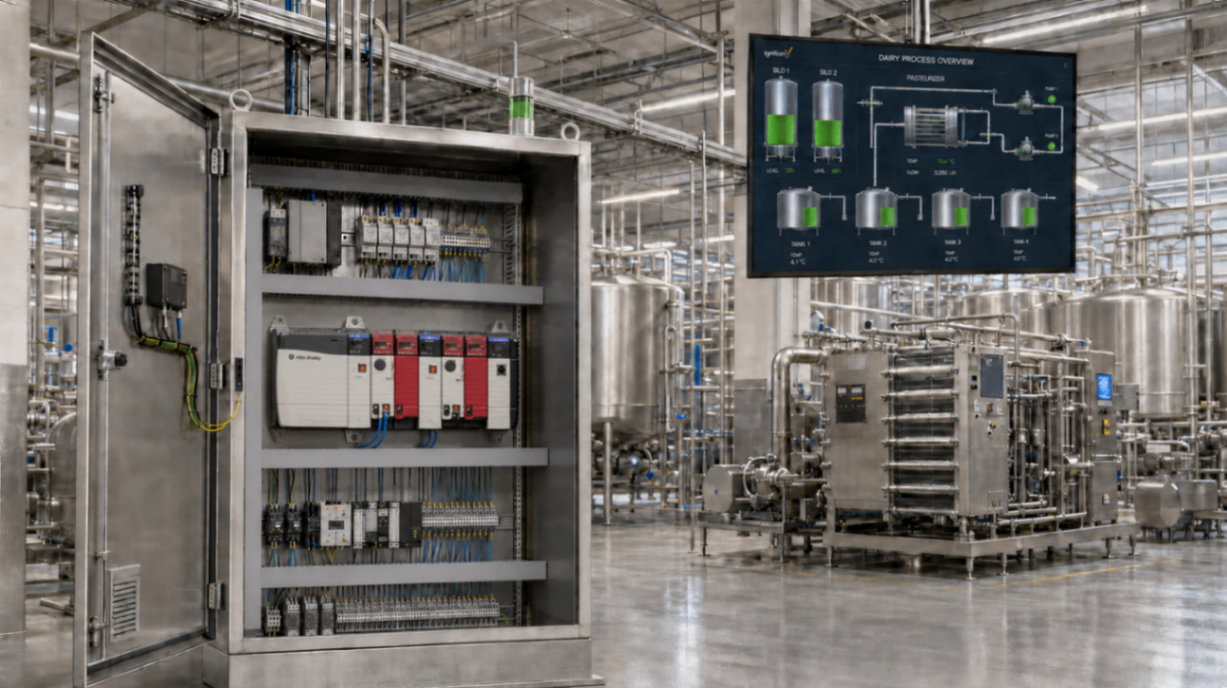
For dairy and food processors, automation must protect both the product and the process. Temperature, pressure, flow, routing, batch sequence, and equipment status all contribute to food safety and consistent quality.
A qualified dairy processing automation integrator serving Pennsylvania manufacturers should understand the relationship between process control and hygienic operation. The system must help operators achieve repeatable results while producing records that can be reviewed during internal audits, customer reviews, and regulatory inspections.
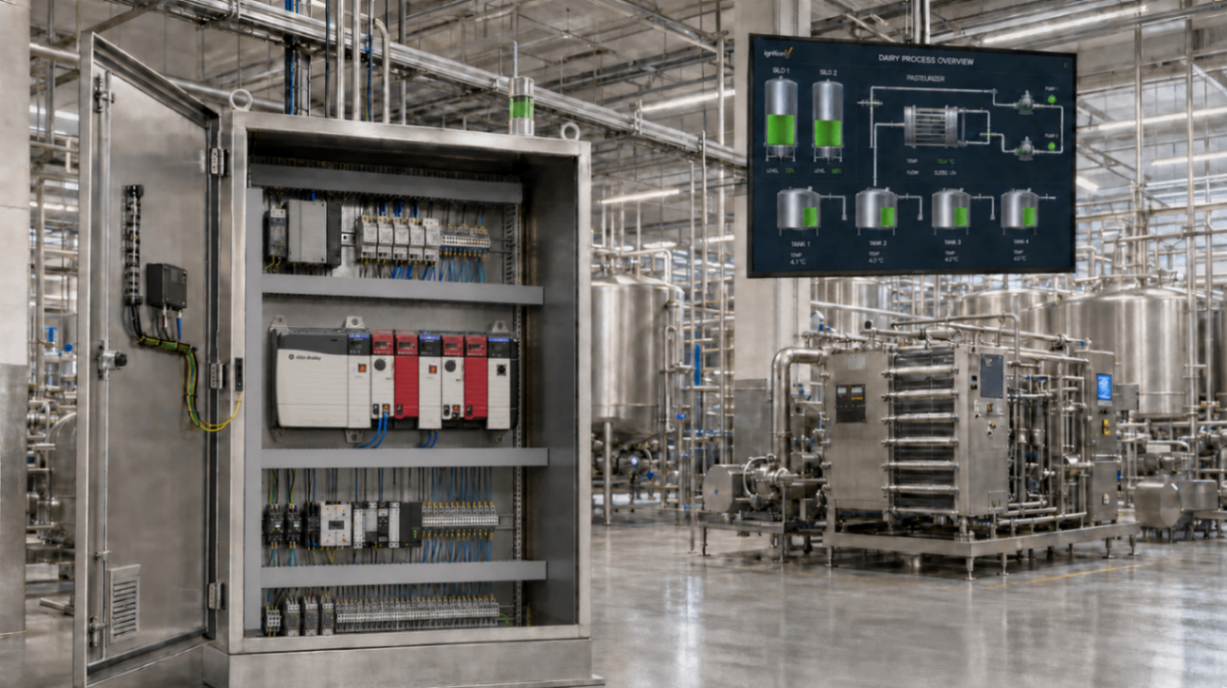
CIP is a process-control challenge
Clean-in-place, or CIP, is not simply a timed sequence of pumps and valves. The system must manage and record the conditions that determine whether a cleaning cycle has been completed effectively.
Depending on the equipment and process, automation may monitor:
- Cleaning step sequence and duration
- Temperature profiles
- Flow rate and velocity
- Chemical concentration or conductivity
- Valve position and routing
- Tank levels and pump status
- Alarms, deviations, and operator actions
Interlocks can prevent production from starting when required cleaning or sanitizing conditions have not been met. Historical records can then connect the cycle to a specific line, vessel, circuit, or production batch.
This information supports faster investigation when a deviation occurs. Instead of relying on incomplete paper records, your team can review a time-stamped history of the process and determine whether the system reached its required parameters.
Traceability connects production data
Dairy automation may also connect PLC and SCADA data with MES, ERP, quality, or laboratory systems. This allows teams to associate ingredients, lots, recipes, process conditions, and finished products within a single traceability structure.
The goal is not to collect data for its own sake. The goal is to make important information available when you need it, such as during a quality review, a production investigation, or a continuous improvement initiative.
CCS has previously addressed the role of connected automation in Mid-Atlantic dairy processing. Our engineers can help develop process control, HMI, SCADA, and panel solutions aligned with your specific needs and expectations.
Metals Manufacturing: Designed for Harsh Environments and Safe Operation
Metals facilities place different demands on automation. Equipment may operate near high temperatures, abrasive dust, heavy vibration, moisture, scale, fumes, and significant mechanical forces. Components that perform reliably in a clean processing room may require protection or relocation in a metals environment.
A metals-industry automation integrator serving Pennsylvania manufacturers must account for the physical environment before selecting hardware or finalizing a control architecture.
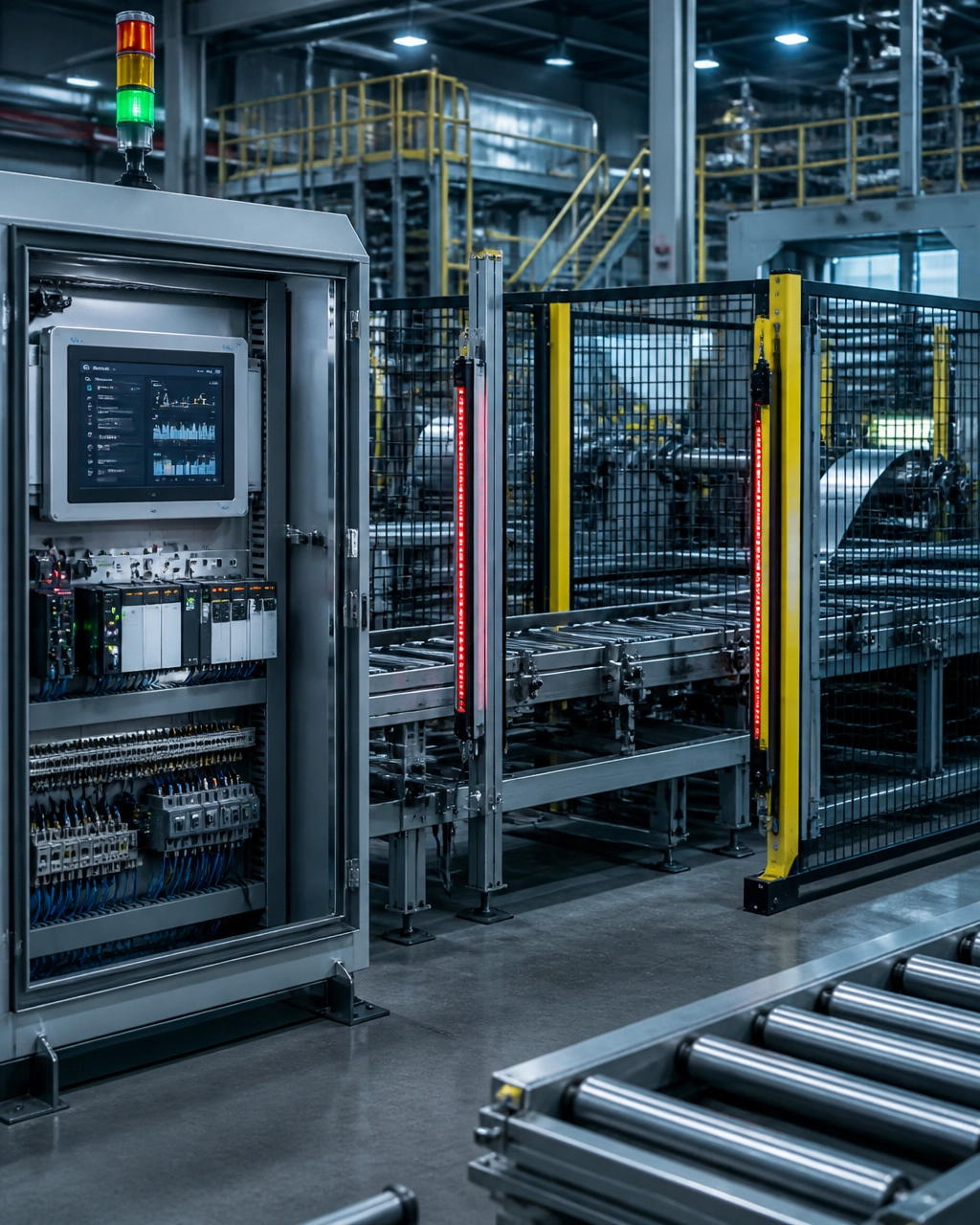
Environmental protection is part of the design
Metals automation may require:
- Properly rated enclosures and control cabinets
- Thermal shielding or physical separation from heat sources
- Protection from dust, moisture, and vibration
- Remote instrumentation where direct access is unsafe
- Robust cable routing and industrial network design
- Sensors suited to the process and ambient conditions
- Planned inspection and replacement strategies
The best approach is often to segment exposure. Components that do not need to be in the harshest area should be located in a protected zone, while field devices and enclosures in exposed locations are selected for the actual conditions they will experience.
Safety must be integrated into the control system
Metals manufacturing can involve furnaces, presses, cranes, conveyors, molten material, cutting equipment, and robotic work cells. Safety cannot be treated as an add-on after the production logic is complete.
A comprehensive solution may incorporate:
- Guarding and access interlocks
- Emergency-stop circuits
- Safety relays or safety PLCs
- Light curtains and presence sensing
- Safe-speed or safe-stop functions
- Controlled restart procedures
- Operator access levels and alarm management
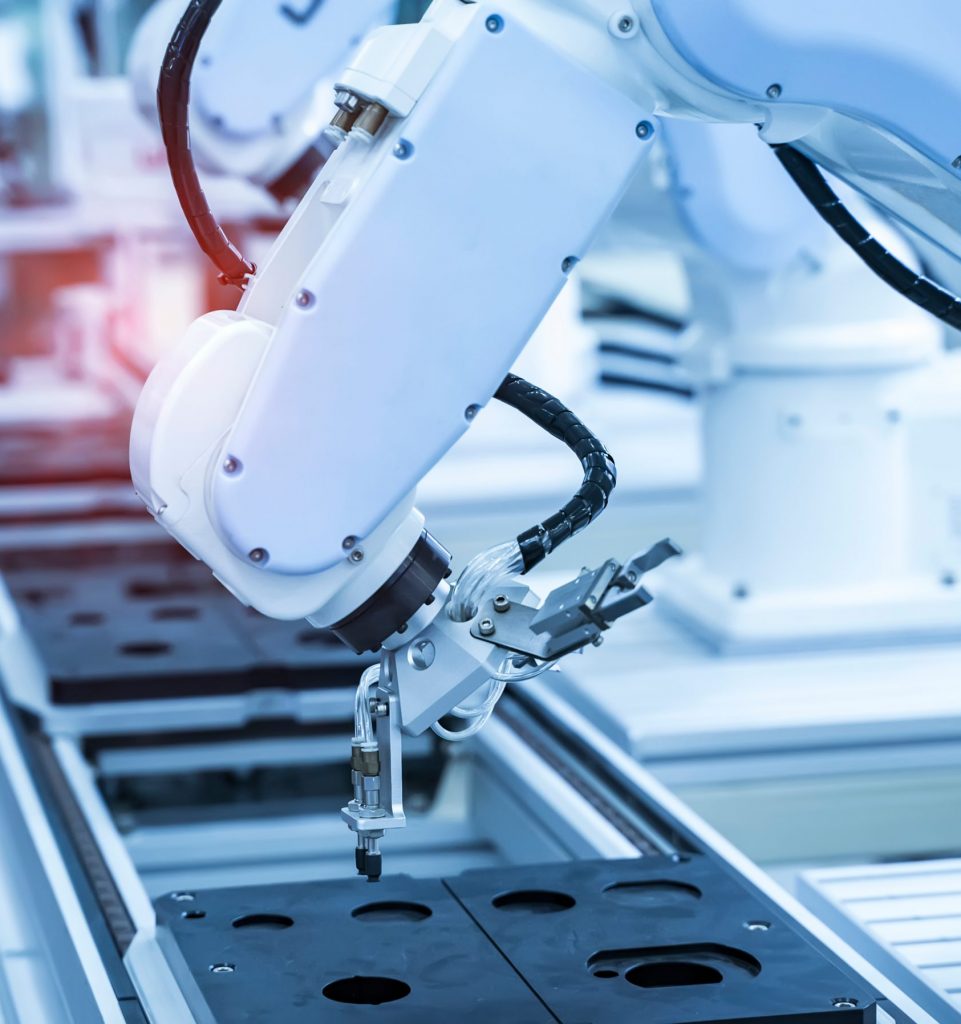
Where robotic automation is appropriate, CCS can design and integrate ABB robotics for applications such as material handling, machine tending, welding, inspection, or palletizing. The robot cell, safety devices, PLC, HMI, and production equipment must work together as one coordinated system.
Our ABB Robotics System Integrator capabilities support projects from concept and engineering through programming, commissioning, optimization, and ongoing support.
Process consistency remains a priority
Even in demanding environments, manufacturers need repeatable quality. Automation can coordinate temperature, speed, pressure, position, material movement, and inspection data to reduce variation between shifts.
When process data is connected to production and maintenance systems, teams can also identify recurring equipment conditions, investigate quality issues, and plan improvements based on evidence rather than assumptions.
For a broader look at planning priorities, read Automating the Metals Industry: Where to Start, What to Avoid.
Water and Wastewater Automation: Distributed Control, Remote Monitoring, and Cybersecurity
Water and wastewater facilities operate across multiple locations. A utility may need to monitor treatment plants, pump stations, wells, reservoirs, tanks, lift stations, and remote telemetry units from a central control room.
That makes a dependable SCADA system essential. A water and wastewater SCADA integrator serving Pennsylvania utilities should understand distributed infrastructure, communications, operator workflows, alarms, reporting, and the need to maintain service continuity.
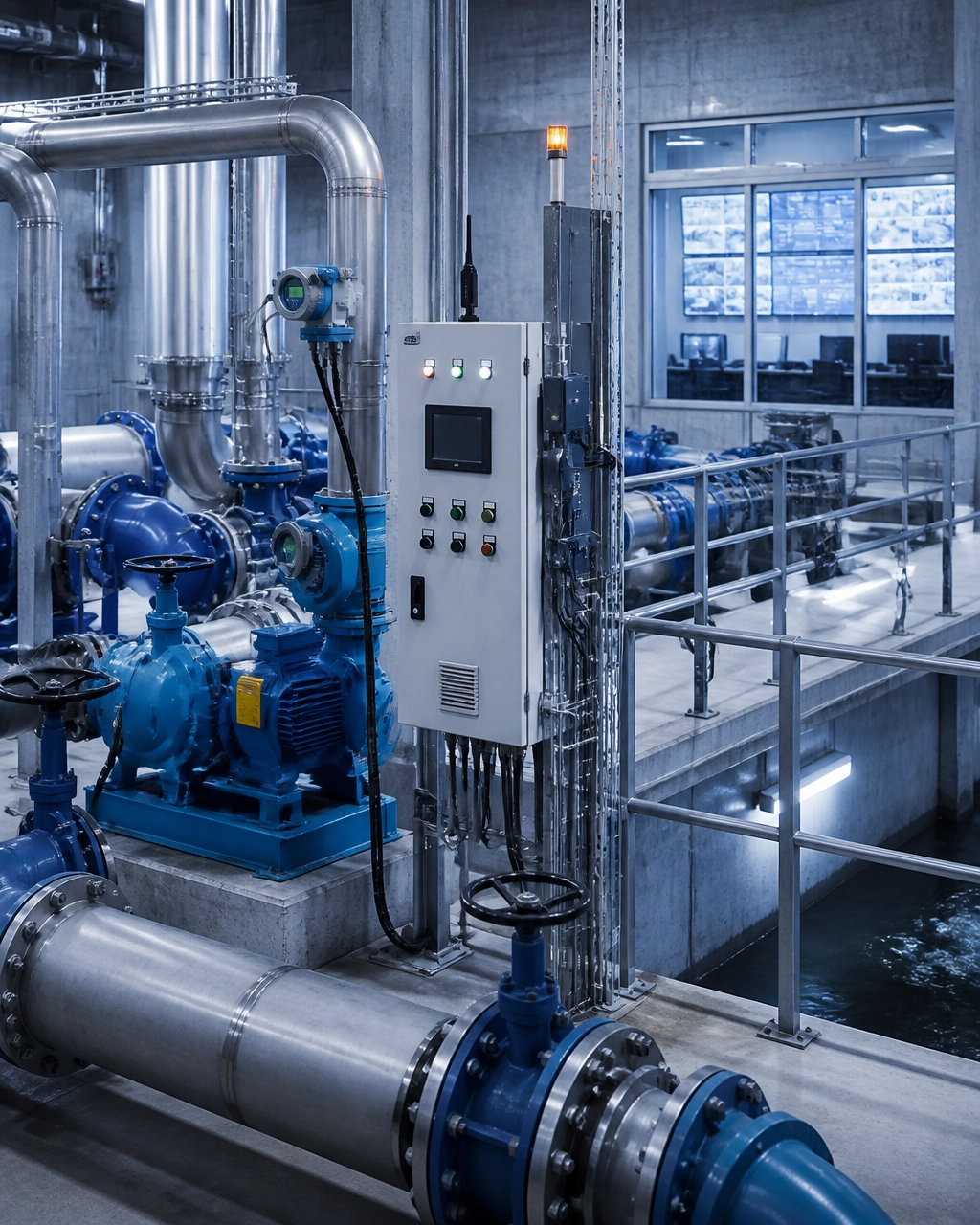
SCADA should provide useful visibility
A well-designed water and wastewater SCADA system can help operators:
- Monitor levels, flows, pressures, and quality parameters
- View pump, blower, valve, and equipment status
- Manage alarms by priority and location
- Track runtime, starts, and energy consumption
- Review historical trends and operating conditions
- Coordinate responses across multiple sites
- Identify abnormal conditions before they become failures
Remote monitoring can reduce unnecessary travel and help operators respond more quickly. However, remote access must be designed carefully. Convenience should never take priority over the security of critical infrastructure. Utilities comparing modernization options can also read Ignition vs. Legacy SCADA for Municipal Utilities.
Cybersecurity belongs in the architecture
Water and wastewater systems are increasingly connected, which makes cybersecurity an essential part of automation planning. Current guidance from Pennsylvania DEP emphasizes reducing public-internet exposure, replacing default passwords, and implementing multifactor authentication for remote access to operational technology.
The NIST practical reference design for the water and wastewater sector also highlights asset management, data integrity, remote access, network segmentation, and SCADA security.
For a utility, practical cybersecurity planning may include:
- Separating IT and OT networks
- Restricting access through secure gateways or VPNs
- Applying role-based permissions
- Removing default credentials
- Maintaining known-good PLC and project backups
- Logging remote connections and operator actions
- Reviewing cellular and wireless communication paths
- Establishing incident response procedures
Security requirements should be considered during system design, not after installation. A properly structured architecture is easier to maintain, audit, and expand over its lifecycle.
One Partner Across Different Automation Requirements
Although dairy, metals, and water systems are distinct, they share a need for reliable engineering and clear communication. Each facility benefits from a partner who can connect field devices, control hardware, networks, visualization, safety systems, and long-term support.
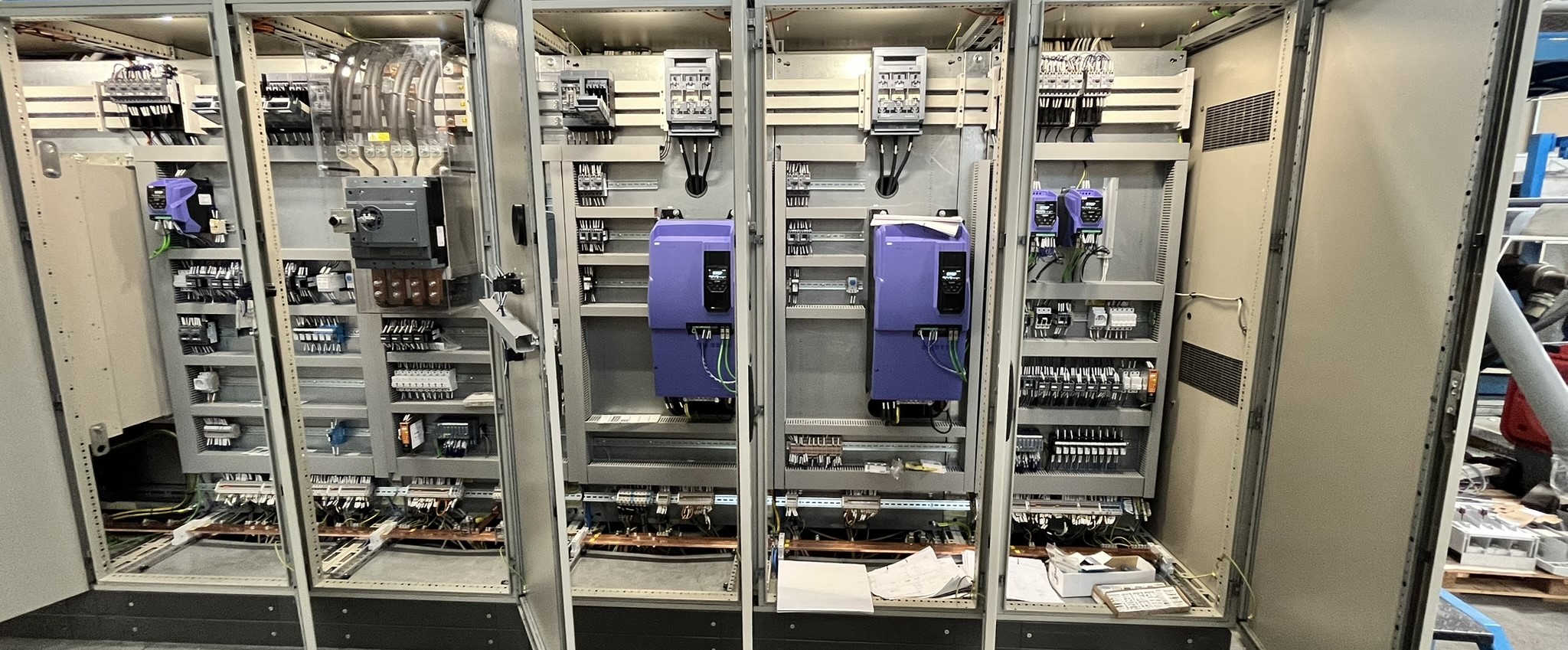
CCS provides engineering services, including PLC programming, HMI application development, industrial networking, drawing packages, and control panel design. We also build and retrofit UL 508A industrial control panels for new and existing systems.
Whether you need to modernize a legacy platform, expand plant visibility, or support a new installation, our control system upgrade services can help you plan a practical path forward. Projects can be phased to manage cost, production risk, and future expansion.
After implementation, system support helps maintain performance through remote assistance, emergency support, product end-of-life planning, and process improvement. Long-term upkeep is part of a successful automation strategy.
Build the Right Automation Strategy for Your Industry
Dairy processors, metals manufacturers, and water utilities need more than generic automation. They need systems engineered around sanitation, traceability, environmental exposure, safety, cybersecurity, remote access, and operational continuity.
From our base in Lebanon, Pennsylvania, CCS supports customers throughout Central Pennsylvania, including Harrisburg, Lancaster, York, and across the broader Mid-Atlantic region, including Maryland, Delaware, and New Jersey.
If you are planning a new system, evaluating a legacy upgrade, or addressing a critical reliability concern, contact Complete Control Solutions. Our engineers will analyze your current operation, corroborate your goals, and develop a robust solution aligned with your specific needs, expectations, safety standards, and future requirements.
With CCS, you gain a collaborative automation partner equipped to support your process from start to finish.