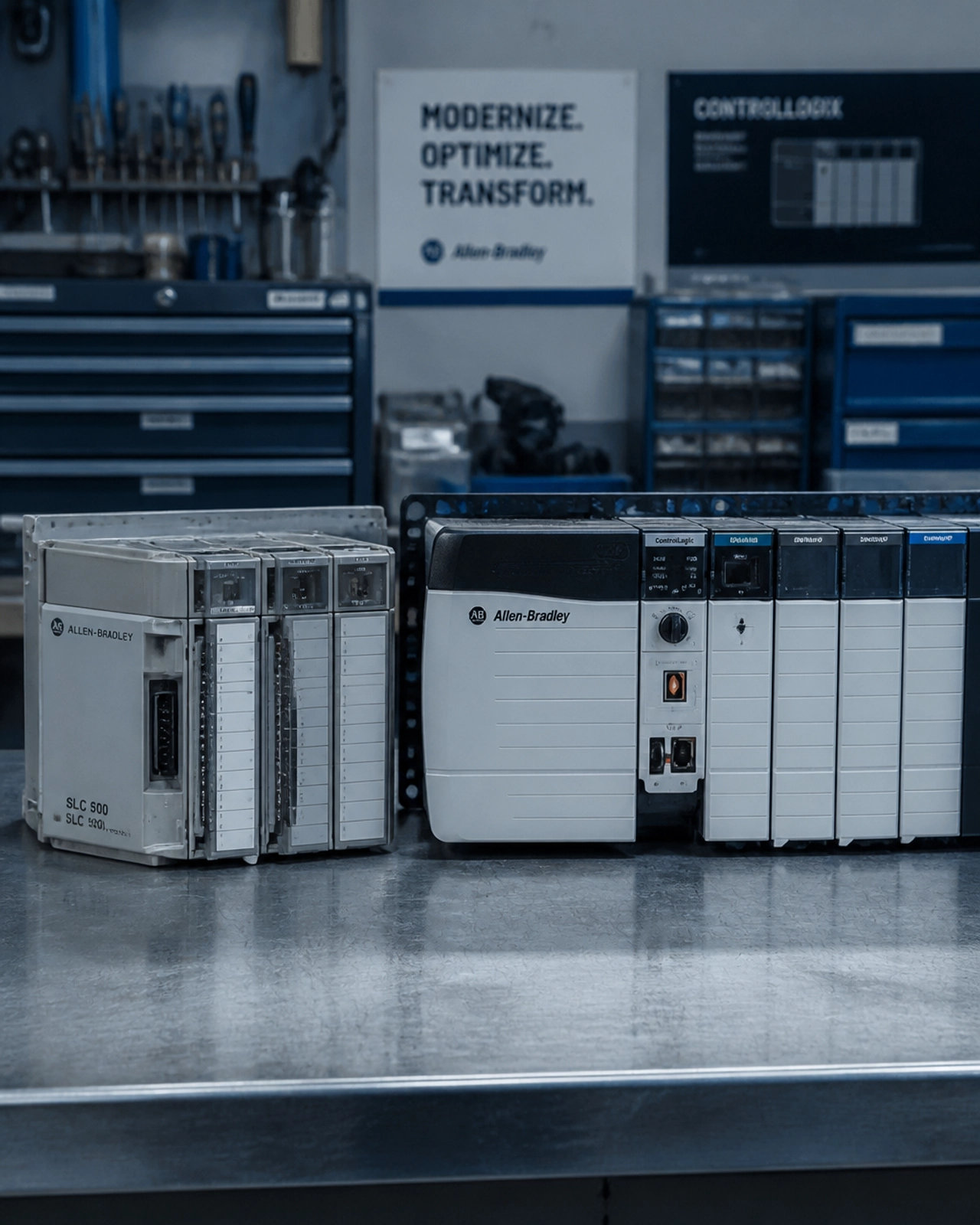
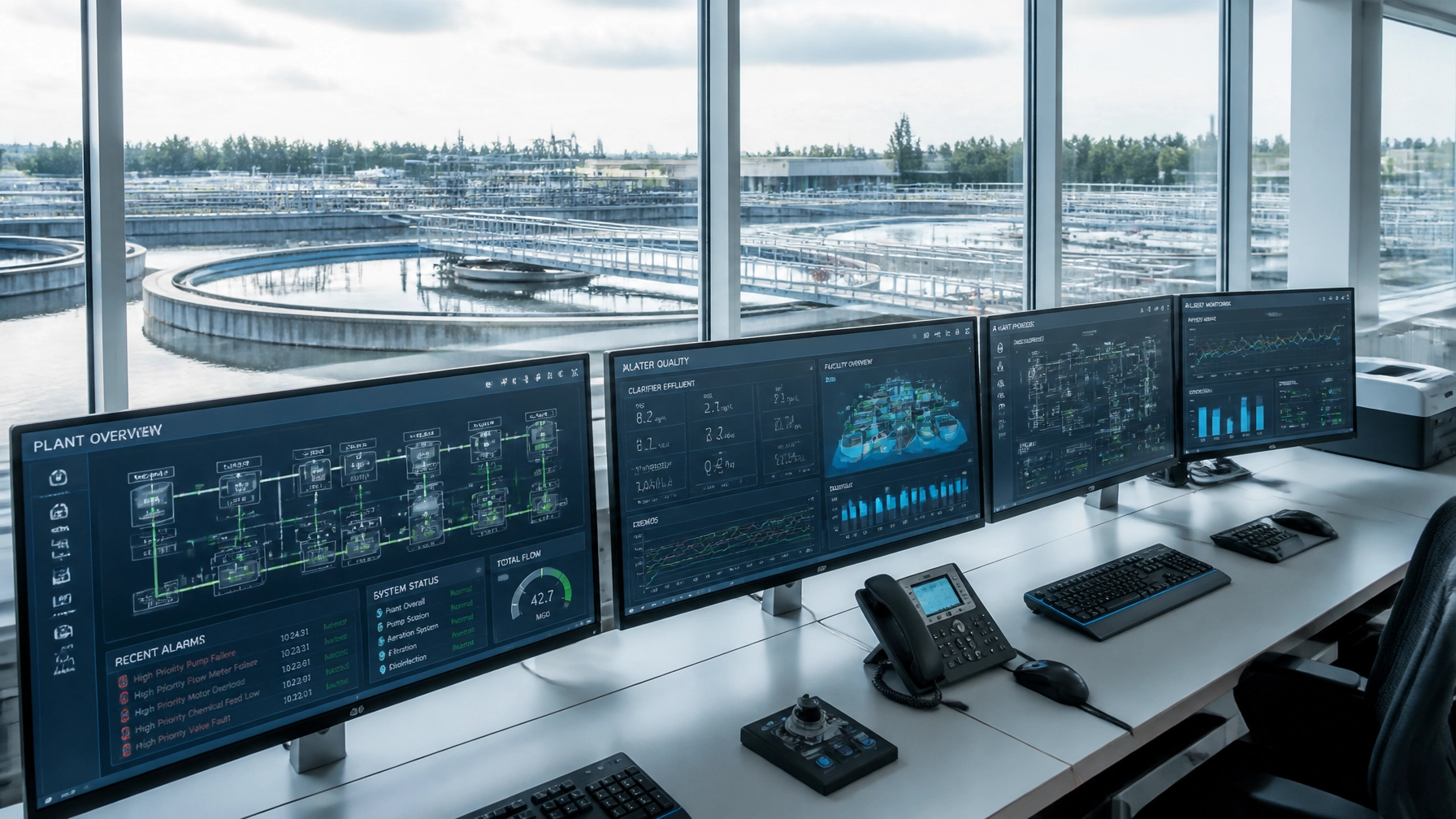
For decades, municipal water and wastewater utilities have relied on a handful of heavy hitters in the SCADA world. Names like Wonderware (now AVEVA) and Siemens WinCC have been the standard. These “legacy” systems got the job done, but the landscape of industrial automation is shifting rapidly.
As infrastructure ages, municipal managers face an important decision: modernize their existing SCADA system or migrate to a platform such as Ignition by Inductive Automation, weighing reliability, cybersecurity, support, expansion needs, and total lifecycle costs.
At Complete Control Solutions (CCS), we’ve spent years performing control system upgrades for utilities of all sizes. We’ve seen the frustrations of legacy “thick-client” systems firsthand, and we’ve also seen the transformative impact of modern platforms. That’s especially true for municipal utilities in the Harrisburg, Lebanon, and Lancaster corridor, where modernization conversations often center on balancing reliability, compliance, and long-term operating costs. In this guide, we’ll break down the key differences to help you decide which path is right for your utility’s future.
1. The “Unlimited” Factor: Rethinking Your Licensing
Licensing is an important consideration when comparing SCADA platforms, but terms vary by product, edition, and package. Some existing installations use tag or client based licenses that can add costs as utilities expand. Other offerings, including AVEVA Operations Control, provide unlimited licensing options. Compare your existing license entitlements and proposed upgrade package with Ignition’s selected modules rather than assuming every competing platform charges per tag or client. Software licensing costs vary by platform, edition, system size, user access, historian requirements, redundancy, and support agreements. Utilities should compare project-specific quotations and expansion costs rather than assume a standard licensing price.
The Ignition Approach:
Standard Ignition uses server-based licensing with unlimited tags, clients, and device connections within the licensed capabilities. Visualization, historical data collection, reporting, and MQTT integration depend on the modules and edition selected.
For municipal utilities adding lift stations or expanding staff access, this approach can make software expansion costs more predictable. However, total cost of ownership also includes engineering, migration, hardware, support, and any additional server or redundancy licenses. Compare the complete proposed system—not just the base software license—before selecting a platform.
2. Web-Based vs. Thick Client: The Battle for Accessibility
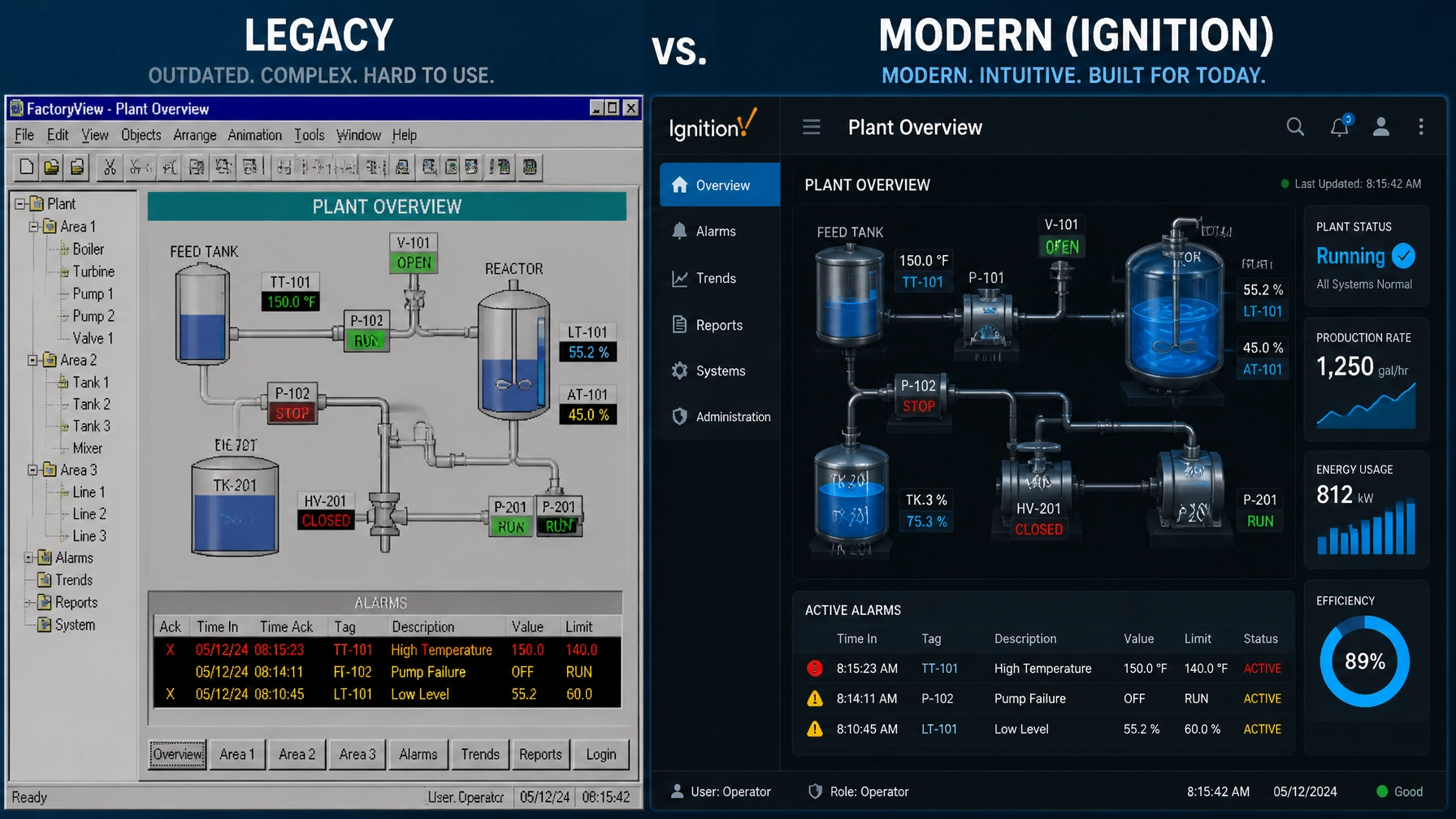
Legacy SCADA systems are often built as “thick clients.” This means the software must be installed and maintained on every individual workstation. If you have five operator stations, you have five separate installations to update, patch, and manage. Furthermore, remote access often requires clunky VPNs or Remote Desktop (RDP) sessions that are prone to lag and security vulnerabilities.
The Ignition Advantage:
Ignition’s Perspective module is built on modern HTML5 technology. This means your SCADA system is essentially a secure, high-performance website. Operators don’t need special software; they just need a web browser.
Whether you are in the control room, at the main plant, or working from home on a laptop, the experience is seamless. This web-first architecture drastically reduces the IT overhead for municipal utilities, allowing our engineers at CCS to push updates to a single server that instantly reflect across every device in the system. For teams managing infrastructure spread across communities in Pennsylvania, Maryland, or New Jersey, that kind of centralized access can make day-to-day operations much easier to support.
3. Mobility: Empowering Field Operators
In the water/wastewater sector, your team isn’t always in the control room. They are at well sites, lift stations, and clarifiers. Legacy systems typically struggle here, often offering “mobile” versions that are stripped-down, non-responsive, or require expensive third-party add-ons.
Modern Field Capability:
Because Ignition is web-native, its interfaces are inherently responsive. Using the Perspective module, we can design screens that look great on a 4K monitor but automatically reorganize themselves to be perfectly functional on an iPad or a smartphone.
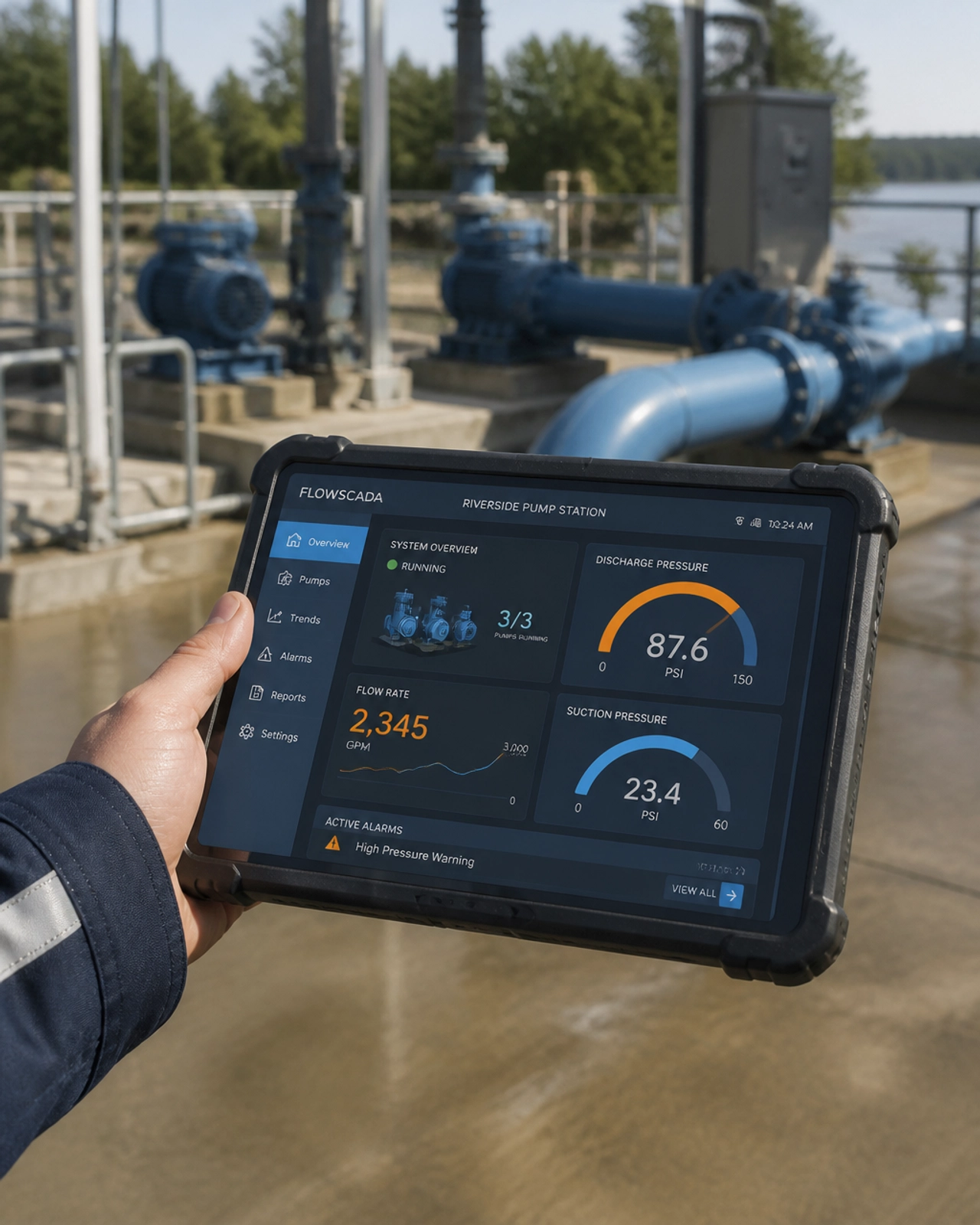
Imagine your on-call operator receiving an alarm at 2:00 AM and being able to securely log in from their phone to check the wet well levels or reset a pump without having to drive to the plant. That isn’t just a convenience; it’s a massive gain in operational efficiency and safety.
4. Scalability for Distributed Infrastructure
Municipal utilities are geographically distributed. You might have a central treatment plant and dozens of remote sites miles away. That’s a common reality for authorities serving both dense boroughs and more rural coverage areas throughout the Harrisburg-Lebanon-Lancaster region.
Legacy Constraints:
Scaling legacy systems to remote sites often requires expensive communication hardware or dedicated servers at every location to ensure data isn’t lost during a network outage.
The Ignition Edge Solution:
Ignition Edge is a lightweight version of the platform designed to run specifically on remote field devices. It provides:
- Local HMI: If the network goes down, the local operator still has control.
- Store-and-Forward: With the appropriate configuration, the system can buffer historical data locally during temporary connection outages and forward it when connectivity returns. This helps reduce data gaps, but retention depends on buffer capacity, outage duration, and system health. Storage sizing, monitoring, and recovery testing are important; buffering does not replace backups or guarantee regulatory compliance.
This distributed architecture, known as a Gateway Area Network (GAN), allows all your remote sites to work together as one cohesive system, managed from a single central point. It’s one of the reasons municipal utilities across the Mid-Atlantic are moving away from patchwork legacy environments and toward more unified SCADA strategies.
5. Data, Historians, and Regulatory Compliance
For water utilities, data isn’t just for operations; it’s for compliance. Generating monthly reports for the EPA or state agencies can be a labor-intensive process in legacy systems, often requiring manual data entry or complex SQL queries across disparate databases.
Integrated Reporting:
With the appropriate historian and Reporting modules, Ignition can collect operational data and generate scheduled reports. CCS can configure SQL-based historical storage and automated report delivery to support your utility’s recordkeeping and reporting workflows. Report formats, calculations, data retention, and access permissions should be designed around your operational and regulatory requirements. Reliable access also depends on properly maintained databases, backups, and system infrastructure.
For utilities planning PFAS treatment, our PFAS treatment controls guide explains how process monitoring, laboratory results, alarms, and SCADA records can work together to support treatment operations and compliance planning.
6. Playing Nice with Existing Hardware
One of the biggest fears in any upgrade is hardware compatibility. Most municipalities have a mix of equipment: Allen-Bradley PLCs in one area, Siemens in another, and perhaps some older Modbus devices at the remote sites.
At CCS, we specialize in engineering solutions that bridge these gaps. Ignition is “hardware agnostic,” meaning it speaks the language of almost every major PLC brand out there.
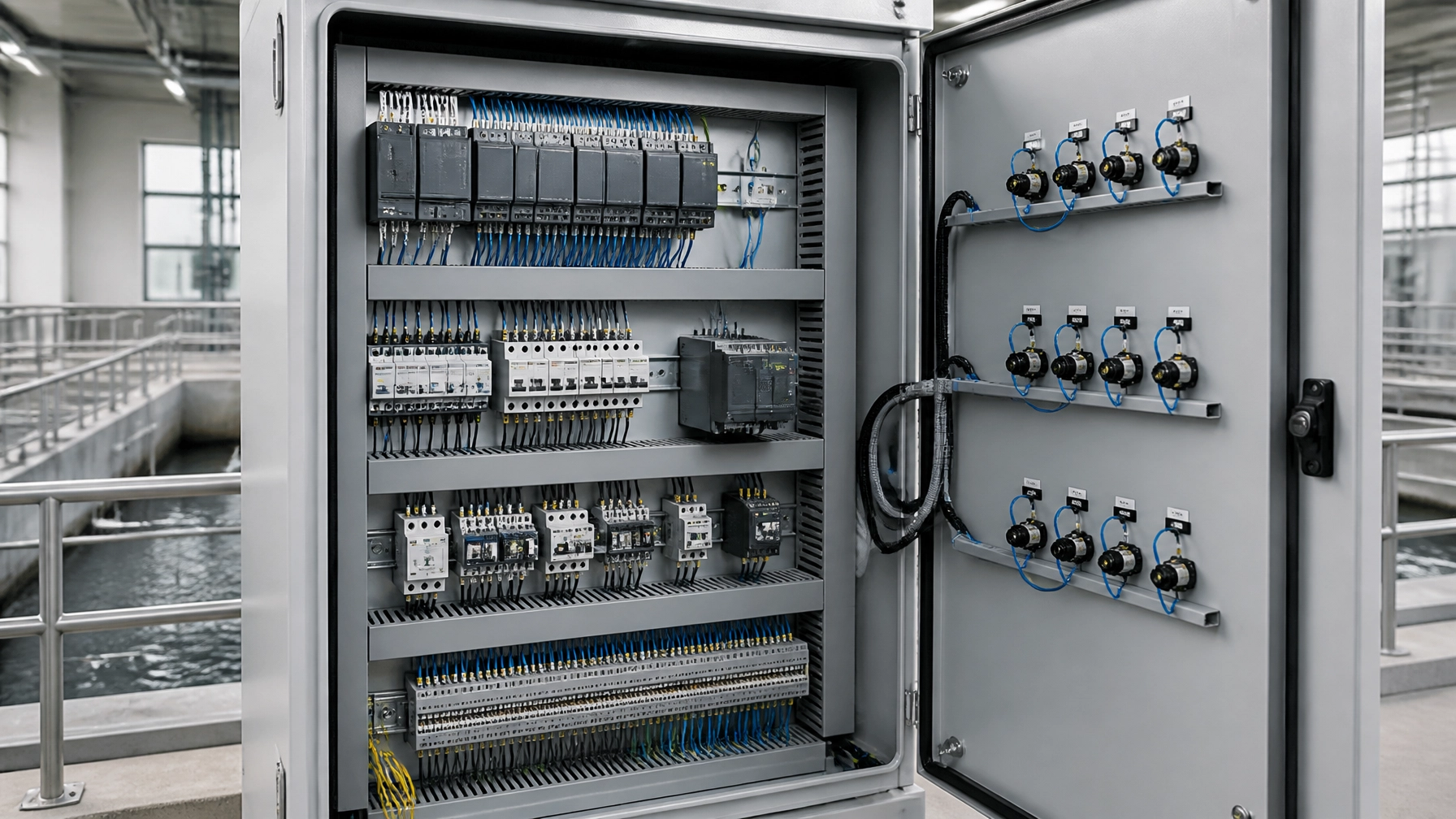
Whether your utility is standardizing newer PLC platforms, maintaining distributed remote I/O across pump stations, or integrating a mix of existing field devices, Ignition can sit on top of your current hardware and provide a unified modern interface without requiring a total “rip and replace” of your control infrastructure. That makes it a practical fit for municipal water and wastewater environments where reliability, phased upgrades, and long-term maintainability all matter.
The Fair Perspective: When Does Legacy Still Make Sense?
While we believe Ignition is the future for most utilities, there are times when sticking with a legacy system might be the pragmatic choice:
- Small, Static Systems: If you have a single, small plant with no plans to expand, no need for mobile access, and a staff that is deeply trained on your current platform, the cost of migration might not yet outweigh the benefits.
- Deep Vendor Locking: If your current facility is 100% standardized on a specific vendor’s full stack (from the cloud down to the I/O) and you have a high-value support contract that covers upgrades, the friction of switching might be high.
However, for any utility looking at a 5-to-10-year horizon, the “familiarity” of legacy systems is quickly becoming a liability as those systems become harder to secure and more expensive to maintain. In our experience, that’s increasingly how utilities in Pennsylvania are evaluating their options, and it aligns closely with what many operators in Maryland and New Jersey are weighing as they compare upgrade paths.
Why Partner with CCS for Your Migration?
Upgrading a SCADA system is about more than just software; it’s about the onsite services and expertise required to ensure a smooth transition without interrupting your critical operations.
Complete Control Solutions is a Credentialed Ignition Integrator. This means we have verified expertise in the platform, but more importantly, we understand the specific nuances of the water and wastewater industry. We don’t just “install software.” We analyze your specific needs, design your industrial control panels, and provide the ongoing system support you need to ensure your utility runs efficiently for years to come. Whether you’re planning a modernization project in the Harrisburg, Lebanon, and Lancaster corridor or supporting distributed utility assets elsewhere in the Mid-Atlantic, we help you build a practical path forward from start to finish.
Ready to see how Ignition can transform your utility? Contact us today to discuss your system and schedule a demo of what a modern, unlimited SCADA platform can do for you.