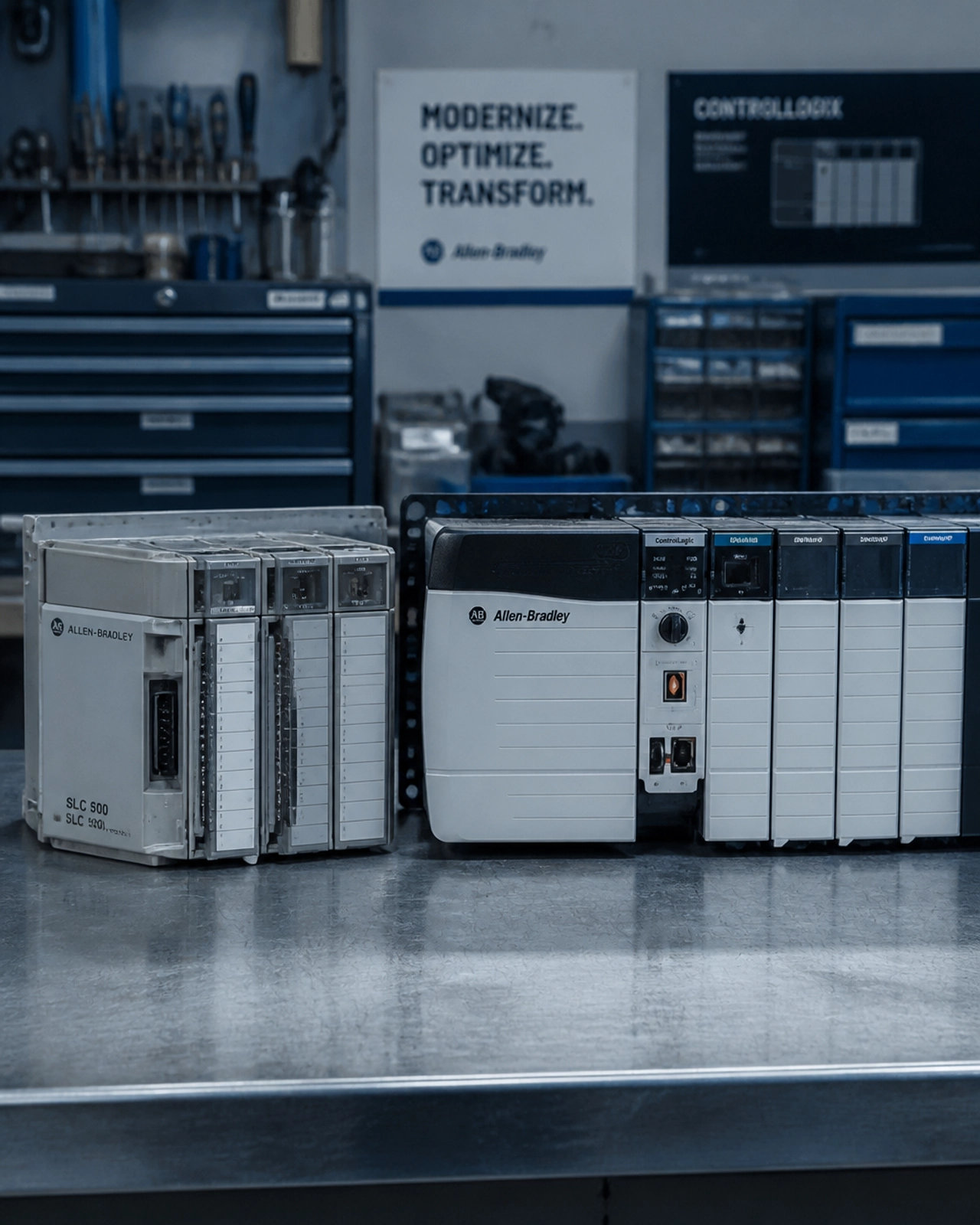
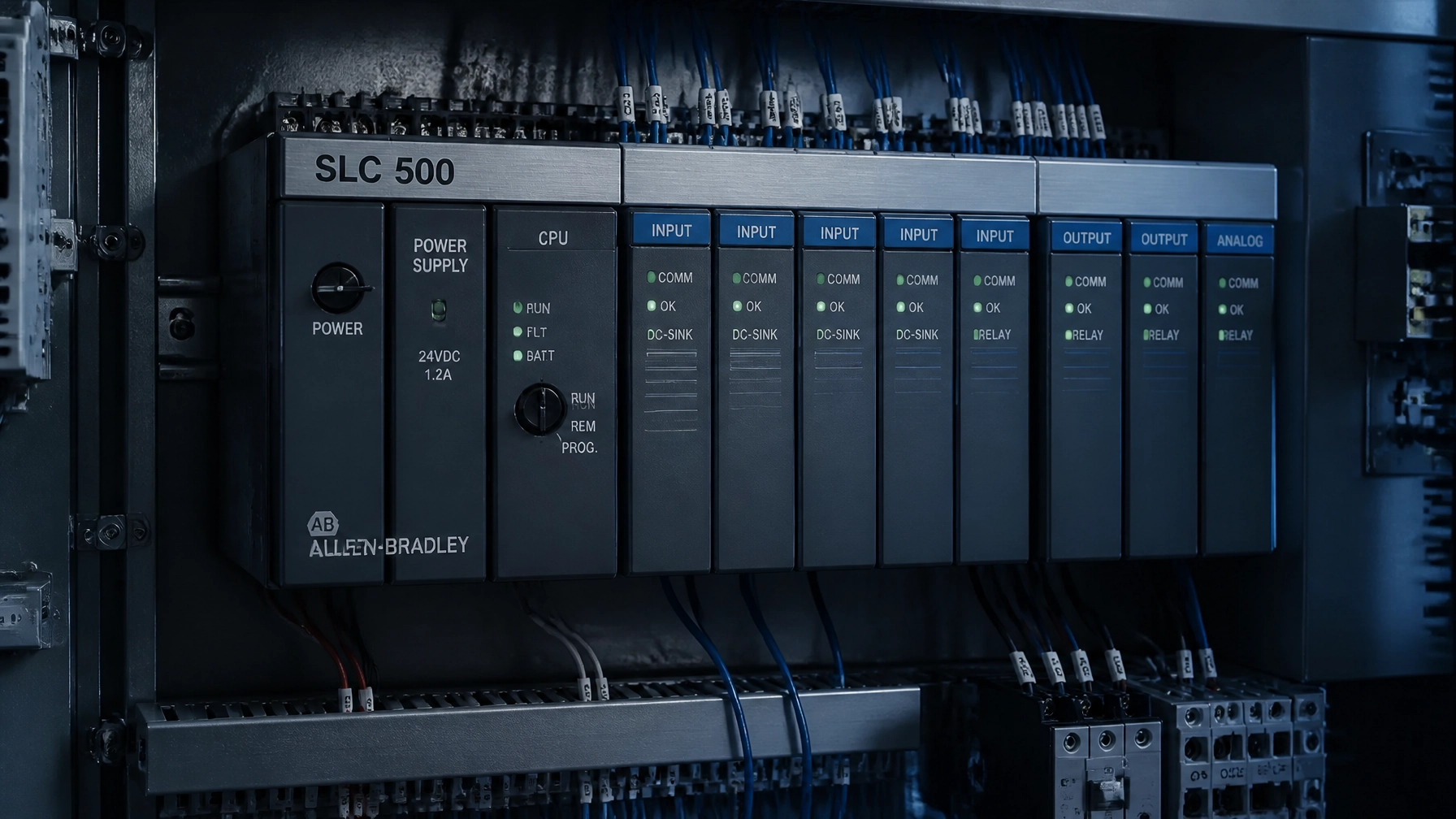
In many manufacturing facilities across the country, there is a silent veteran working tirelessly in the corner of a control cabinet. It might be an Allen-Bradley SLC 500 or a PLC-5: hardware that has reliably governed production lines for twenty, sometimes thirty years. To many plant managers, these systems are a testament to “if it ain’t broke, don’t fix it.”
However, in the world of modern industrial cybersecurity, these legacy systems are no longer just reliable workhorses; they have become a “goldmine” for potential attackers. At Complete Control Solutions (CCS), we have seen firsthand how the very longevity of these systems now creates a significant gap in a company’s defensive posture.
While these controllers were built to withstand the rigors of the factory floor, they were never designed to withstand the rigors of the modern internet-connected world. Understanding why these systems are vulnerable is the first step in securing your operations and ensuring your bottom line remains protected from unforeseen disruptions.
The Anatomy of a Legacy Vulnerability
The fundamental issue with legacy PLCs like the SLC 500 is that they are “insecure by design.” When these systems were engineered in the 1980s and 90s, the concept of a “cyber attack” on a factory floor was the stuff of science fiction. Industrial networks were physically isolated, and the primary goal was high-speed communication and rugged reliability.
1. Lack of Encryption and Authentication
Most legacy protocols, such as those used by the SLC 500 over DH-485 or early EtherNet/IP, transmit data in cleartext. This means that if an intruder gains access to your plant network, they can intercept setpoints, read ladder logic, and even capture passwords without any sophisticated decryption tools.
Furthermore, these systems rarely require any form of authentication. If a device on the network can “speak” the protocol, it can tell the PLC to stop, start, or change its logic. There is no digital “handshake” to verify that the person or machine sending the command is authorized to do so.
2. Remotely Exploitable Denial-of-Service (DoS)
Older hardware often contains specific, documented vulnerabilities that can be exploited with minimal effort. For example, a known vulnerability (CVE-2012-4690) affects the SLC 500 platform, where a remote attacker can send a specific message to modify status bits, forcing the controller into a fault state.
When this happens, the PLC ceases logic execution immediately. Recovery often requires a physical visit to the cabinet to toggle the mode selector: a simple enough task, unless your entire production line has just ground to a halt and you’re losing thousands of dollars every minute the machine is down.

The “Software Trap”: RSLogix 500 and Beyond
The risk isn’t limited to the hardware inside the cabinet. The engineering workstations used to maintain these systems are equally vulnerable. Legacy PLCs require legacy software: specifically RSLogix 5 and RSLogix 500.
Recent security advisories have highlighted critical Remote Code Execution (RCE) flaws in this software. Because these tools were developed before modern security standards, they often lack the ability to verify the authenticity of project files. An attacker could embed malicious scripts within a project file; the moment one of your engineers opens that file to troubleshoot a machine, the attacker gains access to the engineering workstation: and by extension, your entire control network.
The Business Reality: The Cost of Inaction
Why does this matter to your business? Many manufacturers view cybersecurity as an IT problem, but in the industrial world, it is a safety and production problem. A breach in your OT (Operational Technology) environment can lead to:
- Extended Downtime: Unlike an IT server that can be rebooted, a “bricked” PLC or a corrupted control program can take days or even weeks to restore, especially if parts are scarce.
- Safety Hazards: If an attacker modifies the logic governing a boiler, a high-speed robot, or a chemical mixing process, the results can be catastrophic for your personnel and your facility.
- Intellectual Property Theft: Your “secret sauce”: the precise timing, temperatures, and logic that give you a competitive edge: is stored in those PLCs. Unencrypted systems make it easy for competitors to exfiltrate your production data.
Building a Secure Foundation with Modernization
The reality is that you cannot “patch” your way out of the structural weaknesses of a PLC-5. While network segmentation and industrial firewalls are critical interim steps, the only long-term solution is a structured control system upgrade.
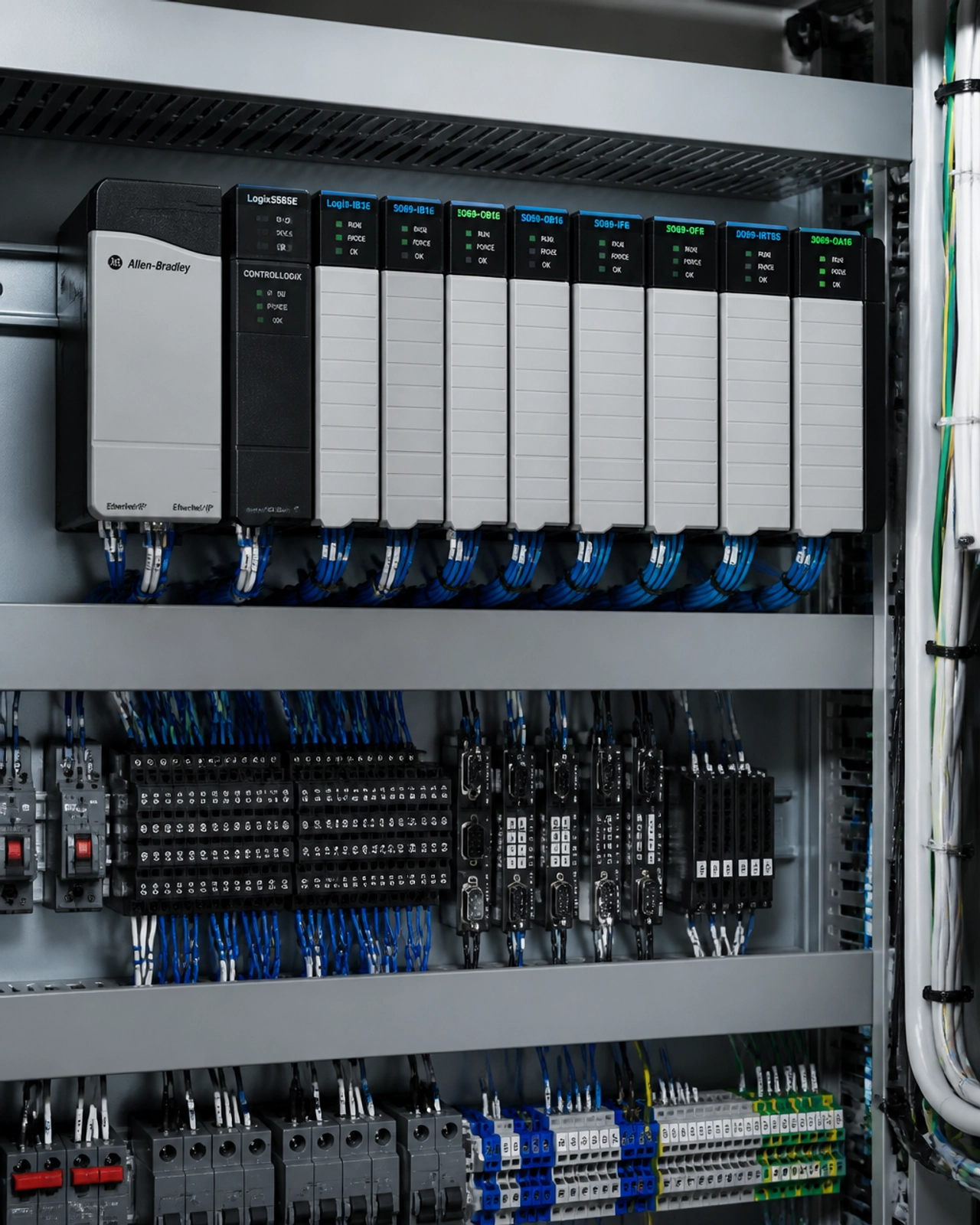
Modern controllers, such as the Rockwell Automation ControlLogix or CompactLogix platforms, are built with a security-first mindset. They offer features that were once unthinkable for an industrial controller:
- Secure Boot: Ensures that only genuine, un-tampered firmware can run on the hardware.
- Encrypted Communication: Utilizing protocols like CIP Security to ensure that data cannot be sniffed or altered in transit.
- Role-Based Access Control (RBAC): Requiring specific credentials for anyone attempting to modify the logic or change system parameters.
How CCS Partners with You
We understand that you cannot simply turn off your plant to replace every old PLC overnight. Our approach at Complete Control Solutions is built on providing a highly personalized, client-focused experience that balances your need for security with your need for continuous production.
We begin by analyzing your current environment to identify the highest-risk assets. Whether you have a single standalone machine or a complex, distributed control system, our engineers work to create a phased migration path from legacy hardware.
Our services cover every aspect of the project:
- Engineering: We rewrite and optimize your legacy logic for modern platforms, ensuring a “better-than-before” result.
- On-Site Services: Our team provides hands-on field support to ensure the on-site integration of new hardware is seamless and causes minimal disruption.
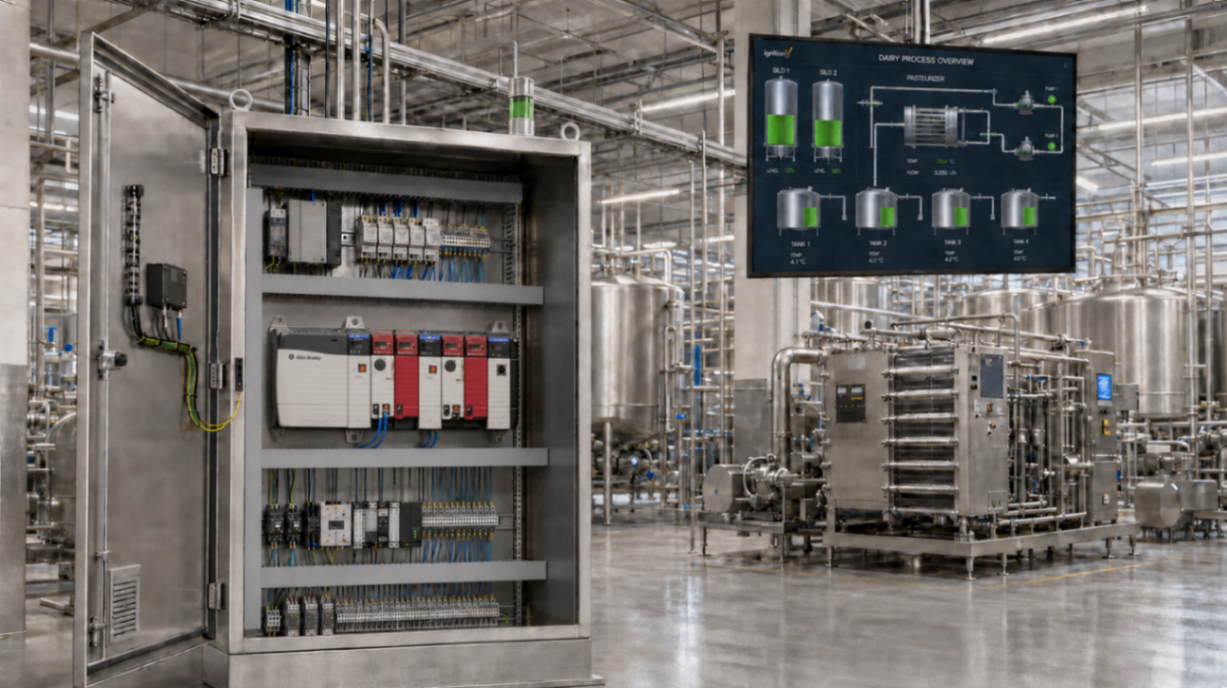
- Industrial Control Panels: We can design and fabricate custom industrial control panels that house your new, secure automation hardware in an organized, efficient manner.
Conclusion: Future-Proofing Your Production
Legacy PLCs are not just an operational risk due to parts scarcity; they are a gaping hole in your facility’s digital armor. In an era where manufacturing is increasingly targeted by ransomware and industrial espionage, leaving your production floor’s “brains” unprotected is no longer a viable strategy.
By modernizing your control systems, you aren’t just buying new hardware: you are investing in the long-term reliability, safety, and security of your entire operation. At Complete Control Solutions, we are dedicated to helping you navigate this transition from start to finish. We combine the robust resources of a large integrator with the open, fluent communication of a trusted partner to ensure your facility is ready for the future.
Ready to secure your plant floor? Contact our engineering team today to begin your modernization journey.