For many manufacturers, an aging PLC system can continue operating for years after it has become difficult to support. That apparent reliability can make modernization seem optional. However, obsolete parts, unsupported software, recurring failures, cybersecurity gaps, and limited diagnostics can expose your operation to increasing production risk.
So, when is a ControlLogix upgrade worth the investment?
The answer depends on your equipment lifecycle, production requirements, supportability, and future plans. At Complete Control Solutions (CCS), we analyze these factors together to help manufacturers determine whether a phased migration, targeted retrofit, or full control system modernization is the right path.
Comparing Legacy PLC Systems With ControlLogix
Legacy PLC vs. ControlLogix at a Glance
| Decision factor | Typical legacy PLC system | ControlLogix system |
|---|---|---|
| Hardware availability | Aging or discontinued components | Currently supported hardware |
| Communications | Older or limited network protocols | EtherNet/IP and modern network integration |
| Diagnostics | Limited fault and device visibility | Detailed controller, module and device diagnostics |
| Expansion | Memory, I/O and communication constraints | Modular architecture designed for expansion |
| Maintenance | Older software and specialized knowledge | Current engineering tools and broader support |
| Upgrade impact | Increasing failure and downtime risk | Requires planned migration and commissioning |
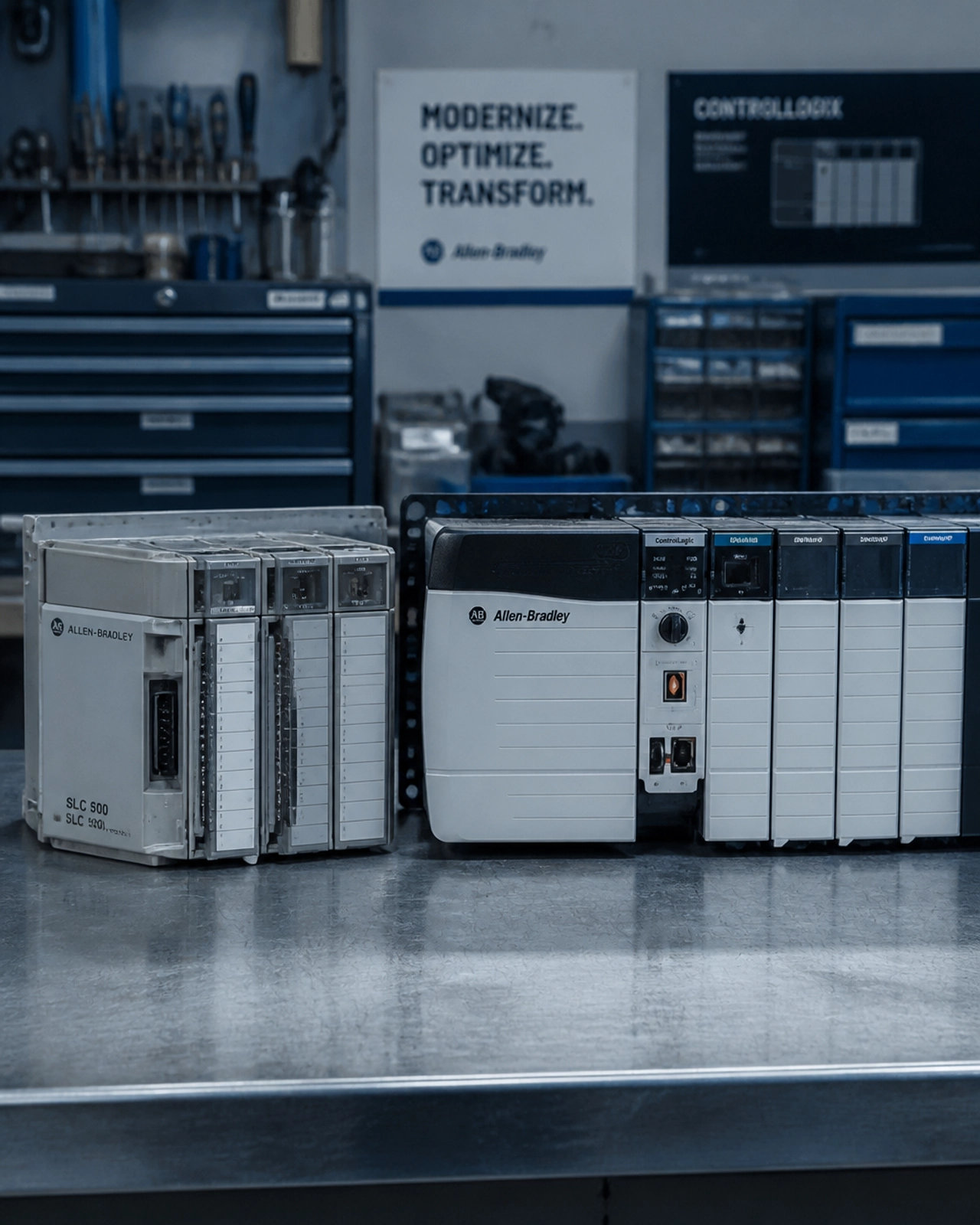
Legacy PLCs, including older PLC-5, SLC 500, and early-generation control platforms were designed for a different manufacturing environment. They often rely on aging communication networks, limited memory, discontinued programming software, and hardware that is no longer readily available.
These systems may still control a process effectively, but they can create serious limitations:
- Replacement processors and I/O modules may be difficult to source.
- Programming software may no longer be fully supported.
- Troubleshooting may require specialized knowledge.
- Diagnostics may be limited to basic fault codes and status indicators.
- Connecting the system to modern HMIs, historians, or plant networks may require additional gateways.
- Expansion can become expensive or impractical.
- Cybersecurity protections may not match current operational requirements.
A modern ControlLogix architecture provides a more scalable foundation for control, visualization, communications, and future expansion. Depending on the application, it can support faster processing, greater memory capacity, Ethernet-based communications, improved diagnostics, and integration with modern HMI and SCADA platforms.
However, modernization is not automatically justified simply because a newer platform exists. The strongest business case appears when the legacy system begins to limit reliability, safety, efficiency, or the ability to meet future production goals.
1. Obsolete Parts Are Increasing Downtime Risk
One of the clearest signs that an upgrade deserves consideration is the declining availability of replacement hardware.
When a legacy processor or I/O module fails, your team may have to search for refurbished equipment, compare uncertain sources, or wait for a part with limited availability. The cost of the component is only one concern. The greater impact may come from an extended production interruption while the replacement is located, tested, and installed.
Rockwell Automation provides formal migration guidance for both PLC-5 and SLC 500 platforms, reflecting the lifecycle risks associated with maintaining legacy Allen-Bradley controls. The appropriate Logix replacement—ControlLogix or CompactLogix—depends on the application’s size, performance, redundancy, safety, I/O, and integration requirements.
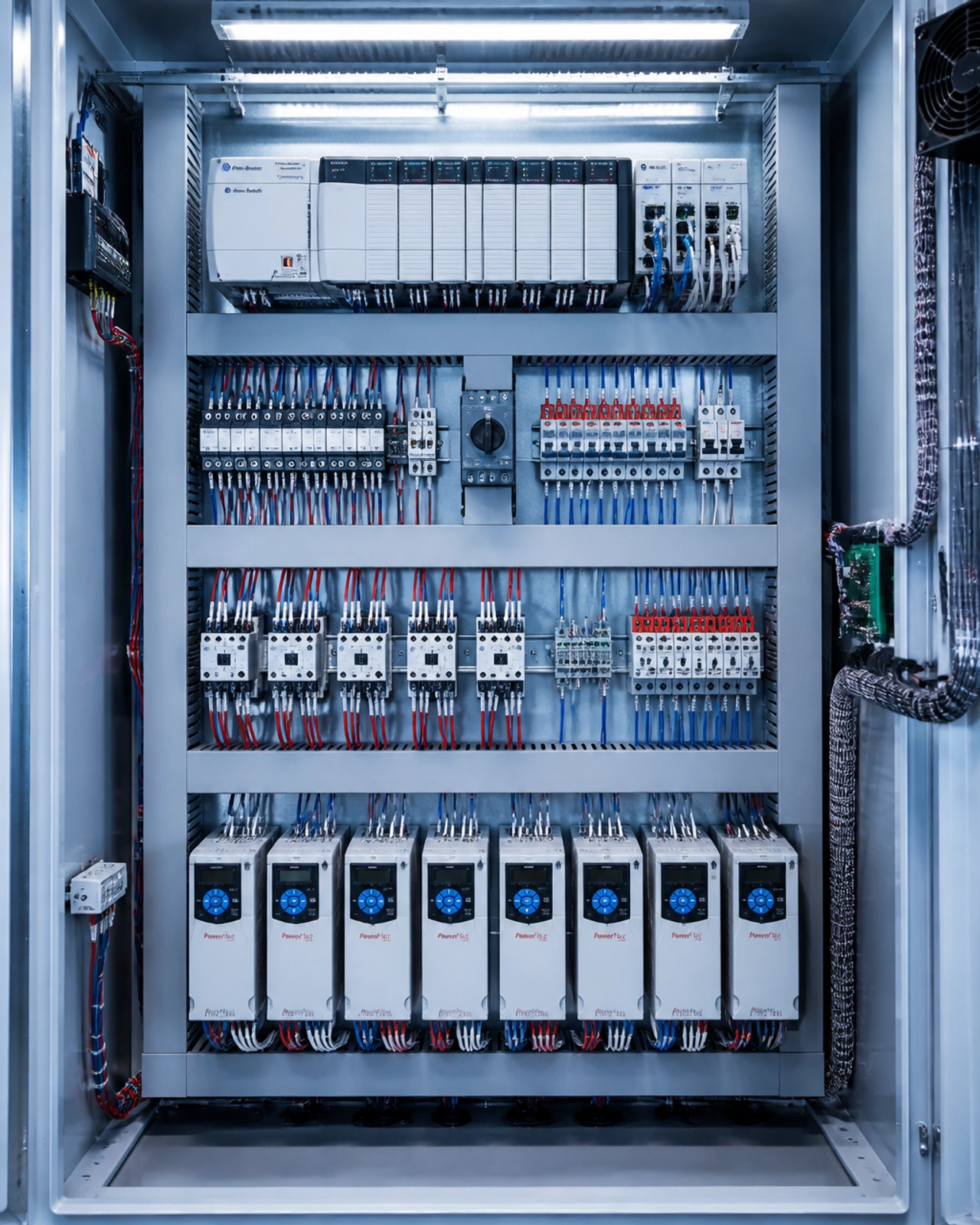
A ControlLogix system upgrade can reduce dependence on obsolete components and establish a more supportable hardware standard. We can also evaluate whether existing field wiring, I/O racks, or panel components can be reused temporarily as part of a phased approach.
2. Unsupported Software Makes Maintenance More Difficult
Legacy software can be just as significant a risk as aging hardware.
Older programming environments may not run easily on current computers or operating systems. Backup files may be incomplete, undocumented, or accessible only through a single workstation. If the engineer or technician familiar with the system is no longer available, even a small logic change can become a time-consuming investigation.
A migration to the Logix platform typically involves moving toward Studio 5000 Logix Designer and a more structured programming environment. The process should involve more than simply converting code and downloading it to a new controller.
Our engineers review the converted logic to:
- Confirm sequences and interlocks.
- Verify analog scaling and timing.
- Remove obsolete or unused logic.
- Improve tag names and program organization.
- Document communication interfaces.
- Align HMI functions with the updated control strategy.
- Corroborate the new program against the existing process and operator expectations.
The result should be a maintainable control system, not merely a newer processor running old, difficult-to-understand code.
3. Recurring Failures Can Justify the Investment
An individual failure does not always mean the entire PLC system should be replaced. However, repeated failures often indicate that repair costs and production risk are beginning to outweigh the cost of planned modernization.
Consider the broader pattern:
- How often are PLC, power supply, communication, or I/O components failing?
- How long does it take to diagnose each event?
- Are replacement parts kept in inventory?
- Have emergency repairs affected production commitments?
- Are temporary fixes becoming permanent?
- Does your team have reliable backups and current documentation?
If the answer to several of these questions is concerning, a control system assessment can clarify the next step. A targeted upgrade may replace the highest-risk components first, while a broader migration can be scheduled around planned outages.
This approach helps you move from reactive repairs to a controlled modernization plan focused on reliability and long-term value.
4. Cybersecurity Should Be Part of the Upgrade Decision
Legacy PLCs were often installed before industrial networks were connected to enterprise systems, remote access tools, and cloud-based applications. As connectivity increases, older controllers and network architectures may create vulnerabilities that are difficult to address with software alone.
Modernization provides an opportunity to establish stronger foundational controls, including:
- Segmentation between business and control networks.
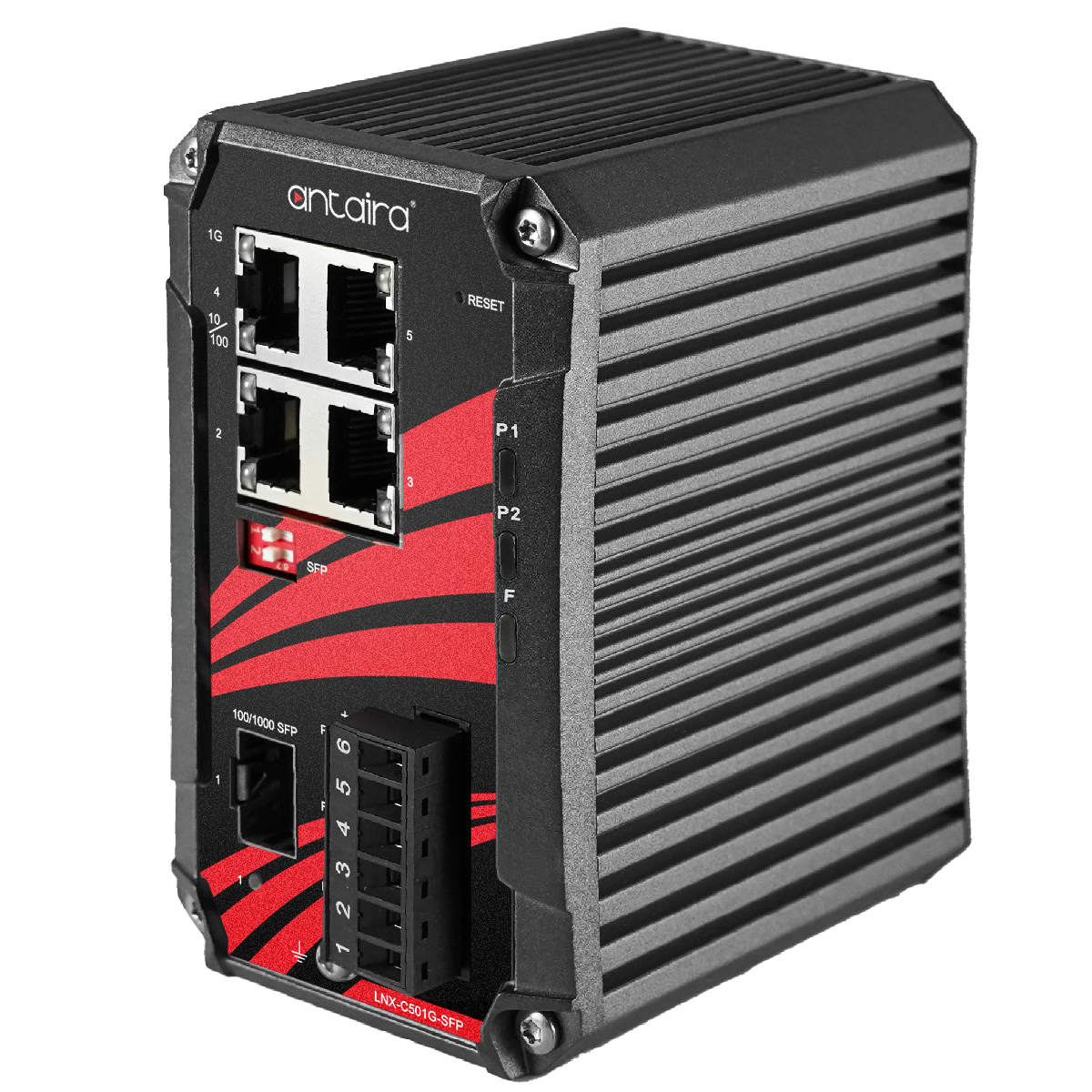
- Managed Ethernet infrastructure.
- Controlled remote access.
- User accounts and role-based permissions where supported.
- Firmware and software lifecycle management.
- Configuration backups and change control.
- Improved event logging and communication monitoring.
These measures support a defense-in-depth approach consistent with the ISA/IEC 62443 series of industrial automation and control system cybersecurity standards.
A new controller does not make a plant secure by itself. Cybersecurity depends on the complete architecture, including networks, HMIs, remote connections, engineering workstations, and operating procedures. Still, replacing obsolete equipment can make it more practical to implement current security practices.
Our control system upgrade services consider both the technical condition of your equipment and the operational requirements of your facility.
5. Limited Diagnostics Increase Troubleshooting Time
When a legacy system stops a line, your team may have limited information about what happened. A fault indicator can identify that an issue exists, but not always which device, sequence, or communication path caused it.
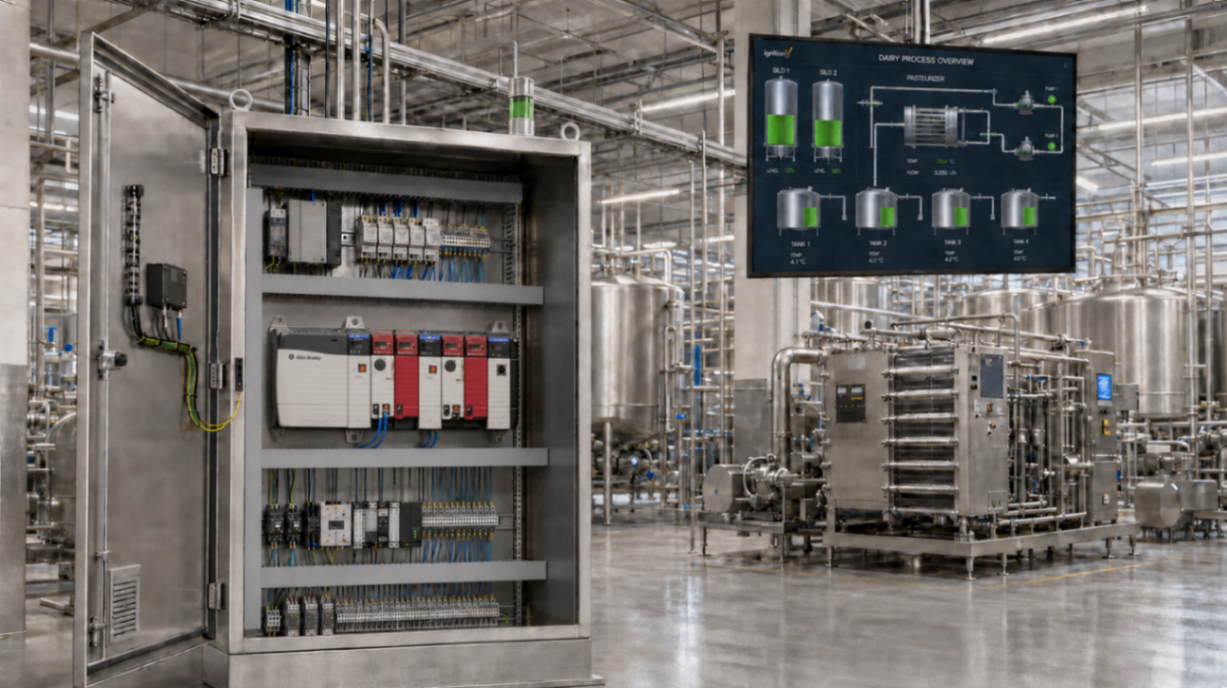
Modern ControlLogix architectures can provide more detailed controller, I/O, network, and device-level information. When paired with a properly designed HMI or SCADA system, this information can help operators and maintenance personnel identify abnormal conditions more quickly.
Better diagnostics can support:
- Faster root-cause analysis.
- More informed maintenance decisions.
- Improved alarm management.
- Reduced mean time to repair.
- Better visibility into communication failures.
- More consistent troubleshooting across shifts.
For facilities that depend on precise production timing or continuous operation, improved diagnostics can provide measurable value even when the legacy PLC still appears functional.
6. Expansion Plans May Make Modernization Necessary
A legacy PLC may be adequate for the equipment it currently controls but unsuitable for your next production phase.
Expansion can expose limitations in:
- Available memory.
- Processor capacity.
- I/O points.
- Network architecture.
- Motion or drive integration.
- HMI and reporting capabilities.
- Panel space and power distribution.
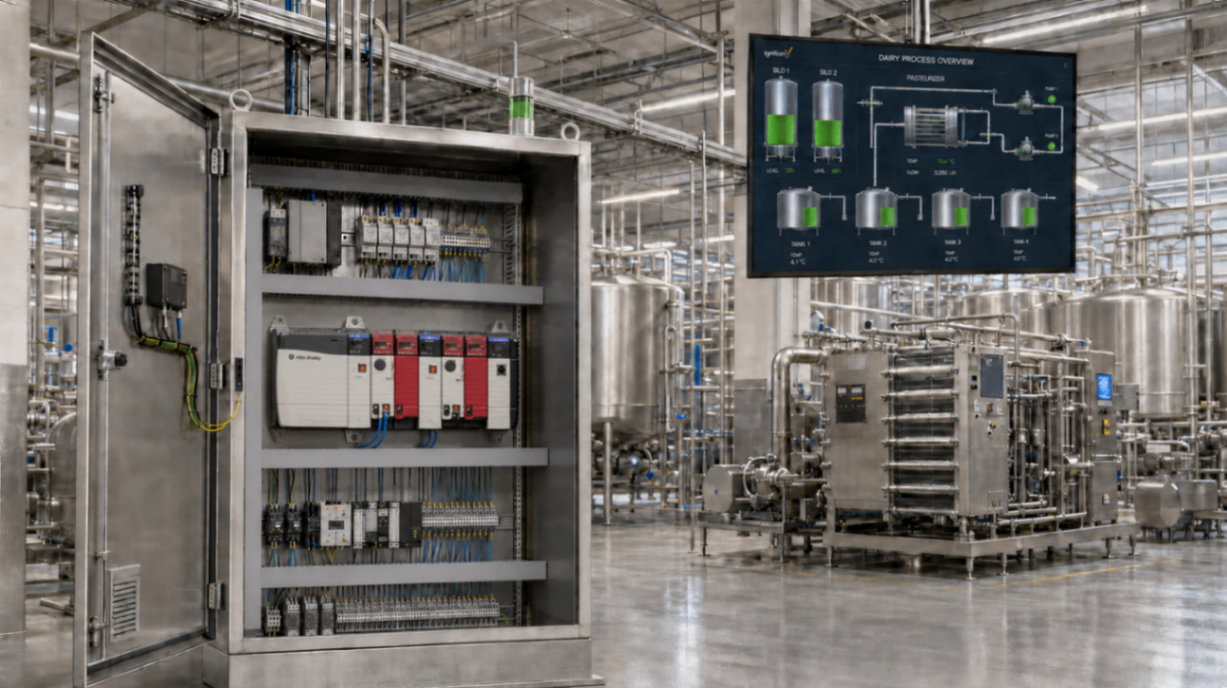
If you are adding a process area, increasing line speed, installing robotics, or connecting production data to business systems, it may be more cost-effective to modernize the control architecture before the expansion begins.
Our engineering team can evaluate the existing system, define the required architecture, and equip your facility for current and future needs. This can prevent a new machine or process from being built around an outdated control foundation.
Phased Modernization Can Reduce Downtime
A common concern is that a PLC migration will require an unacceptable production outage. In practice, careful planning can reduce the length and risk of the final cutover.
A phased modernization may include:
Assessment and documentation
We begin by inventorying controllers, I/O, networks, HMIs, drives, safety systems, field devices, and third-party interfaces. We also review the existing program, electrical drawings, alarms, sequences, and known failure points.
Target architecture and migration strategy
Next, we determine whether the best approach is to:
- Replace only the controller.
- Reuse selected legacy I/O temporarily.
- Use conversion equipment to retain existing field wiring.
- Migrate one process area at a time.
- Replace the complete control architecture.
The appropriate solution depends on your budget, outage window, production schedule, and future objectives.
Offline programming and testing
The new program and HMI screens should be developed and tested before the outage. Factory acceptance testing, simulated I/O, communication checks, and documented review procedures can identify problems before they reach the production floor.

Planned cutover and commissioning
A detailed cutover plan should define responsibilities, safety procedures, test steps, go/no-go decisions, and rollback options. Our engineers maintain open, fluent communication with your team throughout this process so that the work remains aligned with your specific needs and expectations.
After startup, we support stabilization, operator feedback, alarm refinement, documentation updates, and system support.
Is a ControlLogix Upgrade Worth It for Your Facility?
A ControlLogix system upgrade is often worth considering when your legacy PLC system:
- Uses discontinued or difficult-to-source parts.
- Depends on unsupported software or undocumented programs.
- Experiences recurring failures.
- Creates cybersecurity or network integration concerns.
- Provides limited diagnostics.
- Cannot support planned expansion.
- Places critical production at risk.
The right decision is not always a full replacement. A professional assessment may identify a phased migration or targeted retrofit that addresses your most critical risks first.
Frequently Asked Questions About Legacy PLC Upgrades
How do I know when a legacy PLC should be upgraded?
A legacy PLC should be evaluated when replacement parts become difficult to obtain, programming software is no longer supported, failures recur, diagnostics limit troubleshooting, or the platform cannot support planned expansion. Age alone does not justify replacement; the decision should consider downtime risk, maintainability, safety and lifecycle cost.
Is ControlLogix always the best replacement for a legacy PLC?
No. ControlLogix is often appropriate for larger, distributed or complex control systems, while CompactLogix may be better suited to smaller and midsize applications. The correct platform depends on I/O requirements, processing demands, motion and safety functions, redundancy, network architecture and future expansion plans.
Can a legacy PLC upgrade be completed without a long production shutdown?
Many upgrades can be completed during a planned outage by documenting the existing system, developing and testing the new program offline, fabricating hardware in advance and using a carefully sequenced cutover plan. The required downtime depends on the system’s size, condition and migration scope.
Complete Control Solutions provides legacy system upgrades, PLC programming, control engineering, panel integration, commissioning, and on-site support throughout Central Pennsylvania and the Mid-Atlantic region. As a Rockwell Automation Bronze Level System Integrator, we help manufacturers modernize aging systems while maintaining focus on safety, uptime, maintainability, and future needs.
Whether you need to initiate a complete ControlLogix migration or simply want to understand your options, contact CCS to schedule a consultation. We can analyze your current system, identify the most critical risks, and develop a robust modernization plan from start to finish.