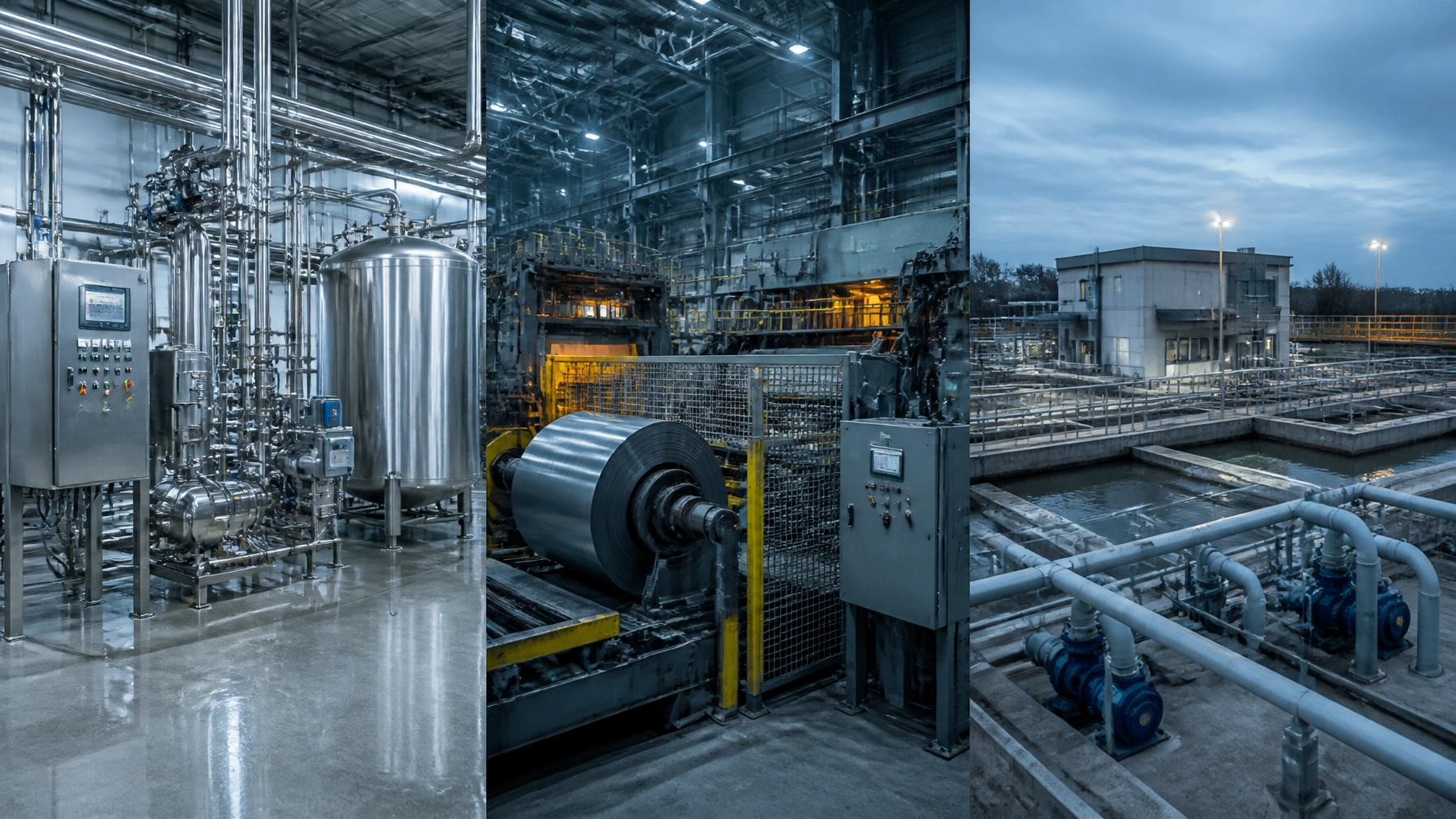
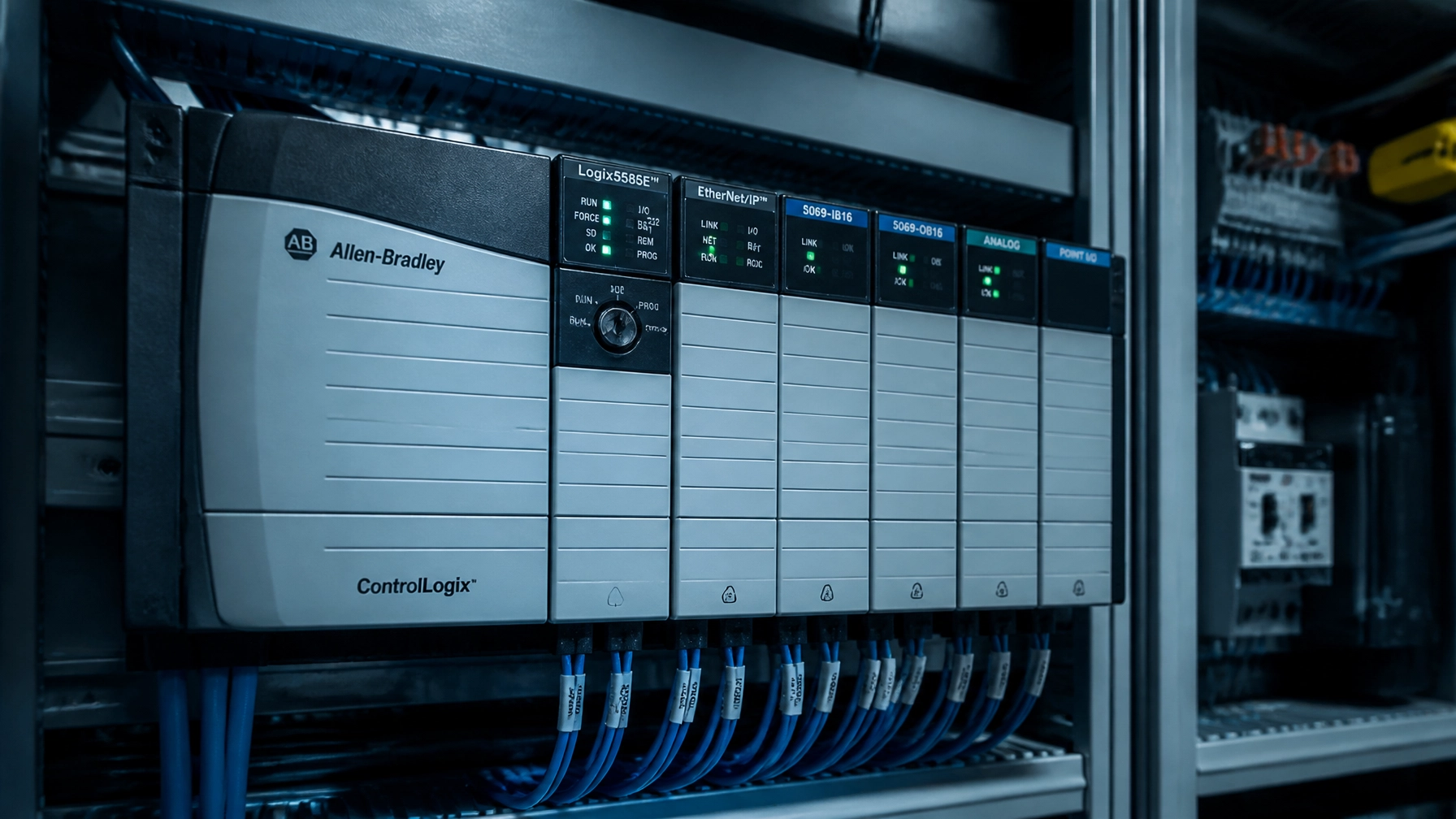
In the world of industrial manufacturing, reliability is the bedrock of production. For decades, the Allen-Bradley SLC 500 series has served as the silent workhorse for countless facilities, powering everything from simple conveyor lines to complex chemical processing units. However, as the industry moves toward a more data-driven, interconnected future, these aging systems are reaching a critical turning point. For a broader evaluation of modernization costs, operational risks, and timing, read ControlLogix vs. Legacy PLC Systems: When Is an Upgrade Worth It?
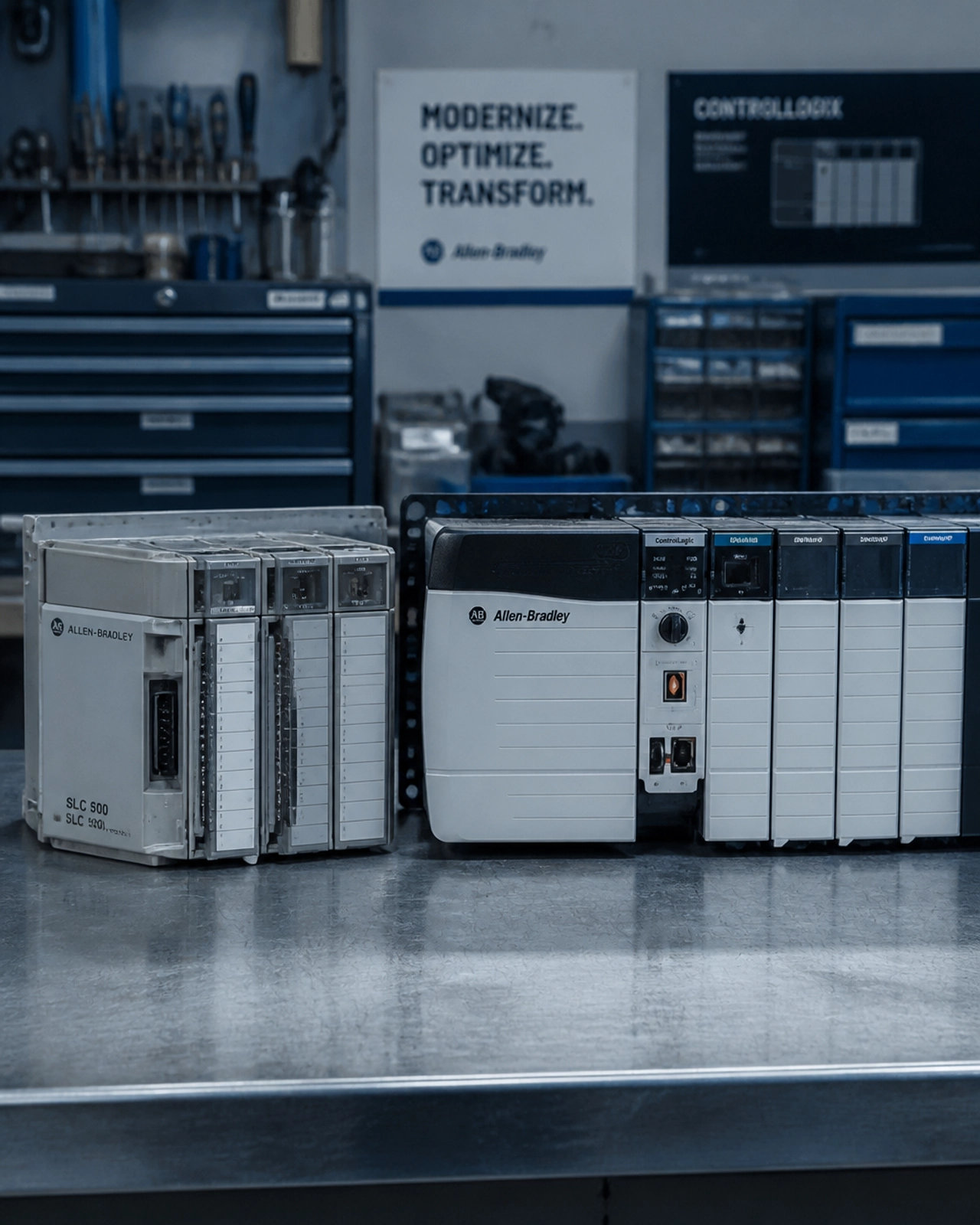
Rockwell Automation has officially placed the SLC 500 family into legacy status. This shift means that while your current hardware may still be running, the ecosystem supporting it: spare parts, technical support, and hardware availability: is rapidly shrinking. At Complete Control Solutions (CCS), we specialize in guiding manufacturers through the complexities of legacy system upgrades, ensuring that your transition from SLC 500 to the ControlLogix platform is not just a replacement, but a strategic leap forward in efficiency.
The True Cost of Maintaining Legacy Systems
It is tempting to adopt a “if it isn’t broken, don’t fix it” mentality. However, the risks associated with maintaining an obsolete SLC 500 system often outweigh the perceived savings of delaying an upgrade.
1. The Spare Parts Crisis
As SLC 500 components become increasingly scarce, the secondary market has seen prices skyrocket. Depending on used or refurbished parts from unverified sources introduces a level of uncertainty that most production managers cannot afford. A single failed I/O module could result in days or weeks of unplanned downtime while you wait for a viable replacement to arrive.
2. Cybersecurity Vulnerabilities
Older hardware was designed in an era before the proliferation of industrial cyber threats. Modern Rockwell Automation platforms, such as ControlLogix, are built with contemporary security protocols, including controller-based change detection and encrypted firmware, providing a level of protection that legacy SLC units simply cannot match.
3. Data Silos and Connectivity
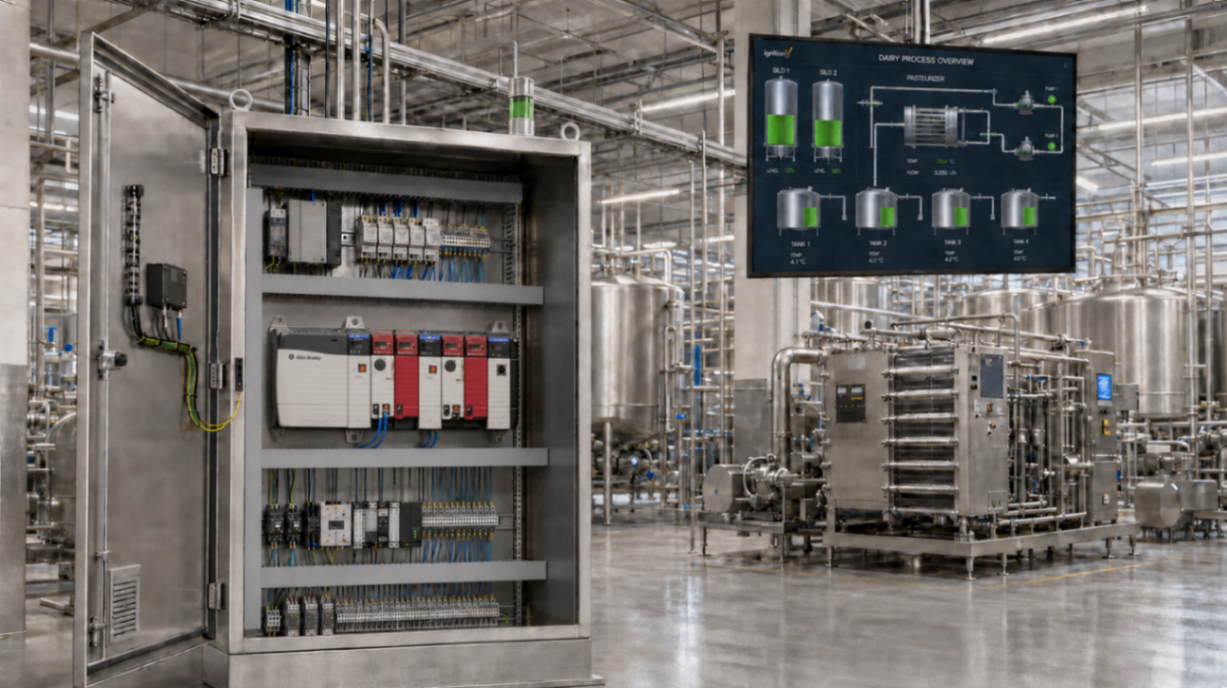
Modern manufacturing relies on real-time data visibility. The SLC 500’s reliance on legacy networks like DH-485 or DH+ makes it difficult to integrate with modern HMIs, historians, and enterprise-level ERP systems. By migrating to a platform with native EtherNet/IP support, we help you break down these data silos and gain a clearer picture of your operational health.
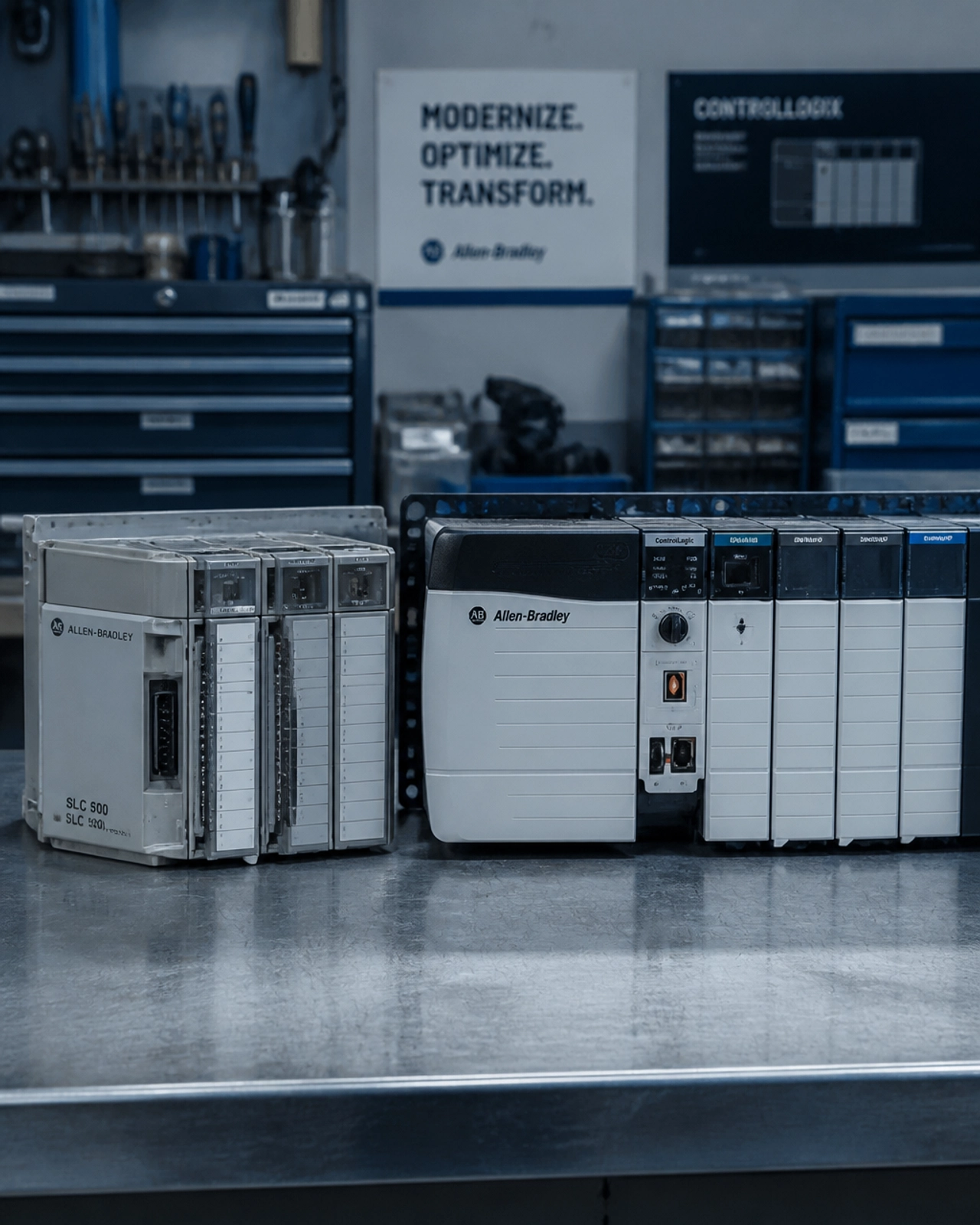
Why Migrate to ControlLogix?
When we analyze a client’s facility for an upgrade, we look beyond simple hardware compatibility. We focus on how the ControlLogix platform can serve as the foundation for future growth.
- Superior Performance: ControlLogix processors offer significantly faster scan times and larger memory capacities, allowing for more complex control strategies and higher precision in your manufacturing processes.
- Scalability: The modular nature of ControlLogix means your system can grow as your facility scales. Whether you need to add integrated motion control or consolidate multiple smaller systems into one, the Logix platform provides the flexibility to do so.
- Unified Engineering Environment: By moving to Studio 5000 Logix Designer, your engineering team can utilize a single, modern environment for programming, configuration, and diagnostics. This standardization reduces the learning curve and simplifies long-term maintenance.
Choosing Your Migration Strategy: The CCS Approach
At CCS, we understand that every manufacturing environment has unique constraints, especially when it comes to downtime. We don’t believe in a one-size-fits-all “rip and replace” approach. Instead, we work with you to determine the most effective path forward based on your budget and production schedule.
Strategy A: The Phased Migration (I/O Reuse)
If your budget is tight or your downtime windows are short, we can initiate a phased migration. By replacing the SLC 500 CPU with a 1747-AENTR EtherNet/IP adapter, we can move the control logic to a new ControlLogix controller while continuing to use your existing 1746 I/O modules. This allows you to modernize the “brain” of your system immediately while deferring the cost of I/O replacement to a later date.
Strategy B: Conversion and Wiring Kits
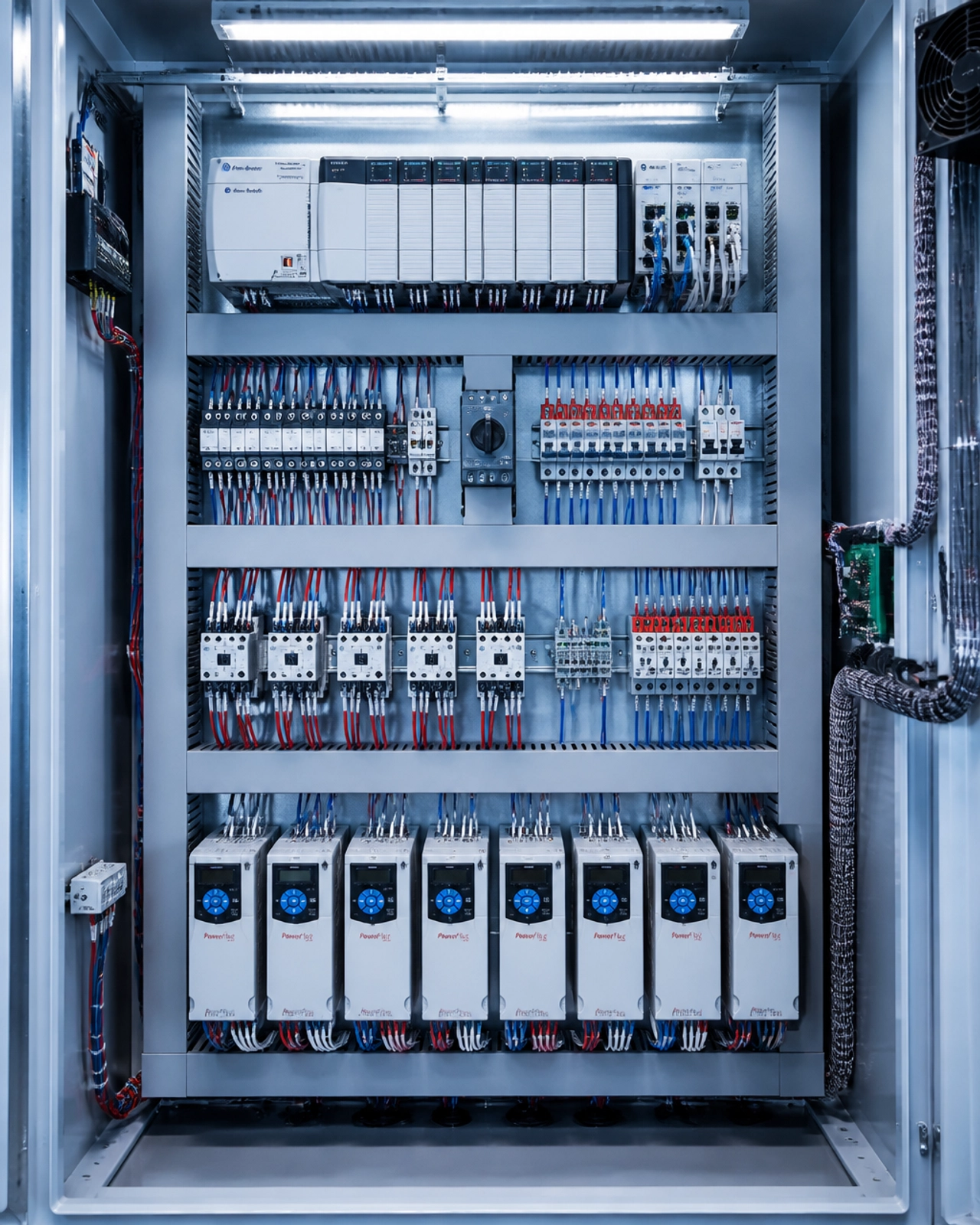
To minimize the risk of wiring errors and significantly reduce installation time, we often utilize Rockwell’s 1492 I/O wiring conversion systems. These pre-engineered kits allow our team to replace your SLC chassis and modules with modern Logix I/O while reusing your existing field wiring. This “swing-arm” approach ensures a clean, professional finish in your industrial control panels with minimal disruption.
Strategy C: Full System Modernization
For facilities looking to maximize their return on investment, a full hardware refresh is often the best choice. This involves a complete redesign of the control architecture, replacing all legacy components with state-of-the-art ControlLogix hardware. This approach provides the cleanest long-term solution, eliminating all legacy risks and providing a blank slate for advanced automation features.
Software Modernization: Beyond Code Conversion
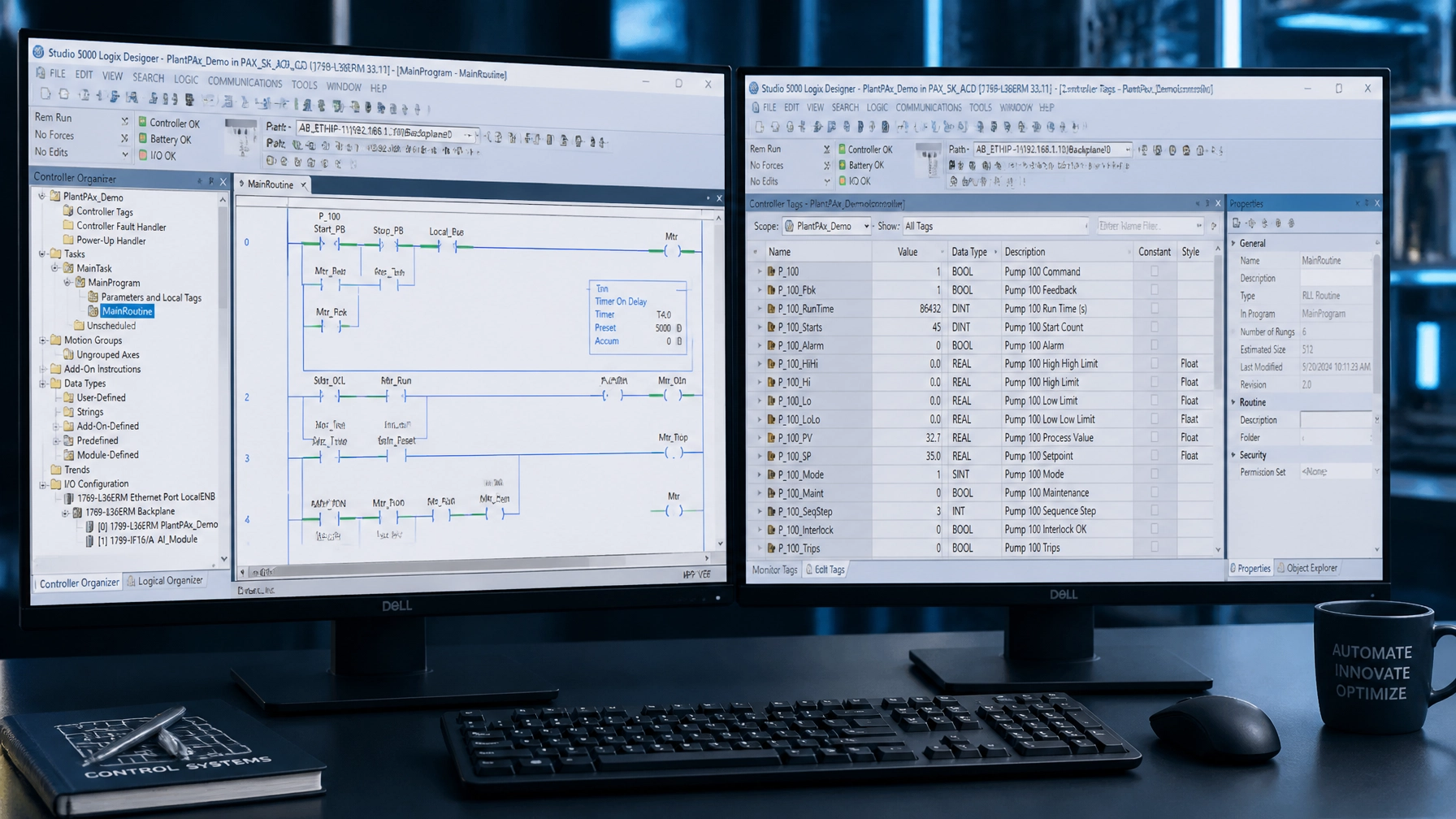
Migrating your code from RSLogix 500 to Studio 5000 is about more than just moving logic from one software to another. While Rockwell provides automated conversion tools, the result is often a program that “runs” but doesn’t take advantage of modern capabilities.
Our engineers employ a hybrid migration strategy. We use the conversion tools to establish the foundation, then we refactor and modernize the code. This includes:
- Tag-Based Addressing: Moving away from cryptic data table addresses (like B3:0/1) to descriptive, human-readable tags.
- User-Defined Data Types (UDTs): Creating custom data structures that reflect your actual equipment, making the code easier to navigate.
- Add-On Instructions (AOIs): Encapsulating frequently used logic into modular, reusable blocks to ensure consistency across your facility.
Partnering with a Verified Expert
Choosing the right partner for your migration is just as important as choosing the right hardware. As a Rockwell Automation Bronze System Integrator, Complete Control Solutions has the verified expertise and direct access to Rockwell resources necessary to ensure your project’s success. We support manufacturers throughout Central Pennsylvania and the surrounding Mid-Atlantic region with control system upgrades, migrations, and automation modernization projects.
We pride ourselves on being a collaborative partner. From the initial site assessment where we analyze your existing SLC 500 footprint, to the final commissioning and on-site support, our engineers are with you every step of the way. We maintain open, fluent communication to ensure that the final system not only meets but exceeds your operational expectations.
Future-Proof Your Facility Today
The transition from SLC 500 to ControlLogix is an investment in the longevity and profitability of your manufacturing operation. By eliminating the risks of obsolescence and equipping your team with modern, high-performance tools, you are positioning your business to thrive in a competitive landscape.
Whether you are ready to initiate a full-scale upgrade or simply want to explore your options, our team is ready to help. We invite you to contact us today to schedule a consultation and begin the journey toward a more efficient, reliable future.