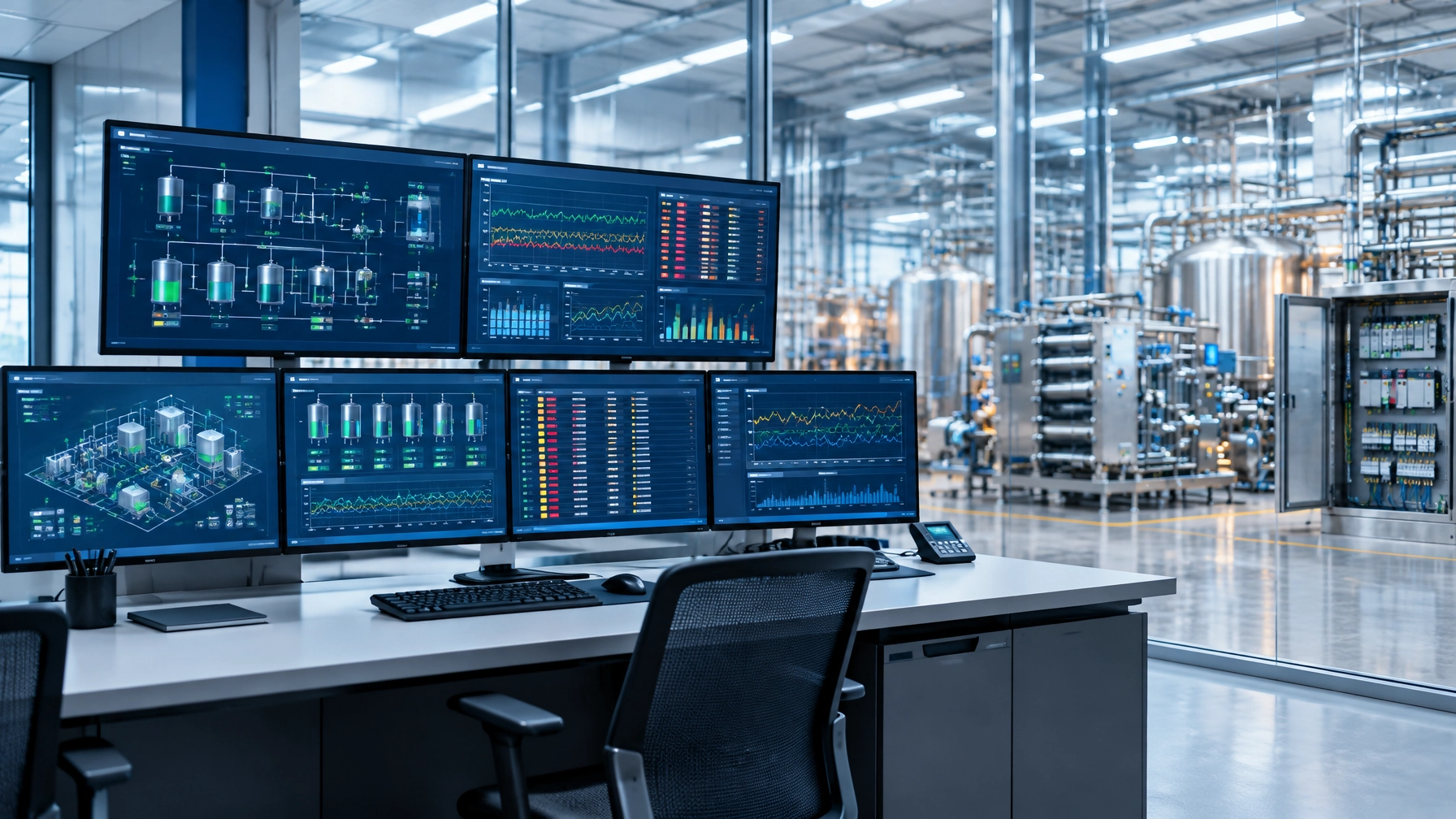
Legacy PLC systems can remain operational for years, but that does not mean they remain reliable, secure, or cost-effective. Aging controllers, obsolete programming software, limited spare parts, and disconnected data can gradually increase the risk of unplanned downtime and make future improvements more difficult.
For manufacturers, the challenge is balancing modernization with production continuity. A full control system replacement may offer long-term benefits, but an unplanned or poorly coordinated migration can interrupt schedules, create commissioning issues, and place unnecessary pressure on operations teams.
The right approach is structured, phased, and aligned with your specific needs and expectations. By documenting the existing system, prioritizing risk, testing new PLC programming before deployment, and planning cutovers around production requirements, you can modernize a legacy PLC control system while minimizing disruption.
At Complete Control Solutions (CCS), we support manufacturers throughout Central Pennsylvania and the broader Mid-Atlantic region with control system upgrades, PLC programming services, engineering, integration, and on-site commissioning. Here are five practical steps we recommend. This article provides a high-level modernization framework for plant managers and operations leaders. For a detailed engineering checklist covering documentation, architecture, testing, cutover, rollback, and post-startup support, see our guide to planning a legacy PLC migration without disrupting production.
Legacy PLC Modernization at a Glance
| Modernization step | Primary outcome | Production-risk control |
|---|---|---|
| Assess the existing system | Identify lifecycle and operating risks | Document dependencies before making changes |
| Define scope and priorities | Focus investment on critical equipment | Divide modernization into manageable phases |
| Design and test the architecture | Validate hardware, software and communications | Complete offline testing before installation |
| Plan the phased cutover | Control the production interruption | Establish cutover and rollback procedures |
| Commission and support | Stabilize the upgraded system | Provide training and post-startup assistance |
1. Assess and Document the Existing Control System
Before replacing hardware or rewriting PLC logic, begin with a complete assessment of the current system. A legacy control system often contains years of operational knowledge embedded in ladder logic, operator procedures, alarm settings, undocumented workarounds, and field wiring.
A thorough assessment should include:
- PLC models, processors, firmware, and communication modules
- Existing I/O points and field device connections
- HMI, SCADA, historian, and network architecture
- Drives, motors, instruments, safety devices, and interlocks
- Control panel condition, available space, and power requirements
- PLC programs, backups, drawings, schematics, and tag databases
- Recurring faults, maintenance concerns, and obsolete components
- Production schedules and acceptable maintenance windows
It is also important to interview operators, maintenance personnel, and process owners. Their experience can reveal timing requirements, startup and shutdown sequences, alarm priorities, and process conditions that may not be clear from the existing documentation.
The result should be a current-state assessment that identifies what must be preserved, what should be improved, and what presents the greatest operational risk. We can help evaluate your PLC or HMI system and develop an upgrade strategy based on your production goals through our control system upgrade services.
2. Define the Modernization Scope and Priorities
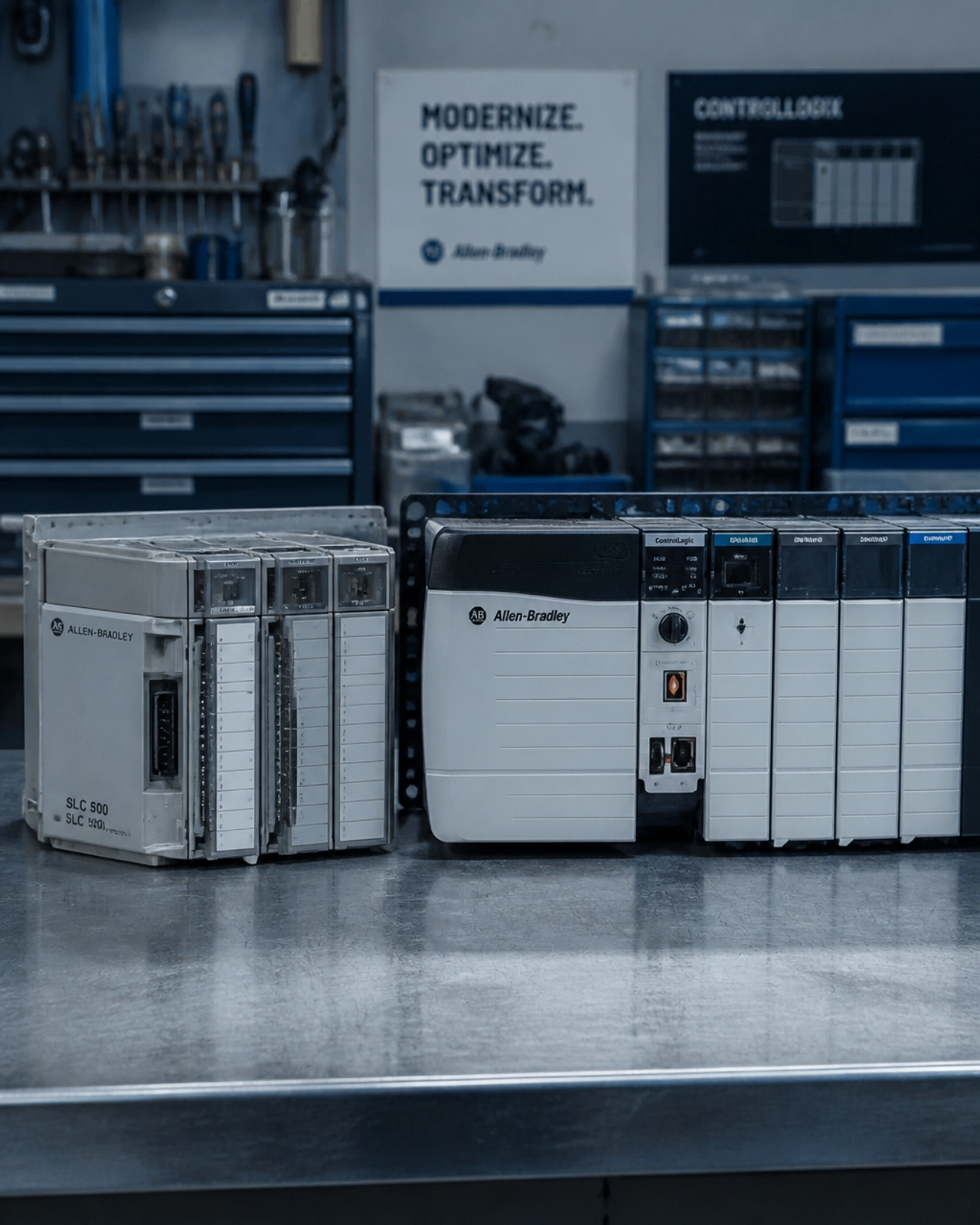
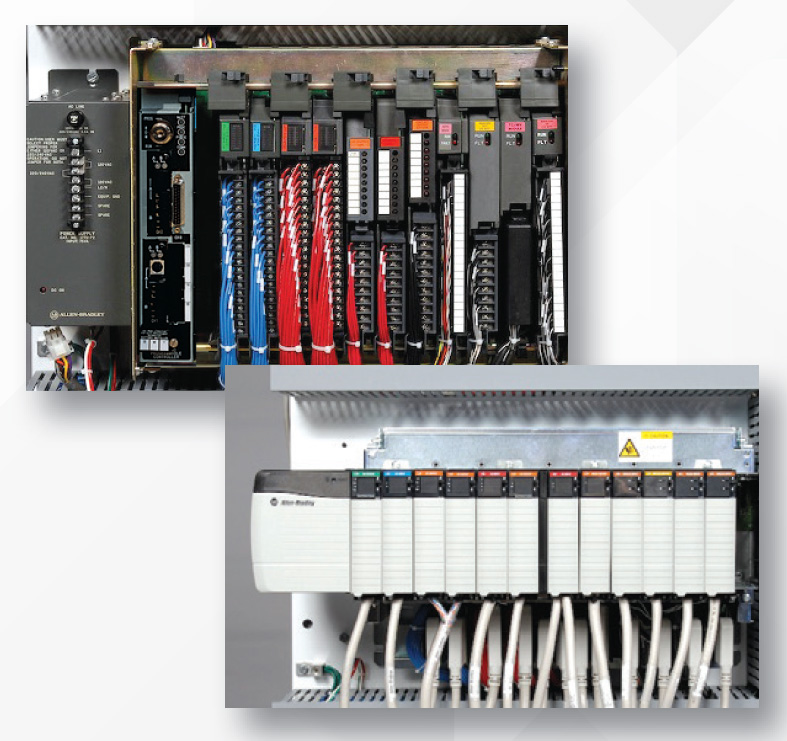
Modernization does not always require a complete plant-wide replacement. In many cases, the most practical strategy is to divide the project into manageable phases. Rockwell Automation provides formal migration and modernization paths for platforms such as SLC 500 and PLC-5, illustrating why lifecycle planning should begin before parts and support become critical constraints.
Start by classifying systems according to their condition and production impact. A controller that operates a noncritical utility process may not require immediate replacement, while an unsupported PLC controlling a high-volume production line may represent a critical business risk.
Consider prioritizing areas with:
- Unavailable or increasingly expensive replacement parts
- Frequent failures or intermittent communication problems
- Outdated software that limits troubleshooting and support
- Insufficient data access for production reporting or quality control
- Safety concerns or difficulty meeting current standards
- Limited ability to expand capacity or add new equipment
- High consequences if an unplanned shutdown occurs
Next, define the desired future state. Your objectives may include improved diagnostics, a modern HMI, better alarm management, integration with a manufacturing execution system, enhanced production data, or a platform with a more sustainable support path.
This stage is also where you should establish measurable success criteria. For example, you may want to reduce troubleshooting time, improve changeover consistency, increase system availability, or create a foundation for future manufacturing process automation.
A clear scope helps control costs and gives every stakeholder a shared understanding of the project. It also allows you to initiate improvements in stages rather than delaying modernization until a full replacement can be funded.
3. Design and Test the New PLC and Integration Architecture
Once the scope is defined, develop the new control architecture before scheduling a production cutover. This includes selecting modern PLCs, I/O hardware, network components, HMI or SCADA platforms, safety equipment, and communication methods that fit your process and long-term plans.
The replacement system should be evaluated for:
- Compatibility with existing field devices and instrumentation
- Expandability for future lines, machines, or production requirements
- Availability of technical support and replacement components
- Integration with HMI, SCADA, MES, historians, and reporting systems
- Cybersecurity and access-control requirements
- Panel space, power distribution, environmental conditions, and wiring
- Required sequence control, motion, process, and safety functionality
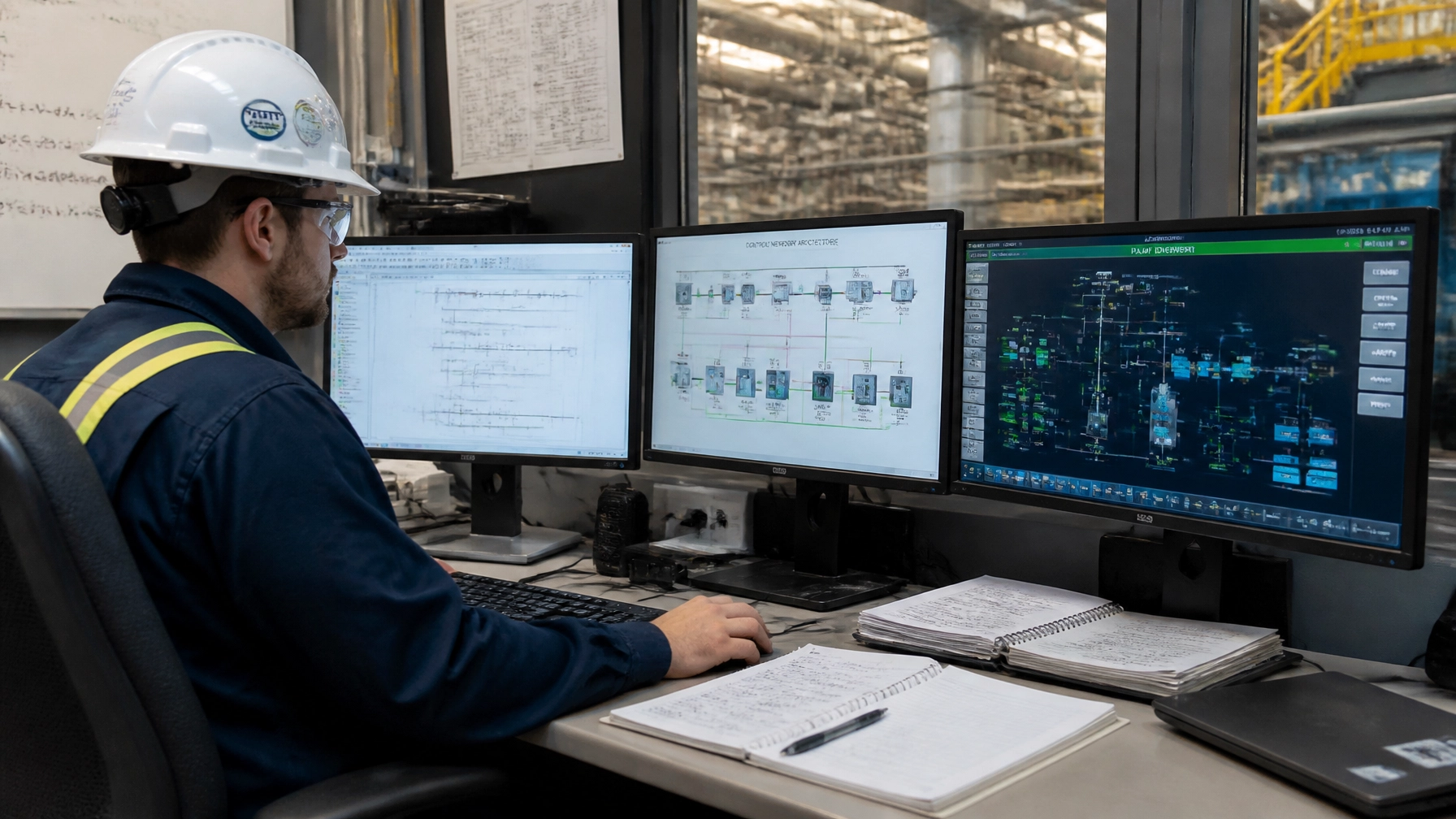
Your PLC programming services partner should then translate the existing logic into the new environment while improving structure, naming conventions, diagnostics, and maintainability where appropriate. The goal is not simply to copy old code. It is to preserve validated process behavior while equipping the system for future needs.
Testing should occur before installation whenever possible. Use offline programming, simulation, factory acceptance testing, and structured review sessions to validate:
- I/O mapping and signal scaling
- Interlocks and permissives
- Startup, shutdown, and fault recovery sequences
- Alarm messages and operator responses
- Recipe, setpoint, and parameter handling
- Communications between controllers, HMIs, drives, and other devices
CCS provides engineering services that include PLC program development, HMI application development, industrial networking design, and drawing package development. This documentation equips your team for future troubleshooting, upkeep, and system expansion.
4. Use a Phased Migration and Planned Cutover Strategy
The most effective way to minimize production downtime is to avoid treating modernization as one large event. Instead, divide the project into logical migration zones, such as individual machines, process areas, production cells, or complete lines.
For each zone, define:
- The equipment included in the migration
- The required production and maintenance window
- The hardware and software to be installed
- The testing and commissioning sequence
- The personnel responsible for each task
- The go/no-go criteria for returning to production
- The rollback steps if the new system does not perform as expected
Where feasible, new components can be prepared and tested off-line before the scheduled outage. New control panels or retrofit assemblies may also be fabricated in advance, reducing the amount of work required at the facility.
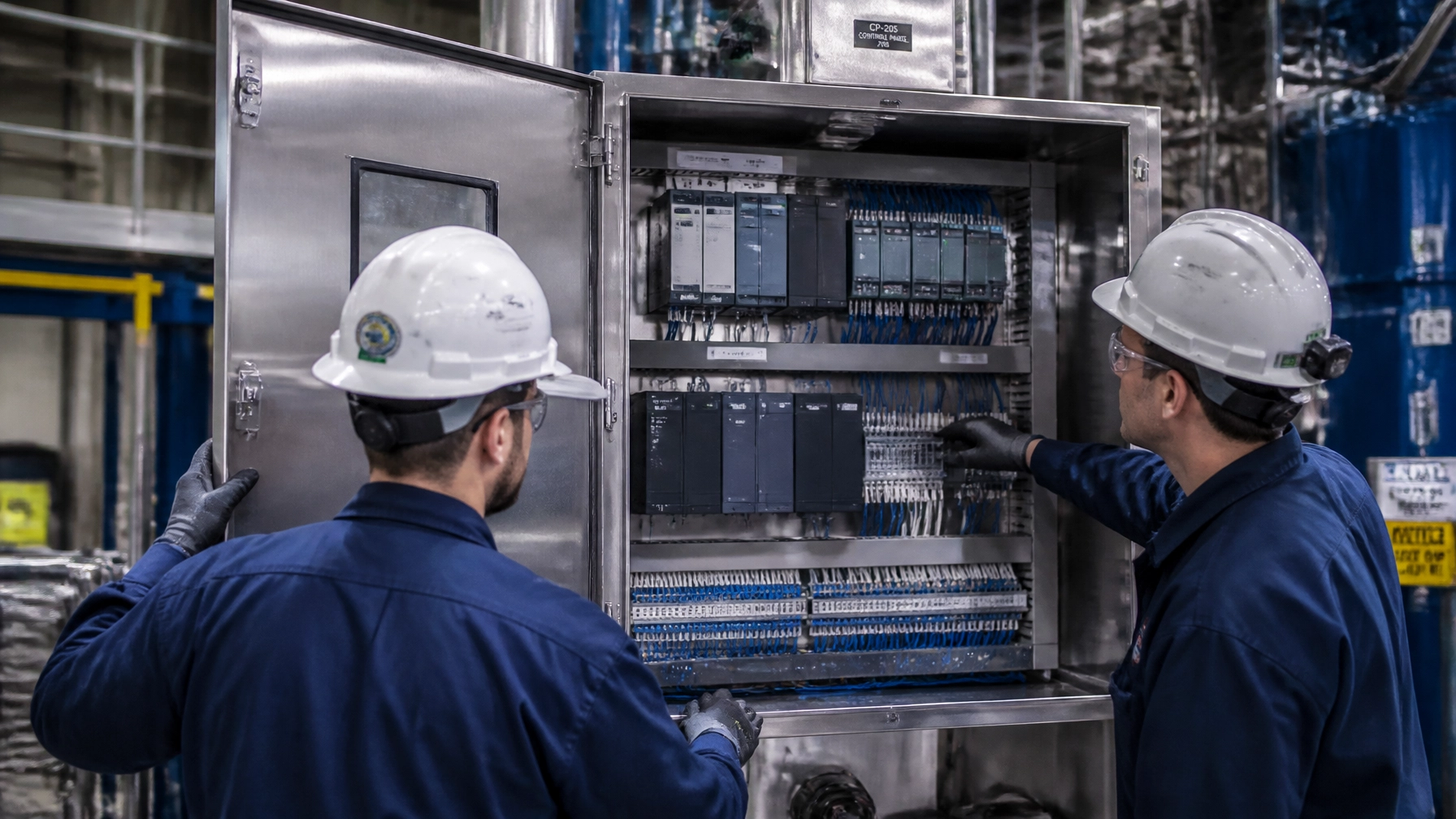
Depending on the application, the project may use a staged or parallel approach. A modern system may first collect data or operate in a monitored condition while the legacy controller remains in control. In other applications, existing field wiring can be reused through compatible interfaces or carefully planned retrofit assemblies.
The specific approach depends on the equipment, process risk, available space, and required downtime. However, the principle remains consistent: prepare as much as possible before the outage, limit the scope of each cutover, and maintain a documented fallback plan.
CCS can assist with industrial control panel design and fabrication, including UL 508A Listed panels and retrofit solutions designed around your existing plant conditions.
5. Commission, Train, and Support the System After Startup
A successful cutover is only the beginning of the modernization process. After the new PLC system is installed, commissioning should follow a structured sequence that confirms both technical performance and operator readiness.
Commissioning activities may include:
- Point-to-point I/O verification
- Instrument and loop checks
- Motor, drive, and actuator testing
- Safety circuit and interlock validation
- Sequence and recipe testing
- HMI screen and alarm verification
- Network and device communication checks
- Cause-and-effect testing
- Production trials at controlled speeds or capacities
Establish clear acceptance criteria before startup. If the system does not meet those criteria, the project team should know whether to correct the issue, pause the startup, or initiate the rollback plan.
Operator and maintenance training should be included in the project, not added after an issue occurs. Your team should understand new HMI screens, alarm priorities, manual controls, fault recovery steps, and basic diagnostic procedures. Updated electrical drawings, PLC backups, software files, network documentation, and operating procedures should also be provided.
For additional stability, many manufacturers retain the legacy system, hardware, or a verified backup image for a defined transition period. This creates a temporary safety net while the new control system operates through multiple production cycles.
Ongoing support is equally important. CCS provides system support and on-site services for troubleshooting, maintenance, commissioning, and future improvements. Open, fluent communication allows us to address issues quickly and keep the system aligned with changing production needs.
When Should You Modernize a Legacy PLC System?
A system does not have to fail before it becomes a modernization priority. Manufacturers should evaluate an upgrade when replacement parts are difficult to source, support contracts have ended, software is no longer compatible, or the system cannot provide the data and diagnostics required by current operations.
You should also consider an upgrade when a planned expansion, safety improvement, HMI replacement, or process automation project exposes limitations in the existing controls.
Modernization is often most cost-effective when planned before an emergency. A phased roadmap gives your organization time to evaluate options, schedule outages, train personnel, and align investment with business priorities.
For a platform-specific comparison of lifecycle support, diagnostics, networking, scalability and migration considerations, review ControlLogix vs. legacy PLC systems and when an upgrade is worth it.
Modernize With a Partner Focused on Production Continuity
A legacy PLC upgrade should improve reliability and performance without creating unnecessary risk for your operation. The right modernization plan combines careful assessment, practical PLC programming, control system integration, advanced testing, clear documentation, and responsive field support.
Complete Control Solutions brings the resources of a capable system integrator together with a highly personalized, client-focused experience. From a small PLC programming project to a distributed control system migration, our engineers work with you from start to finish to analyze your current system, corroborate requirements, develop a robust solution, and support implementation.
Based in Lebanon, Pennsylvania, CCS serves manufacturers throughout Central Pennsylvania, including Harrisburg, Lancaster, and York, as well as the broader Mid-Atlantic region, including Maryland, Delaware, and New Jersey.
If you are evaluating a legacy PLC upgrade, contact Complete Control Solutions to discuss your system, production constraints, and next steps. We can help you create a practical modernization roadmap that protects uptime today and supports your future needs.