Choosing an industrial automation company is a strategic decision. The right partner can improve production efficiency, strengthen safety, reduce downtime, and give your team a clear path toward future growth. The wrong partner may deliver a system that is difficult to maintain, poorly documented, or unable to adapt as your operation changes.
For manufacturers evaluating industrial automation services in Central Pennsylvania, the selection process should go beyond comparing project estimates. You should evaluate technical expertise, platform credentials, engineering depth, communication, commissioning practices, and long-term support. Whether your facility is in Lebanon, Harrisburg, Lancaster, York, Allentown, Philadelphia, or elsewhere in the Mid-Atlantic, the right system integrator should align its services with your specific needs and expectations.
1. Match the Integrator’s Experience to Your Project
Industrial automation projects vary significantly in size and complexity. You may need a small PLC programming update, an HMI modification, or troubleshooting support for a specific machine. You may also be planning a complete control system replacement, plant-wide SCADA deployment, or distributed control system.
Before selecting an automation company, ask whether its engineers have experience with projects similar to yours. An integrator should be able to analyze your current system, understand your production objectives, and recommend a practical solution rather than forcing your operation into a predetermined design.
Important questions include:
- Has the integrator worked with your type of manufacturing process?
- Can it support both new installations and legacy equipment?
- Does it understand your production, quality, and safety requirements?
- Can its team scale from a focused programming task to a larger integration project?
- Will the proposed system support your future needs?
At Complete Control Solutions, our engineering services support projects ranging from small-scale programming work to large-scale distributed control systems. We work with your team to develop a plan suited to your process, goals, and available resources.
2. Verify Platform Credentials and Technical Capabilities
Your automation partner should have demonstrated experience with the platforms already operating in your facility: or the platforms you intend to implement.
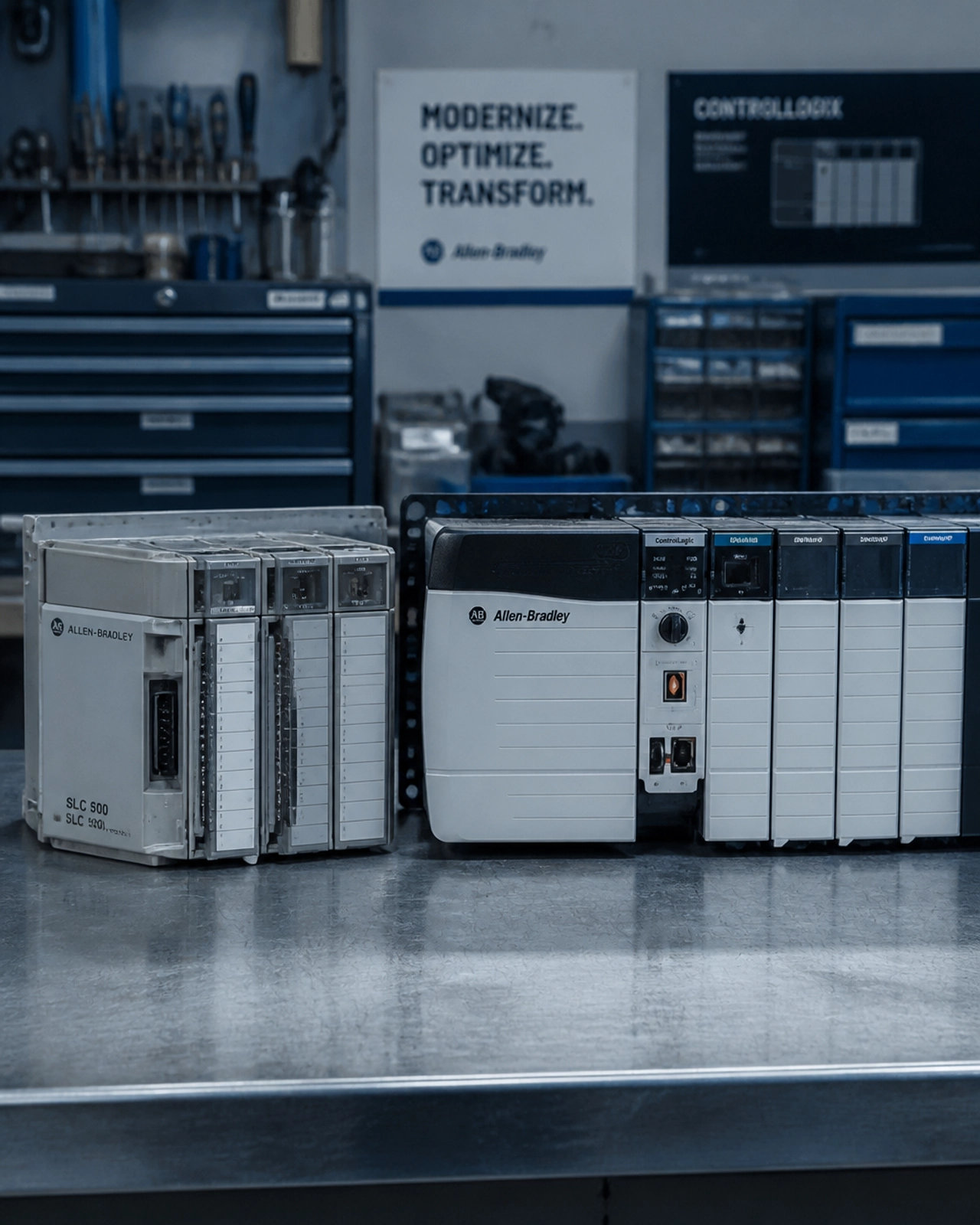
For Rockwell-based systems, look for experience with Allen-Bradley PLCs, ControlLogix, CompactLogix, FactoryTalk, motion control, industrial networks, and low-voltage drives. If your operation uses robotics, SCADA, or multiple control platforms, the integrator should also understand how those systems communicate and operate together.
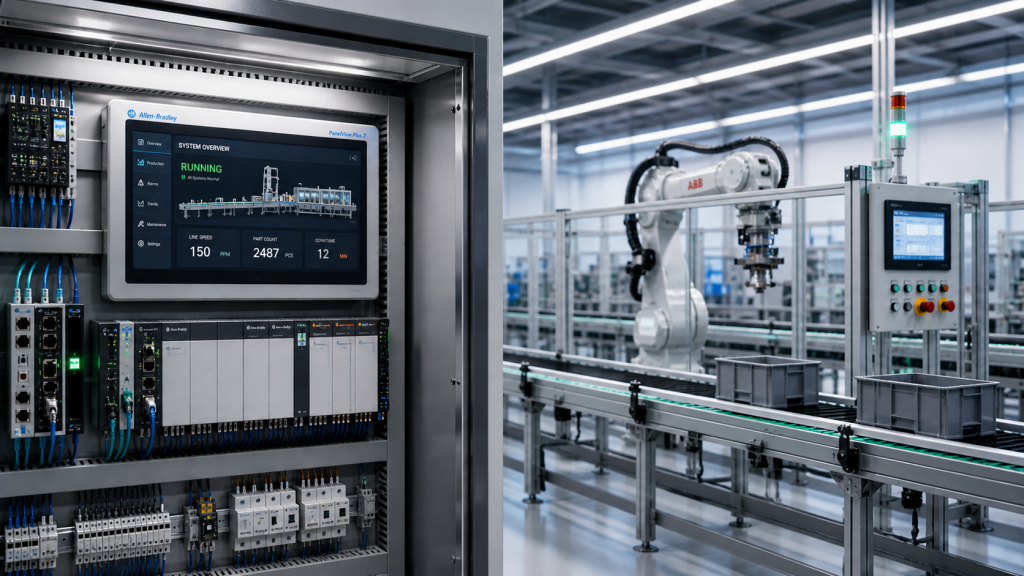
Credentials can help corroborate a company’s capabilities. Complete Control Solutions is a Rockwell Automation Bronze Level System Integrator with recognized competencies in controls, visualization, motion, and low-voltage drives. CCS is also an Ignition Credentialed Integrator and an authorized ABB Robotics System Integrator.
When evaluating an integrator, ask:
- Which control platforms does your team regularly design and program?
- Can you provide examples of recent projects using those platforms?
- Do you support PLCs, HMIs, SCADA, drives, robotics, and industrial networks?
- Are your engineers trained or credentialed by the manufacturers relevant to our systems?
- Can you integrate new equipment with our existing controls?
Credentials do not replace experience, but they provide an important indication that an integrator maintains current knowledge of state-of-the-art technologies and manufacturer practices.
3. Evaluate Engineering Depth
A reliable automation project begins with disciplined engineering. Programming is only one part of a successful control system. The project may also require system architecture, electrical design, network planning, HMI development, safety considerations, panel design, testing, and documentation.
Ask the integrator to explain how it will move from your initial requirements to a functioning system. A strong engineering process typically includes:
- Reviewing the existing equipment and control architecture
- Defining functional requirements and operating objectives
- Developing the system design and control strategy
- Selecting hardware, software, and network components
- Creating PLC, HMI, and SCADA applications
- Developing electrical drawings and documentation
- Testing the system before installation
- Commissioning and validating the completed solution
This approach is particularly important for brownfield projects, where new controls must operate safely with existing machines, instrumentation, and production procedures.
CCS provides PLC program development, HMI application development, industrial networking design, and drawing package development. Our engineers can help you initiate a project with a clear technical plan and equip your team with the documentation required for ongoing upkeep.
4. Confirm Panel Fabrication and Electrical Compliance
If your project includes a new control panel, retrofit, or equipment modernization, determine whether the automation company designs and builds panels in-house or relies entirely on outside suppliers.
An experienced panel team should understand component selection, enclosure requirements, wiring, labeling, heat management, maintainability, and applicable electrical standards. It should also be able to coordinate the panel with the PLC program, network architecture, field devices, and installation requirements.

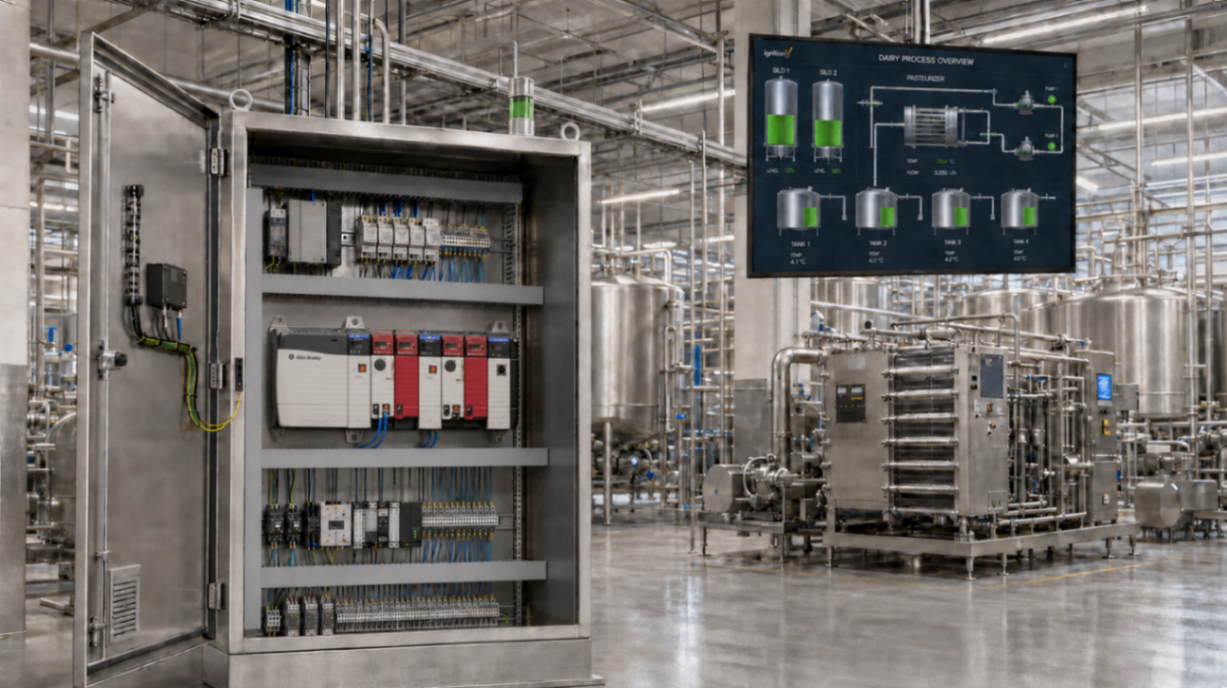
Complete Control Solutions designs and builds UL 508A Listed industrial control panels for standard, custom, OEM, and retrofit applications. Our panels are developed in accordance with UL 508A, NEC, and NFPA requirements and undergo testing and safety reviews.
Ask potential partners:
- Are control panels designed and fabricated by your team?
- Are the panels UL 508A Listed?
- How are electrical drawings and wire labels managed?
- Can you retrofit an existing panel at our facility?
- Will the panel design allow for future expansion and maintenance access?
Panel fabrication and controls engineering should work together from the beginning. This reduces rework and helps ensure that the physical system supports the intended software and process design.
5. Review Project Management and Communication
Technical expertise is essential, but project execution also depends on effective management. A partner should provide a clear schedule, defined deliverables, decision points, and responsibilities for both organizations.
Before work begins, request an explanation of:
- The project phases and expected milestones
- The primary project manager and technical contacts
- The information required from your team
- The process for reviewing and approving designs
- How changes to scope, budget, and schedule will be managed
- How risks and delays will be communicated
You should also look for open, fluent communication throughout the project. Your integrator should be willing to explain technical decisions in business terms, identify potential issues early, and corroborate that the proposed solution remains aligned with your production objectives.
At CCS, we take a collaborative, client-focused approach. Our goal is to combine the resources and technical capabilities of a large integrator with a highly personalized experience. That means your team has access to experienced engineers while still receiving direct communication and attention to detail.
6. Ask About Cybersecurity and System Ownership
Industrial control systems are increasingly connected to plant networks, business systems, remote support tools, and cloud-based applications. As a result, cybersecurity should be addressed during system design: not after implementation.
Ask how the integrator approaches:
- Industrial network segmentation
- Secure remote access
- User permissions and role-based access
- Backup and recovery procedures
- Firewall and switch configuration
- Software and firmware updates
- Account ownership and credential management
- Protection of PLC, HMI, SCADA, and historian systems
Your integrator should be able to coordinate with your IT team and explain how the automation system will fit within your organization’s security policies.
It is also important to clarify ownership. At project completion, you should know who owns the PLC code, HMI applications, network documentation, licenses, passwords, and system backups. Clear ownership and complete documentation reduce long-term operational risk.
7. Examine Testing, Commissioning, and Training
A control system is not complete when the programming is finished. It must be tested, installed, commissioned, and validated under real operating conditions.
Ask whether the integrator provides formal factory acceptance testing and site acceptance testing. Testing should address normal operation, alarms, interlocks, safety functions, communications, fault conditions, and operator workflows.
A well-managed commissioning process should include:
- Defined test procedures and acceptance criteria
- Review of the system before shipment or installation
- Structured startup activities
- Production and performance verification
- Operator and maintenance training
- As-built drawings and final software backups
- A documented list of outstanding items, if applicable
CCS provides on-site services, including system startup and commissioning, installation support, troubleshooting, scheduled shutdown support, and end-user training. These services help your team transition from project implementation to dependable day-to-day operation.
8. Look Beyond Startup to Long-Term Support
Manufacturing systems require ongoing attention. Software versions change, hardware reaches end of life, production requirements evolve, and new equipment must eventually be integrated.
A strong automation partner should offer support after commissioning, including:
- Remote troubleshooting
- Emergency support
- Product end-of-life planning
- Process improvements
- System administration
- Control system upgrades
- Scheduled maintenance and optimization
Review the company’s expected response times and support process. Ask who will respond when a system issue affects production, whether remote diagnostics are available, and how on-site service is coordinated.
Through our system support services, CCS helps manufacturers diagnose issues, address system problems, support aging equipment, and identify opportunities to improve production and output. Our focus is not only on resolving the immediate issue but also on supporting your current and future needs.
9. Use a Structured Selection Process
Once you have identified potential automation companies, use a consistent evaluation process. A weighted scoring matrix can help your team compare partners objectively.
Consider assigning scores for:
- Relevant industry and application experience
- Platform credentials
- Engineering capabilities
- Panel fabrication and compliance
- Project management
- Cybersecurity practices
- Documentation quality
- Testing and commissioning
- On-site service coverage
- Response times
- Long-term support
- Overall communication and fit
Request references from customers with similar systems, especially those who have worked with the integrator beyond the initial installation. If practical, visit the integrator’s facility to review its engineering resources, panel fabrication capabilities, testing process, and documentation standards.
The lowest initial quote is not always the lowest total cost. A robust solution with strong documentation, reliable support, and a plan for future expansion can deliver greater value over the life of the system.
Choose a Partner for the Full Automation Lifecycle
The best industrial automation company is more than a programmer or equipment supplier. It is a partner that can analyze your needs, design an appropriate system, manage implementation, support commissioning, and remain available for future upgrades and upkeep.
Complete Control Solutions serves manufacturers in Lebanon, Harrisburg, Lancaster, York, Allentown, Philadelphia, and throughout Central Pennsylvania and the broader Mid-Atlantic. From a focused PLC programming job to a complete distributed control system, our engineers provide end-to-end support with open communication and personalized service.
Contact CCS to request a consultation and discuss how the right automation strategy can improve your operation from start to finish.