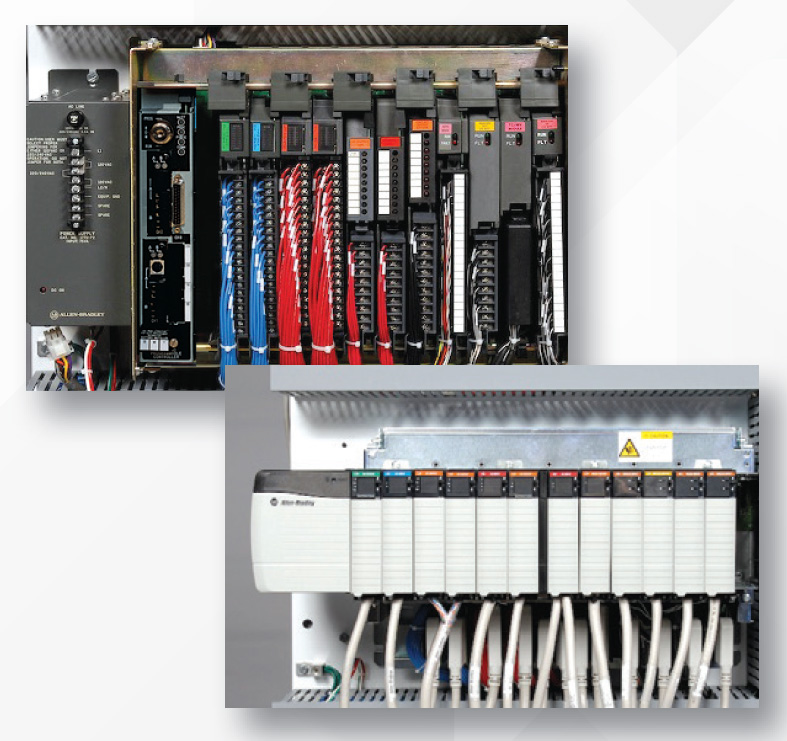
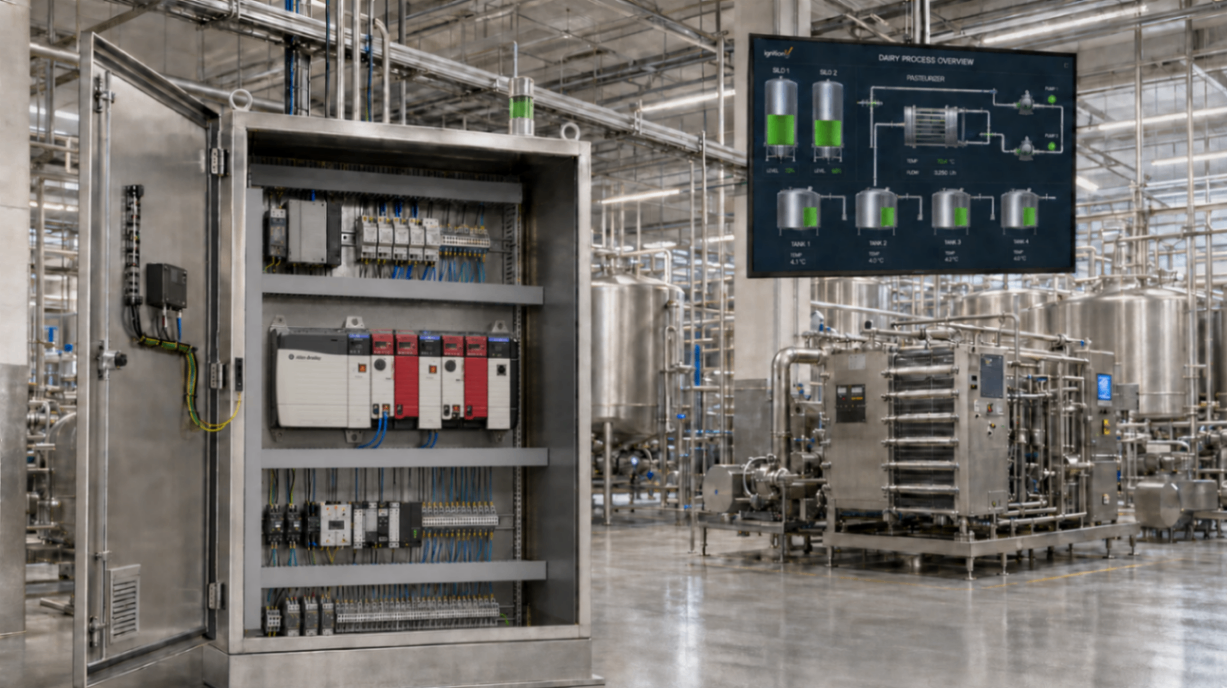
A legacy control system can continue running for years after its original components are no longer supported. That reliability can make modernization difficult to justify, until a failed processor, unavailable spare, unsupported software package, or cybersecurity exposure creates an urgent production risk.
The most effective modernization programs do not begin with a wholesale replacement. They begin with a structured assessment of the installed base, a clear business case, and a phased plan aligned with your production schedule. Whether you operate a manufacturing facility in Central Pennsylvania or manage multiple sites across the Mid-Atlantic, the goal is the same: improve reliability and capability while protecting production today and preparing for future needs.
Begin with an Installed-Base Assessment
Before creating a capital request, analyze what is installed and how each asset affects your operation. An accurate inventory should include:
- PLCs, controllers, racks, I/O modules, and power supplies
- HMIs, SCADA servers, historians, and engineering workstations
- Industrial networks, switches, gateways, and communication modules
- Drives, motion equipment, safety systems, and critical field devices
- Panel layouts, electrical drawings, software versions, and available backups
- Spare parts, repair history, failure frequency, and vendor lifecycle status
The assessment should connect each component to the process it controls. A failed controller on a noncritical utility skid may be inconvenient, while the same failure on a primary production line, wastewater pump station, or safety-related process can create a significant operational and compliance concern.
We recommend scoring each asset against five risk categories:
| Risk factor | Questions to evaluate |
|---|---|
| Hardware end-of-life | Is the component discontinued or approaching the end of vendor support? |
| Spares scarcity | Can you obtain new, refurbished, or repairable replacement parts? |
| Unsupported software | Are programming tools, operating systems, licenses, or backups difficult to maintain? |
| Cybersecurity exposure | Does the system lack current security features, patching options, segmentation, or access controls? |
| Single points of failure | Could one component, network path, server, or power supply stop a critical process? |
A simple one-to-five score for each category can create a practical risk heatmap. Assets with high production impact and high obsolescence risk should generally be addressed first, even if they are not the oldest equipment in the facility.
For Allen-Bradley equipment, Rockwell Automation’s Product Lifecycle Status tool can confirm whether a product is Active, Active Mature, End of Life, or Discontinued.
Separate Must-Fix Risks from Nice-to-Have Improvements
Modernization projects often expand because reliability needs, process improvements, reporting requests, and future expansion goals are combined into one large scope. Separating these priorities helps you create a realistic budget.
Must-fix items
These are conditions that create immediate or growing operational risk, such as:
- Discontinued controllers with no viable spare strategy
- Unsupported HMI or SCADA operating systems
- Unrecoverable programs or incomplete backups
- Network equipment that cannot be secured or replaced
- Repeated failures affecting production or safety
- Single points of failure on critical assets
- Panels with inadequate space, obsolete power supplies, or unsafe modifications
Nice-to-have improvements
These may provide meaningful value but can often be scheduled after the highest-risk work:
- Standardized HMI screens across multiple lines
- Expanded production dashboards and reporting
- Historian improvements and enterprise data integration
- Advanced alarm management
- Energy monitoring
- Additional automation, robotics, or optimization features
If you have a chemical process, the must-fix list may place greater emphasis on process safety, hazardous-area requirements, permissives, and validated operating procedures. In a municipal water or wastewater application, service continuity, redundancy, remote visibility, and regulatory reporting may take priority. The modernization strategy should reflect the process rather than apply a generic template.
Build a Multi-Year Capital Plan
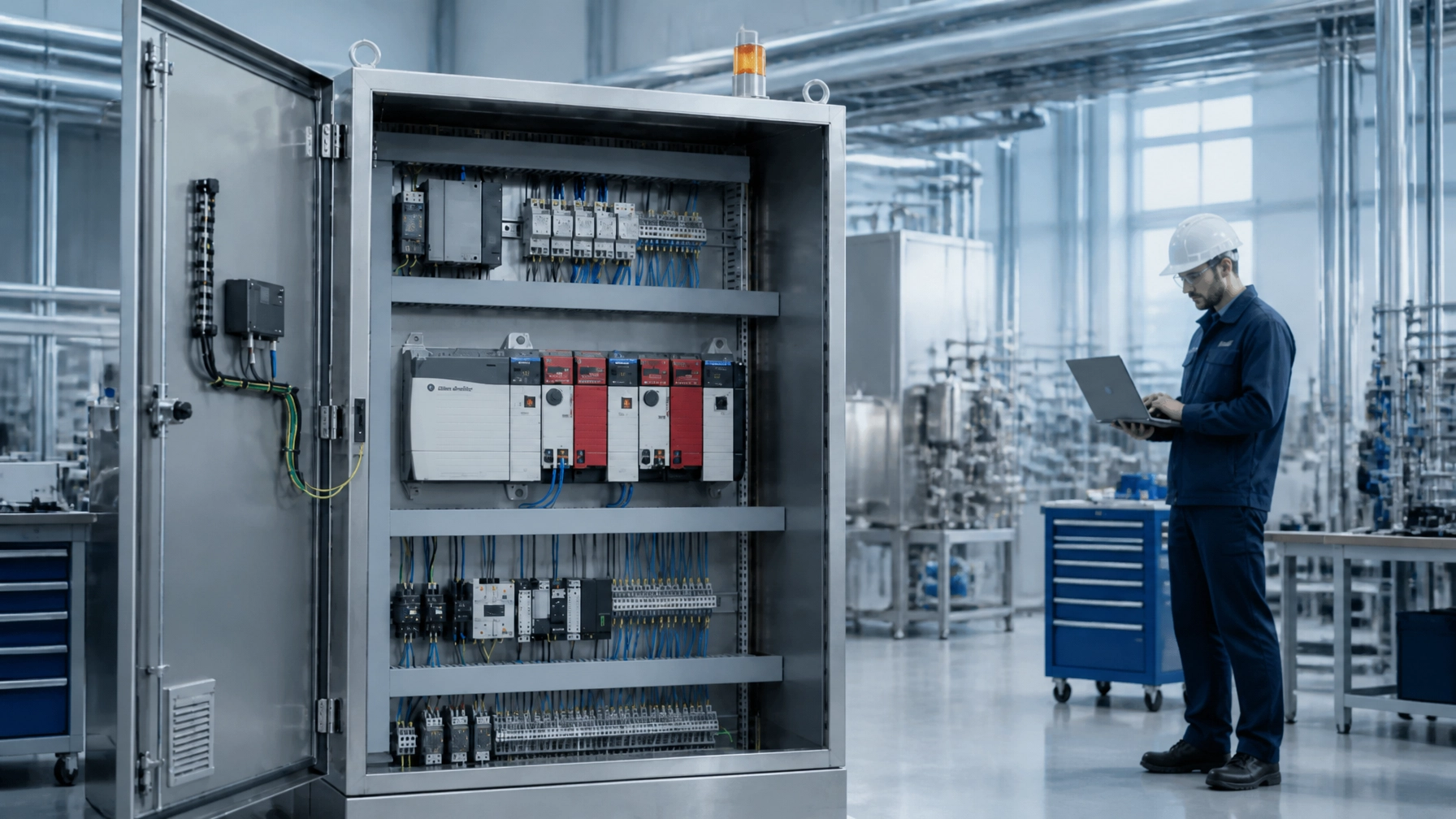
A practical modernization roadmap usually combines a front-end engineering and design study with a multi-year capital plan. This planning stage should define the technical scope, estimated cost, implementation schedule, risks, and expected operational return. For the technical execution steps that follow budgeting, review our guide to 5 Practical Steps for Legacy PLC Modernization.
A typical roadmap may include:
Year 1: Assessment and risk reduction
- Complete the installed-base inventory and risk scoring
- Secure program backups and update documentation
- Replace the highest-risk power supplies, communication modules, or controllers
- Establish a spare-parts strategy for critical assets
- Segment or improve the most exposed control-system networks
Year 2: Operator interface and connectivity improvements
- Modernize aging HMI stations
- Improve alarm handling and diagnostic displays
- Upgrade network infrastructure where appropriate
- Add SCADA connectivity, historian functions, or production reporting
- Establish standardized screens and tag structures
Year 3: Controller and panel migration
- Migrate the highest-priority PLCs or control platforms
- Modify or replace panels where necessary
- Rework control logic and validate sequence operation
- Complete factory acceptance testing and site commissioning
- Update drawings, backups, and operating procedures
Year 4 and beyond: Optimization and expansion
- Address lower-risk systems
- Add energy monitoring, advanced analytics, or additional automation
- Expand data visibility to maintenance, quality, and management teams
- Standardize similar lines or facilities
- Review the roadmap as equipment, production demands, and cybersecurity requirements change
The exact schedule will vary, but a multi-year plan allows you to align capital requests with business priorities instead of waiting for an emergency failure to force a rushed decision.
Decide Whether to Build, Buy, or Migrate
Every modernization program includes a critical decision: should you build a new solution, purchase a packaged platform, or migrate the existing system?
| Approach | Best fit | Primary consideration |
|---|---|---|
| Build | Unique processes or applications requiring custom control | Provides flexibility but requires careful engineering and long-term support planning |
| Buy | Standardized equipment, packaged systems, or repeatable applications | Can reduce development time but may require integration and customization |
| Migrate | Existing equipment and logic remain valuable, but the controls platform is obsolete | Preserves process knowledge while reducing lifecycle and downtime risk |
Migration is often the right choice when the mechanical equipment remains sound and the existing process logic is well understood. A controller, HMI, SCADA, or network upgrade may deliver substantial value without replacing an entire production line.
However, a full replacement may be more appropriate when the electrical infrastructure is deteriorated, documentation is unreliable, the machine is nearing the end of its useful life, or modernization costs approach the cost of a new asset. The decision should compare total cost of ownership, not only the purchase price of hardware.
Why Phasing Usually Outperforms a Rip-and-Replace Project
A “big bang” replacement can be appropriate for a greenfield project or a facility with a long, controlled outage. For many operating plants, however, a phased approach reduces risk and improves budget control.
Phasing allows you to:
- Start with a pilot machine, line, or process area
- Reuse proven programming and HMI standards
- Validate new hardware and network architecture before expanding
- Schedule work during planned shutdowns and maintenance windows
- Reduce the size and duration of production interruptions
- Capture lessons learned before addressing more complex areas
- Spread capital investment across multiple budget cycles
The work can be divided by line, panel, process area, or system layer. For example, a facility may first improve network connectivity, then modernize HMI development and SCADA, and later migrate controllers and I/O during scheduled outages.
When field wiring and existing equipment are in good condition, retaining them may reduce electrical labor and cutover risk. That decision requires a detailed review of terminal arrangements, signal types, panel space, grounding, power distribution, and the compatibility of new control hardware. A careful engineering assessment can determine what should be preserved and what must be modified.

Budget for the Costs That Are Easy to Miss
Hardware and software are visible line items, but hidden costs frequently cause modernization budgets to grow. Your plan should account for:
- Field wiring verification, labeling, and retermination
- Panel modifications, new enclosures, terminal blocks, and power supplies
- Electrical installation and network infrastructure
- Reverse engineering of undocumented PLC logic
- HMI screen development and alarm rationalization
- SCADA tag mapping, historian configuration, and reporting
- Factory acceptance testing, site acceptance testing, and commissioning
- Production downtime and reduced capacity during cutover
- Operator and maintenance technician retraining
- Updated electrical drawings, network diagrams, software backups, and manuals
- Temporary controls, bypasses, or parallel operation during migration
- Post-startup support and punch-list completion
Documentation gaps deserve particular attention. If the existing drawings do not match the installed system, the engineering team may need additional time to trace field devices, verify I/O, interpret logic, and corroborate actual operating sequences with operators and maintenance personnel.
Open, fluent communication between operations, maintenance, engineering, management, and the integration partner is essential. A realistic budget is built around your specific needs and expectations, not assumptions based only on a parts list.
Quantify the Operational Payback
A modernization program becomes easier to prioritize when benefits are expressed in operational and financial terms.
Downtime reduction
Estimate the number of unplanned downtime hours associated with legacy failures, then multiply by the value of lost production, labor, scrap, and recovery time. Even a modest reduction in recurring interruptions may justify a targeted upgrade.
Spares strategy
Compare the cost of maintaining obsolete inventory, sourcing emergency parts, using third-party repairs, and expediting replacements with the cost of moving to a supported platform. A modern spare-parts strategy can reduce both carrying costs and response time.
Energy savings
Modern drives, improved sequencing, and better process control can reduce unnecessary motor operation, pressure variation, heating, cooling, and compressed-air demand. Establish a baseline using available utility and production data, then identify measurable opportunities.
Data visibility
Modern HMI and SCADA systems can reduce manual reporting, improve alarm response, and make production losses easier to identify. Quantify time spent collecting data, preparing reports, investigating downtime, and reconciling inconsistent records.
How CCS Supports Legacy System Upgrades
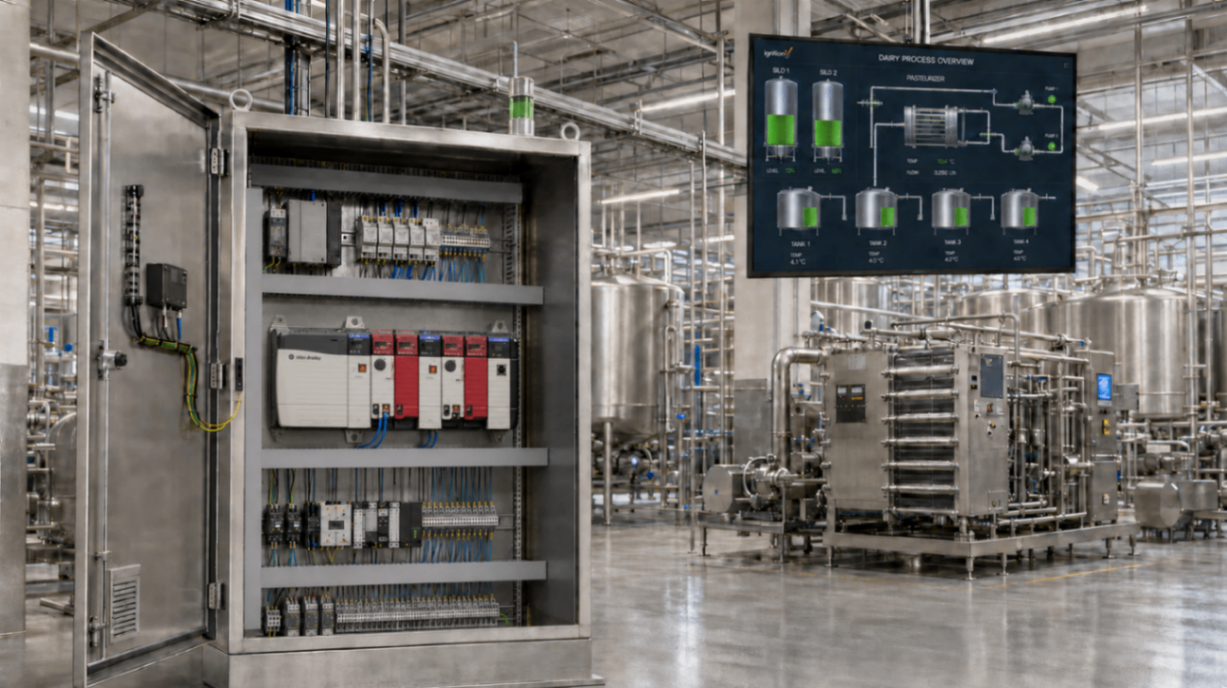
Complete Control Solutions helps manufacturers move from uncertainty to a practical modernization roadmap. Our team provides consulting, engineering, control system upgrades, PLC programming, HMI development, SCADA integration, industrial control panel design and fabrication, on-site services, and ongoing system support.
Whether you need a focused programming update in Harrisburg, a panel modernization project in Lebanon or Lancaster, a plant-wide migration near Allentown or Philadelphia, or support across the surrounding Mid-Atlantic states, we can analyze your installed base, define priorities, develop a phased plan, and equip your team for long-term upkeep.
Our engineers support Rockwell Automation systems and bring verified credentials as a Rockwell Automation Bronze Level System Integrator, Ignition Credentialed Integrator, and AVEVA Registered System Integrator. We are also an ABB Authorized Robotics System Integrator when modernization includes an ABB robotic cell or coordinated automation equipment.
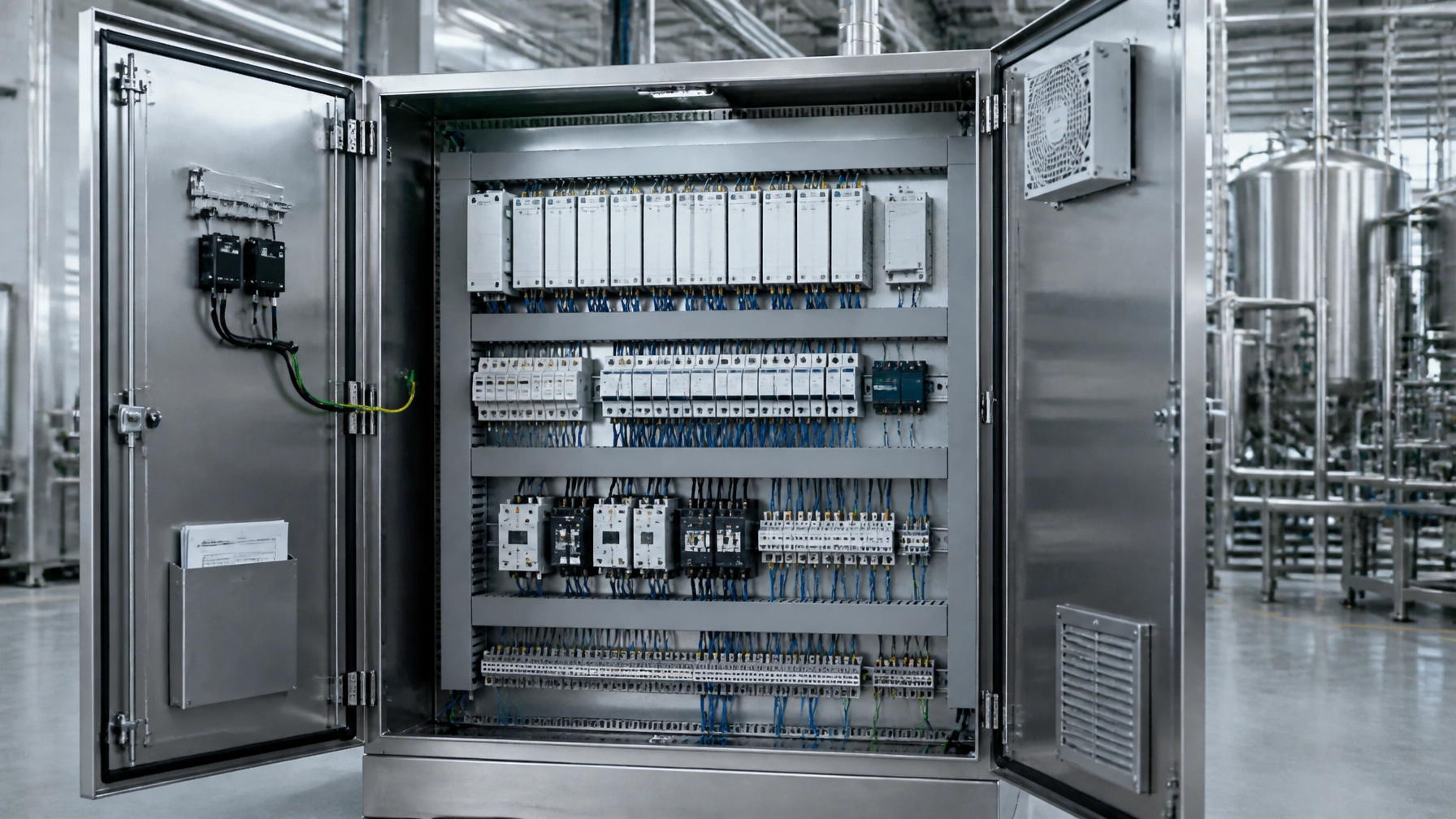
Whether you have a single obsolete PLC or a complex distributed control environment, we can help you evaluate the risks, corroborate the installed condition, initiate the right first phase, and build toward a robust, state-of-the-art system. Our goal is to improve reliability today while creating a flexible foundation for future production, safety, data, and efficiency requirements.
Start Planning Your Modernization Program
A legacy control system upgrade does not need to be an all-at-once decision. With the right assessment and phased strategy, you can address critical risks, align investment with scheduled shutdowns, reduce unexpected downtime, and build measurable operational value over time.
Contact Complete Control Solutions to discuss your installed base, modernization priorities, and next steps.