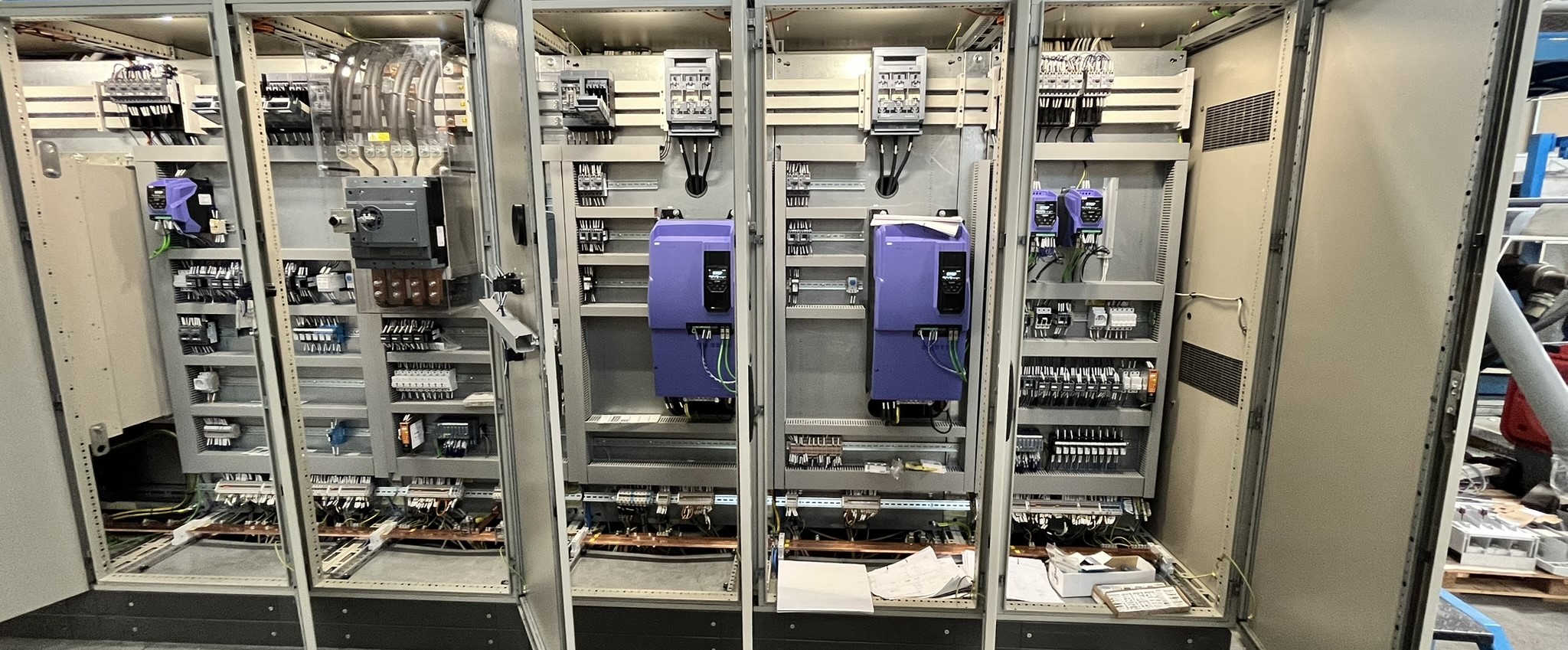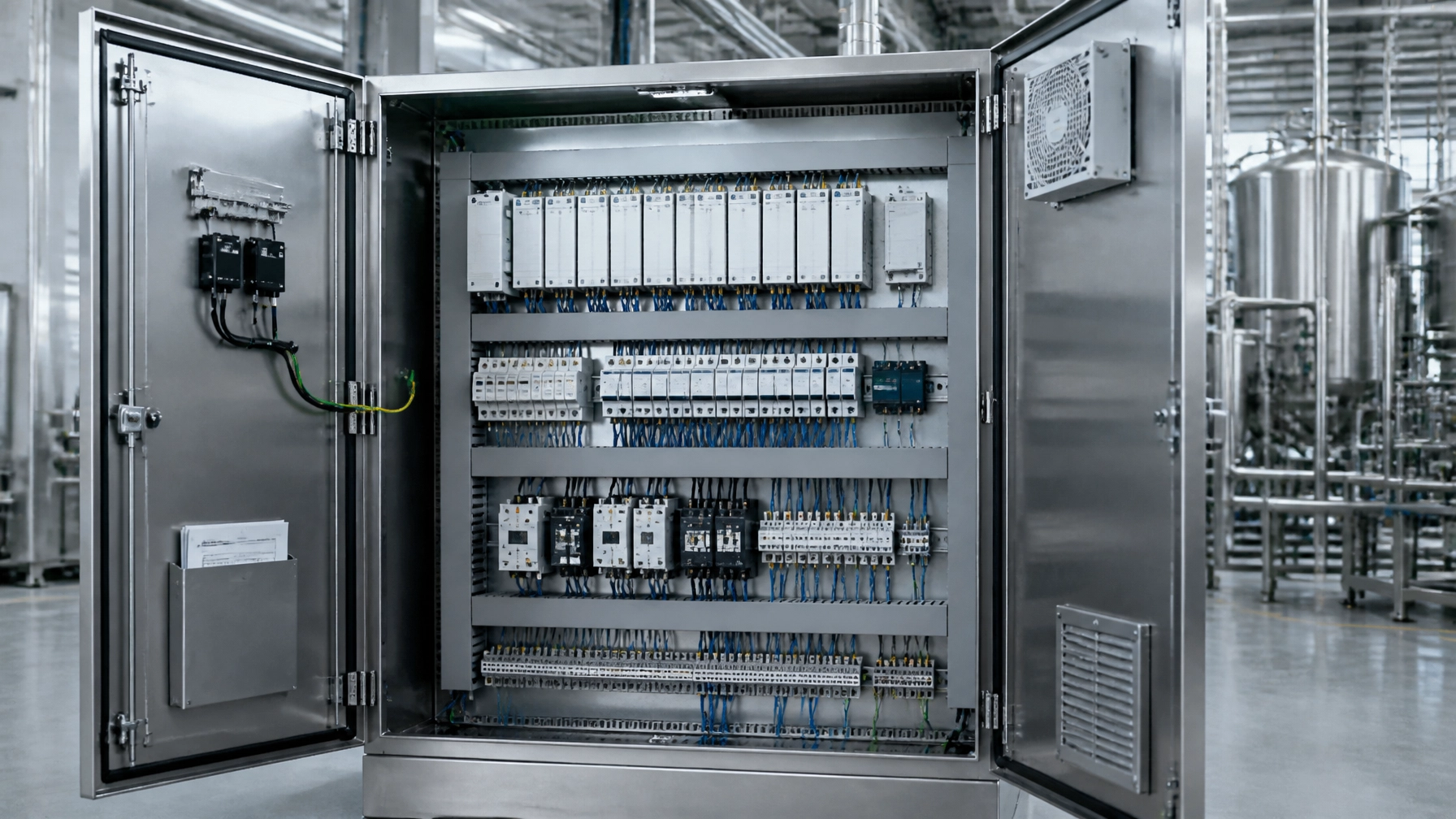
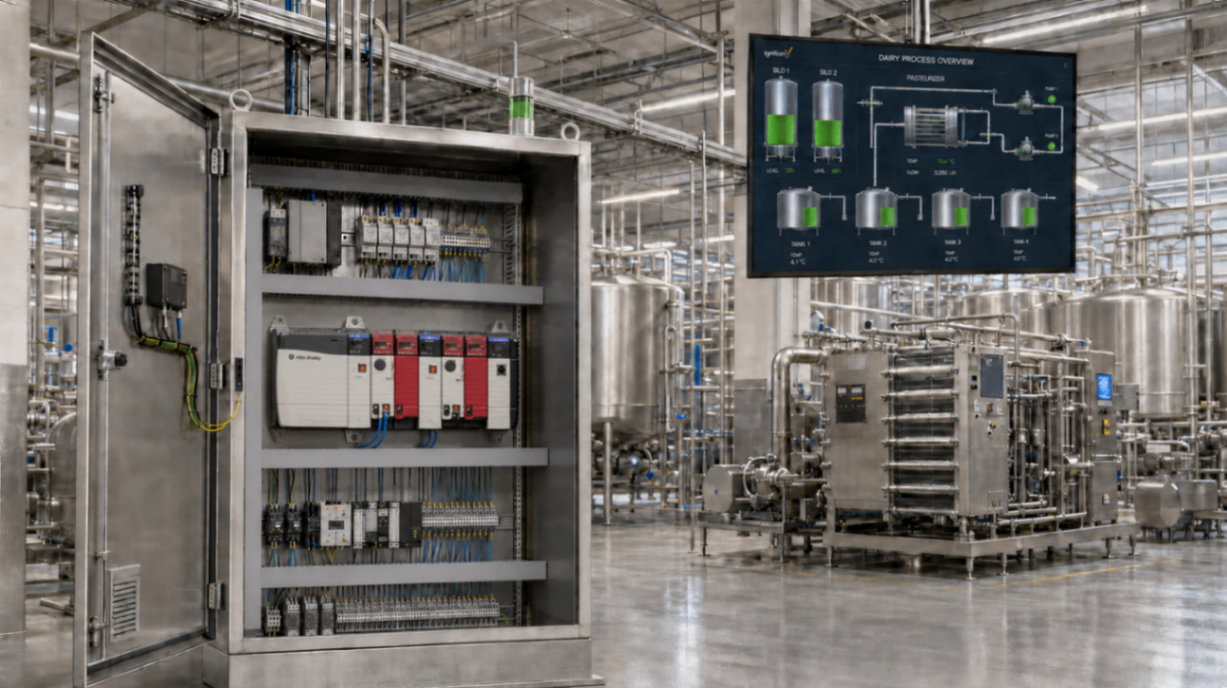
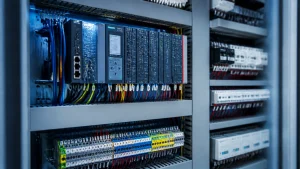
Many manufacturers have valuable production equipment controlled by legacy PLCs. These systems may still perform reliably, but the surrounding data infrastructure often creates challenges. Operators may lack real-time visibility, production reports may depend on manual spreadsheets, and critical process information may remain isolated within individual machines or departments.
An Ignition SCADA integration can help address these limitations without requiring you to replace every controller on the plant floor. As an Ignition SCADA integrator in Pennsylvania, Complete Control Solutions (CCS) helps manufacturers connect legacy and modern PLCs to a centralized platform for visualization, data collection, alarming, reporting, and enterprise integration.
Ignition by Inductive Automation provides a flexible foundation for modern supervisory control and data acquisition. With the right architecture and engineering approach, your existing equipment can become part of a more connected, secure, and scalable operation.
Why connect legacy PLCs to modern plant data?
Legacy PLCs often control critical processes, but they were not always designed to share information with today’s business systems. Older controllers may use serial communications, proprietary protocols, or outdated network infrastructure. In other cases, the PLC is capable of producing data, but the facility lacks a practical way to organize and use it.
Whether your challenge involves obsolete SCADA software, isolated production cells, or limited reporting capabilities, Ignition can provide a modern data layer around your existing controls.
A properly designed system can help your team:
- Monitor production equipment from centralized dashboards
- Analyze throughput, downtime, quality, and energy metrics
- Record important process values in a historian or SQL database
- Configure alarms and notifications for critical conditions
- Generate production, compliance, and maintenance reports
- Provide information to supervisors, engineers, and managers
- Connect plant-floor data with enterprise applications
The objective is not simply to display more data. Our engineers work to ensure that your data is organized, accessible, and aligned with your specific needs and expectations.
How Ignition connects to legacy and modern PLCs
Ignition operates as a central integration hub between plant-floor equipment, databases, visualization tools, and enterprise systems. It can communicate with many PLC families and industrial protocols through native drivers, OPC connections, protocol gateways, and other integration methods.
Modern controllers may connect through Ethernet-based protocols such as OPC UA, EtherNet/IP, or Modbus TCP. Older controllers may require an external OPC server, a protocol converter, or an edge device to translate communications into a format Ignition can use.
For example, a legacy PLC may continue controlling a machine while a communication gateway makes selected tags available to Ignition. This approach allows the manufacturer to retain proven control logic while adding modern visualization and reporting capabilities.
In some applications, an Ignition Edge gateway or MQTT architecture may be appropriate. This can place data collection closer to the machine or production line before securely transmitting normalized information to a central Ignition Gateway.
The appropriate method depends on your existing hardware, communication networks, production requirements, and future modernization plans. Our engineering team can analyze your current architecture and identify the most practical connection strategy.
Building a reliable SCADA architecture
A successful Ignition project begins with architecture, not screen development. The system should define how data moves from PLCs to the Gateway, databases, operator interfaces, and enterprise systems.
A typical architecture may include:
- PLCs and field devices: Controllers collect signals from sensors, drives, instruments, and machines.
- Communication layer: Native drivers, OPC servers, protocol converters, or edge gateways make device data available.
- Ignition Gateway: The Gateway manages connections, tags, projects, alarms, security, and system services.
- Database or historian: Important values and events are stored for analysis, reporting, and traceability.
- Visualization layer: Operators and other authorized users access HMIs, dashboards, trends, and status information.
- Enterprise connections: Production information can be shared with MES, ERP, quality, maintenance, or analytics systems.
This structure separates machine-level control from supervisory and business-level functions. The PLC continues to perform its critical real-time control tasks, while Ignition provides the visibility and data services needed to improve decision-making.
A well-planned architecture also makes future expansion easier. Whether you begin with one line in Harrisburg or a broader deployment across multiple facilities in the Mid-Atlantic, the system can be designed to support future needs.
Organizing data for useful dashboards and metrics
Connecting devices is only the first step. Raw PLC addresses and inconsistent tag names do not provide much value to an operator or plant manager. Data must be normalized and organized according to the way your facility operates.
Our engineers can help establish consistent tag naming, equipment hierarchies, units of measure, alarm priorities, and production states. A dashboard should make it easy to answer practical questions:
- Is the line running?
- What is the current production rate?
- Which equipment is limiting throughput?
- How long has the line been stopped?
- Are quality values within acceptable limits?
- Which alarms require immediate attention?
- How does current performance compare with the previous shift?
Ignition visualization tools can present this information through role-based screens. Operators may need a focused HMI showing process status and alarms. Supervisors may need production summaries and downtime information. Maintenance personnel may require equipment diagnostics and historical trends. Managers may benefit from high-level KPIs across lines or facilities.
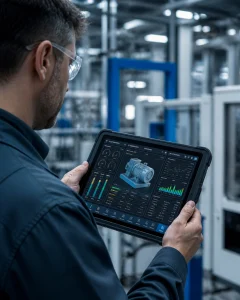
The best interface is not necessarily the one with the most graphics. It is the one that provides the right information at the right time, using clear navigation and consistent visual standards. Operator usability remains a critical part of every effective SCADA integration.
Historians, reports, and production visibility
A historian gives your team the ability to review what happened, not just what is happening now. Ignition can record selected process values, production counts, equipment states, quality information, and energy data for later analysis.
Historical data can support:
- Downtime investigation
- Batch and recipe traceability
- Production comparisons by shift or product
- Quality analysis
- Preventive maintenance planning
- Regulatory and compliance documentation
- Energy and resource monitoring
Ignition can also connect plant-floor information with SQL databases. The Ignition SQL Bridge Module supports data movement between PLCs and databases, including event logging, production summaries, recipe systems, and process sequencing.
Instead of asking employees to manually collect information from multiple machines, your facility can generate consistent reports from a shared data source. Reports can be designed around the metrics your organization uses to evaluate efficiency, quality, safety, and output.
Centralized alarms and faster response
Alarm management should help your team respond to meaningful conditions without creating unnecessary distractions. During an Ignition integration, we can help define alarm priorities, acknowledgment requirements, notification rules, and escalation paths.
A centralized alarm system can provide:
- Real-time equipment and process notifications
- Alarm history and acknowledgment tracking
- Priority-based response procedures
- Notifications for selected personnel
- Consistent alarm behavior across multiple PLC platforms
- Historical context for troubleshooting and root-cause analysis
Whether you operate a food-processing line in Lancaster, a metals facility near Lebanon, or a water and wastewater system elsewhere in Central Pennsylvania, alarms should reflect the risks and operating requirements of the process.
Cybersecurity for connected industrial systems
Connecting legacy equipment to a modern network requires careful cybersecurity planning. Many older PLCs and SCADA systems were not designed for today’s threat environment. Simply placing them on a broader network can create unnecessary exposure.
Our approach considers network segmentation, user permissions, secure remote access, authentication, backups, and system upkeep. Ignition supports capabilities such as TLS encryption, client authentication, role-based permissions, and system auditing. These features should be implemented as part of a broader industrial cybersecurity strategy, not treated as a replacement for firewalls, access controls, patch management, or established plant security practices.
The architecture may use segmented networks, secure communication paths, and edge gateways to limit direct exposure of legacy devices. Access should be based on job responsibilities, with operators, maintenance personnel, engineers, and managers receiving only the permissions necessary for their roles.
The result is a connected system that supports operational visibility while respecting your safety standards and cybersecurity requirements.
A phased approach to Ignition SCADA integration
You do not always need to modernize an entire facility at once. A phased project can reduce risk, distribute capital costs, and provide value earlier.
A typical implementation may include:
1. Discovery and assessment
We review your PLCs, networks, existing SCADA applications, databases, operator workflows, and reporting requirements. This step helps us corroborate current system conditions and identify communication limitations.
2. Architecture and standards
We define the Ignition architecture, data model, tag standards, screen conventions, alarm philosophy, security structure, and database requirements.
3. Pilot deployment
A selected machine, cell, or production area becomes the initial implementation. This gives your team an opportunity to validate functionality and provide operator feedback.
4. Expansion and integration
Once the pilot is proven, we extend the system to additional equipment, lines, buildings, or facilities. Enterprise connections can be initiated as the data model matures.
5. Training and ongoing support
We equip your team with the knowledge and documentation needed to use and maintain the system. CCS can continue supporting your operation through system support, control system upgrades, and on-site services.
Why work with CCS?
An Ignition license alone does not create a dependable automation system. The result depends on the quality of the architecture, programming, data model, cybersecurity plan, documentation, testing, and commissioning.
CCS combines the resources of a large system integrator with a highly personalized, client-focused experience. As a verified Ignition Credentialed Integrator, we provide support from initial consulting and engineering through implementation, operator training, and long-term upkeep.
Whether you need to connect a small group of legacy PLCs, replace an outdated SCADA platform, or develop a plant-wide data strategy, we can align the solution with your operational goals and future needs.
Connect your legacy PLCs to a more useful future
Modernizing plant data does not always require replacing reliable equipment. With a carefully planned Ignition SCADA integration, your legacy and modern PLCs can contribute to a centralized system for dashboards, historians, alarms, reports, production metrics, and enterprise visibility.
From Central Pennsylvania to Harrisburg, Lancaster, Lebanon, and throughout the Mid-Atlantic, CCS provides the technical expertise and open, fluent communication needed to move your project forward.
Contact CCS to discuss your current controls architecture and schedule a consultation with our engineering team.