
There is a specific kind of tension that fills a manufacturing floor on the day a new robotic cell is scheduled to go live. You’ve seen it before: the hardware is bolted down, the safety gates are locked, and everyone is gathered around for the “big red button” moment. In the traditional world of automation, this is often where the real work: and the real risk: begins.
Whether you are integrating a high-speed palletizing line or a precision pick-and-place system, the stakes are high. One wrong line of code or an unforeseen mechanical interference can lead to expensive equipment damage, weeks of project delays, and the kind of downtime that hurts your bottom line.
At Complete Control Solutions (CCS), we believe that the first time a robot moves shouldn’t be a gamble. As an Authorized ABB Robotics System Integrator, we utilize Virtual Commissioning through ABB RobotStudio to identify and reduce these risks long before our engineers ever step onto your factory floor.
What is Virtual Commissioning?
In the simplest terms, Virtual Commissioning is the process of creating a high-fidelity “Digital Twin” of your entire robotic cell. This isn’t just a 3D animation; it is a functional, physics-based simulation that uses the exact same software found in the physical robot controller.
By using ABB RobotStudio, our engineering team can build your entire system in a virtual environment. We import your CAD files, model the end-of-arm tooling, and define the reach and motion of every axis. This allows us to test, debug, and refine the system in a digital space where mistakes cost nothing but a few keystrokes.
Eliminating the “Oops” Moments
Traditional commissioning relies on “trial and error” on-site. Virtual Commissioning turns that model on its head. Here is how we use it to reduce risk for our clients:
1. Collision Detection and Reach Analysis
It sounds simple, but ensuring a robot can reach every part of a pallet without hitting a support beam or its own safety cage is one of the most common challenges in automation. Through RobotStudio, we perform swept-volume analysis to identify potential collisions within the modeled cell. If a reach issue is identified, we solve it in the design phase, not when the robot is already bolted to the floor.
2. Validating Complex Safety Logic
Safety must be considered throughout the robotic-cell design. Where ABB SafeMove is used, our engineers can review planned safety zones, motion limits, and operating sequences during virtual commissioning. Simulation helps identify potential issues before installation, but it does not replace the application’s risk assessment, physical safety-function testing, or documented validation of the installed system before production.
3. Cycle Time Optimization
For manufacturers, every second counts. If a process takes 12 seconds but needs to take 10 to hit production targets, finding those 2 seconds on-site is a stressful race against the clock. We use virtual commissioning to analyze cycle times down to the millisecond, optimizing paths and motion profiles to ensure the system delivers the ROI you expect from day one.
The Secret to Faster Startups: Parallel Engineering
One of the most significant advantages we offer is the ability to initiate software development long before the physical hardware even arrives.
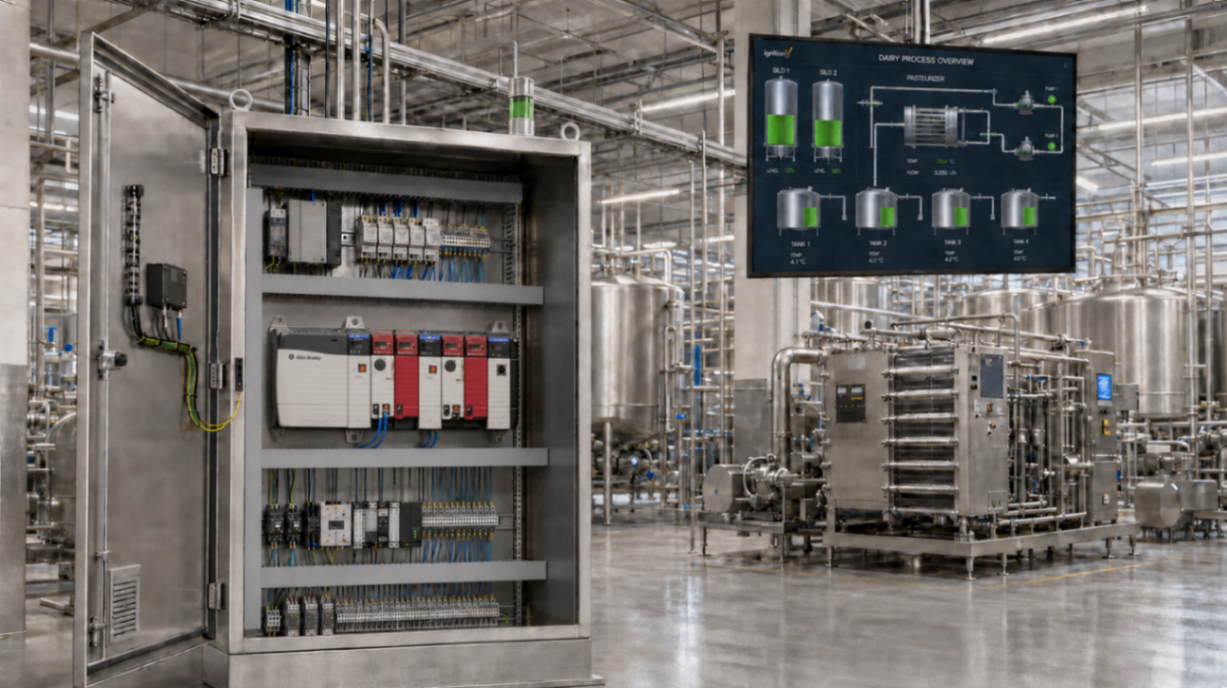
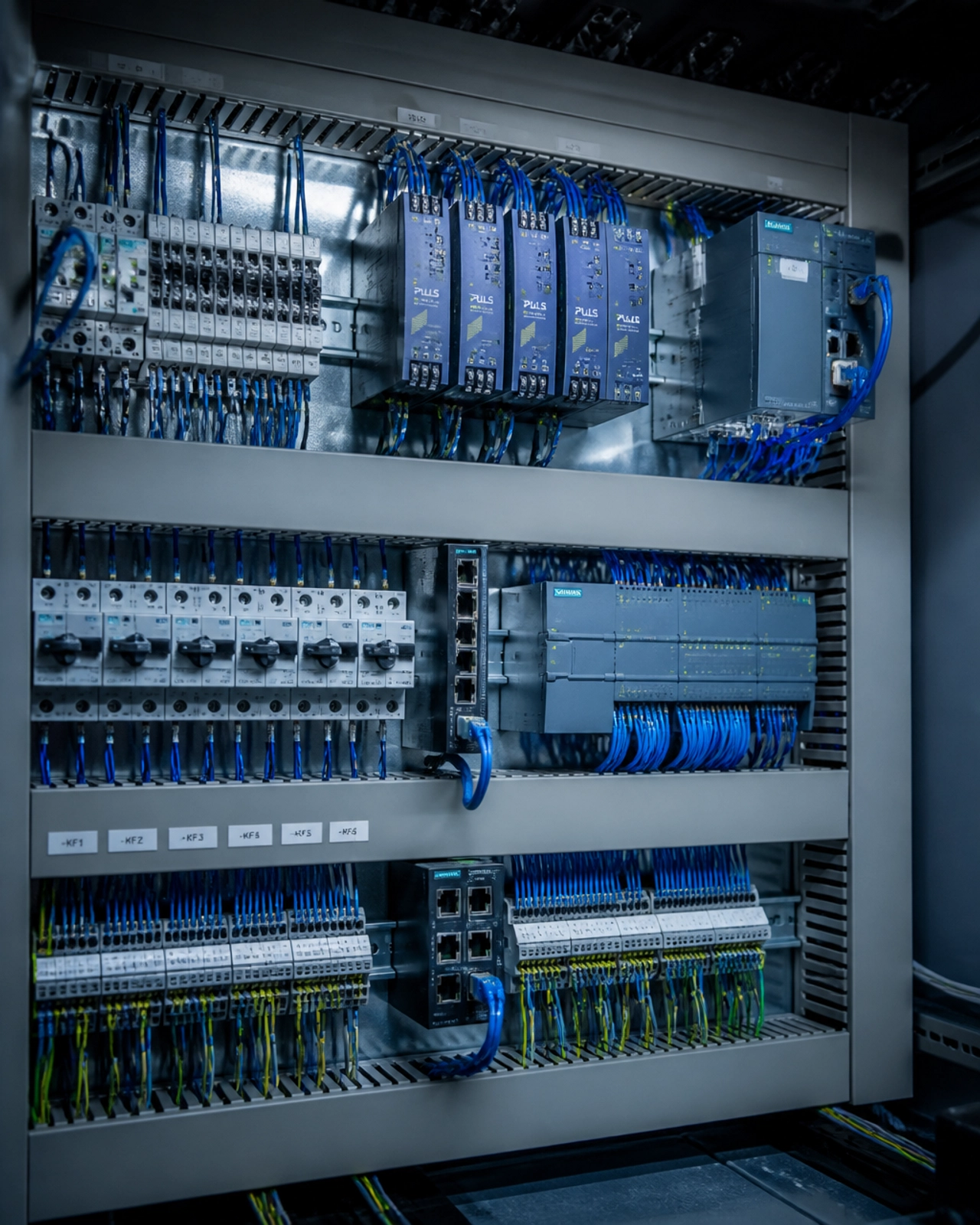
In a standard project timeline, you wait for the robot to be delivered and installed before the programmer can start their work. At CCS, we utilize a parallel engineering approach. While our Industrial Control Panels are being fabricated in our shop, our engineers are already writing and testing the code in RobotStudio.
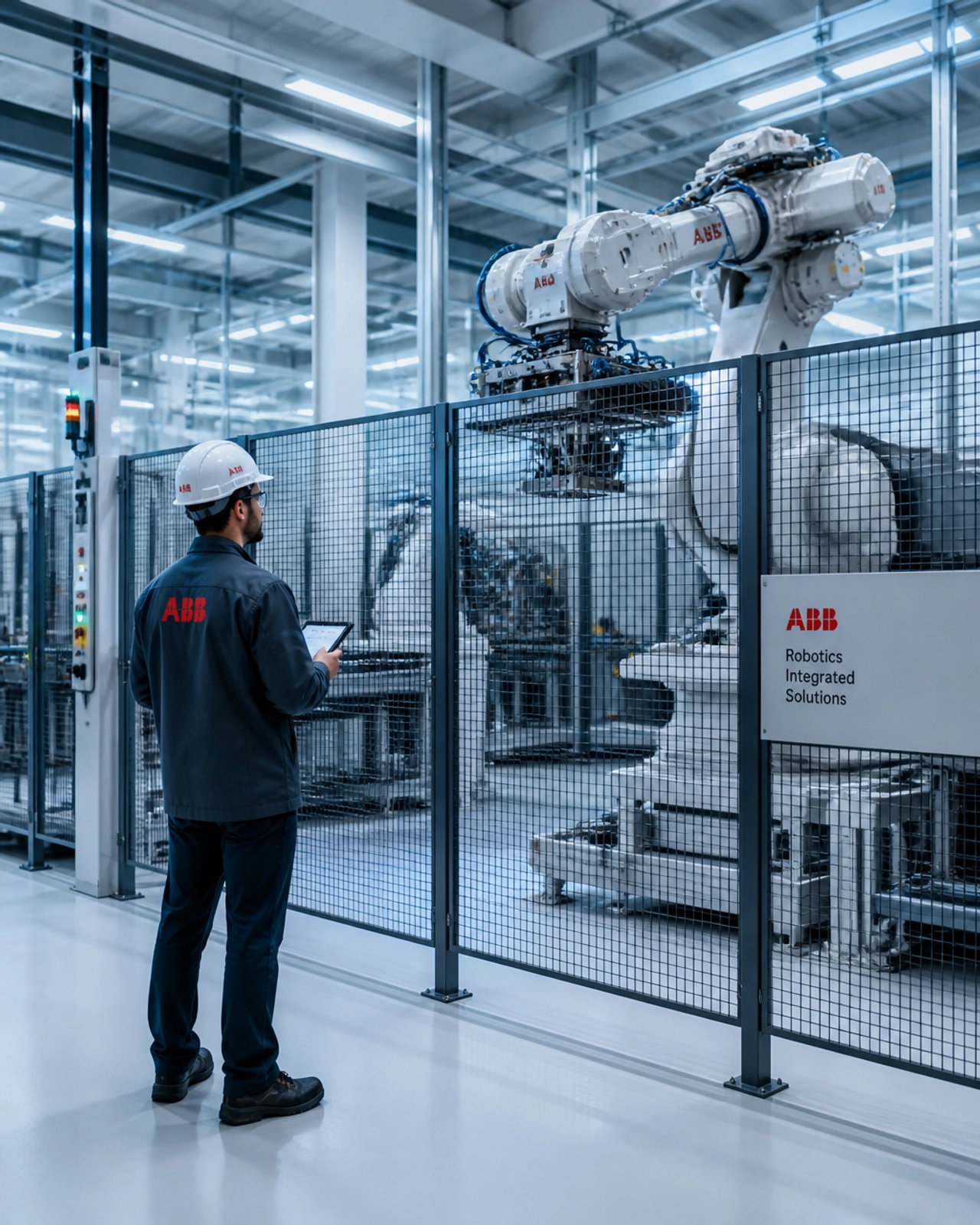
By the time we arrive at your facility for On-Site Services, the “heavy lifting” of programming is already done. We aren’t there to write code; we are there to verify it. This approach can reduce on-site commissioning work by identifying programming, sequence, and integration issues before installation, helping your team prepare for a more efficient startup.
Integrating the Brain and the Muscle
A robotic cell rarely stands alone. It needs to communicate with PLCs, HMIs, and other factory-level systems. Whether you are using a Rockwell Automation platform or an Ignition SCADA system, Virtual Commissioning allows us to test the communication between the “brain” (the PLC) and the “muscle” (the ABB Robot).
We can map I/O, verify handshake protocols, and test sequence interlocks virtually. This level of preparation ensures that when we finally connect the physical cables, the system speaks the same language immediately, preventing the “debugging loops” that often plague complex integrations.
Training Without the Risk
We know that long-term success depends on your team’s ability to operate and maintain the system. A secondary but vital benefit of Virtual Commissioning is its use as a training tool.
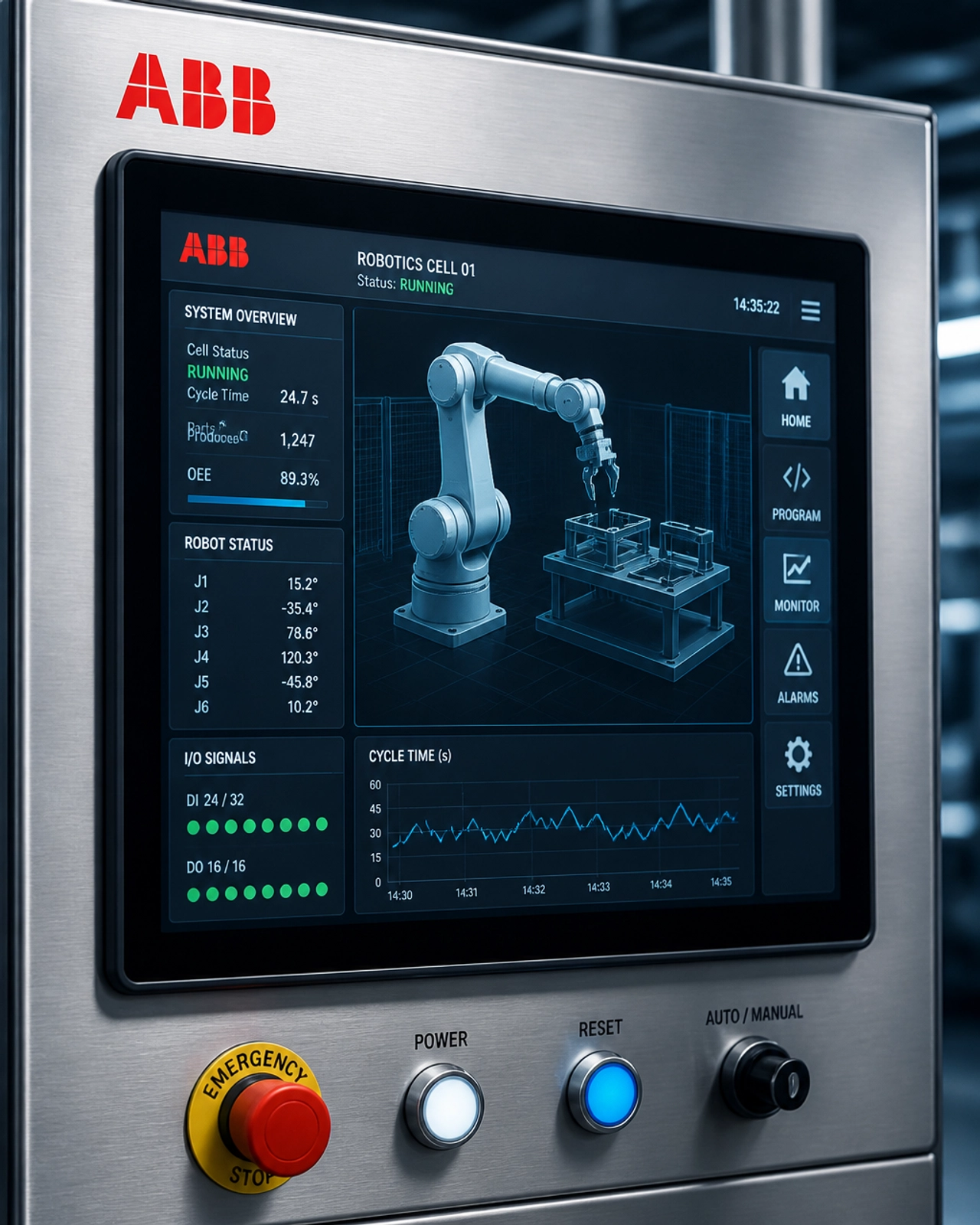
We can provide your operators with a virtual look at the system before it is installed. They can interact with a virtual HMI, learn the alarm sequences, and understand the workflow of the robot without the fear of breaking something. This proactive system support ensures your team is confident and ready the moment the line goes live.
A Partner in Your Success
At Complete Control Solutions, we don’t just deliver a robot; we deliver a robust, state-of-the-art solution tailored to your specific operational needs. Our status as an ABB partner means we have direct access to the latest tools and deep technical expertise to ensure your project is a success.
We combine the resources of a large integrator with a highly personalized, client-focused experience. From the initial Consulting phase to long-term Maintenance, we remain committed to open, fluent communication and absolute precision.
If you are looking to scale your production, improve efficiency, or modernize a legacy line with the latest ABB robotics, don’t leave your commissioning to chance. Let us show you how a “virtual-first” approach can save you time, reduce your risk, and protect your bottom line.

Ready to start your next automation project? Contact our team today to discuss how Virtual Commissioning can make your ABB robotics integration seamless and stress-free.