The landscape of municipal water management is shifting beneath our feet. For decades, “forever chemicals”: per- and polyfluoroalkyl substances, or PFAS: have been a background concern. That changed recently when the EPA finalized the National Primary Drinking Water Regulation (NPDWR), setting some of the most stringent enforceable limits in the history of the Safe Drinking Water Act.
Regulatory update—September 2026: EPA’s 2024 PFAS drinking-water regulation remains in effect, including initial monitoring requirements through April 26, 2027 and an April 26, 2029 compliance date. In May 2026, EPA proposed allowing eligible water systems to request up to two additional years for PFOA and PFOS compliance. EPA also separately proposed rescinding the individual limits for PFHxS, PFNA and HFPO-DA (GenX), along with the Hazard Index requirement. These proposals are not final. Utilities should monitor EPA updates and consult their state primacy agency before making compliance decisions.
By April 26, 2029, every municipal and community water system in the United States must be in full compliance with these new Maximum Contaminant Levels (MCLs). For utilities in the Mid-Atlantic region, especially across Pennsylvania, New Jersey, and Delaware, that timeline carries even more urgency given how aggressively PFAS compliance is being tracked and discussed. While 2029 may seem like a distant milestone, the complexity of designing, piloting, and automating the necessary treatment systems means the window for action is closing fast.
At Complete Control Solutions (CCS), we understand that compliance isn’t just about the physical filters; it’s about the intelligence that monitors and manages them. This guide outlines how you can prepare your control systems to meet the 2029 deadline with confidence.
What is PFAS and Why Does the 2029 Deadline Matter?
PFAS are a group of synthetic chemicals used since the 1940s in everything from non-stick cookware to firefighting foams. They are incredibly stable, meaning they do not break down in the environment or the human body. The EPA has set the enforceable MCL for PFOA and PFOS at just 4 parts per trillion (ppt): a level so low it’s equivalent to four drops of water in an Olympic-sized swimming pool.
The 2029 deadline is the hard “compliance” date. However, the regulatory timeline begins much sooner:
- By 2027: Systems must complete initial monitoring and begin reporting PFAS levels to the public.
- By 2029: Systems exceeding MCLs must have treatment or other control measures fully operational.
Failure to comply doesn’t just mean regulatory fines; it impacts public trust and community health. That pressure is especially real for municipalities in regions like greater Philadelphia and the Allentown area, where PFAS compliance has become a visible operational and public communication issue. The challenge for utilities is that traditional water treatment processes are often ineffective at removing these microscopic compounds. You need advanced technology: and the expert engineering to control it.
Selecting the Right Treatment Technology and Control Requirements
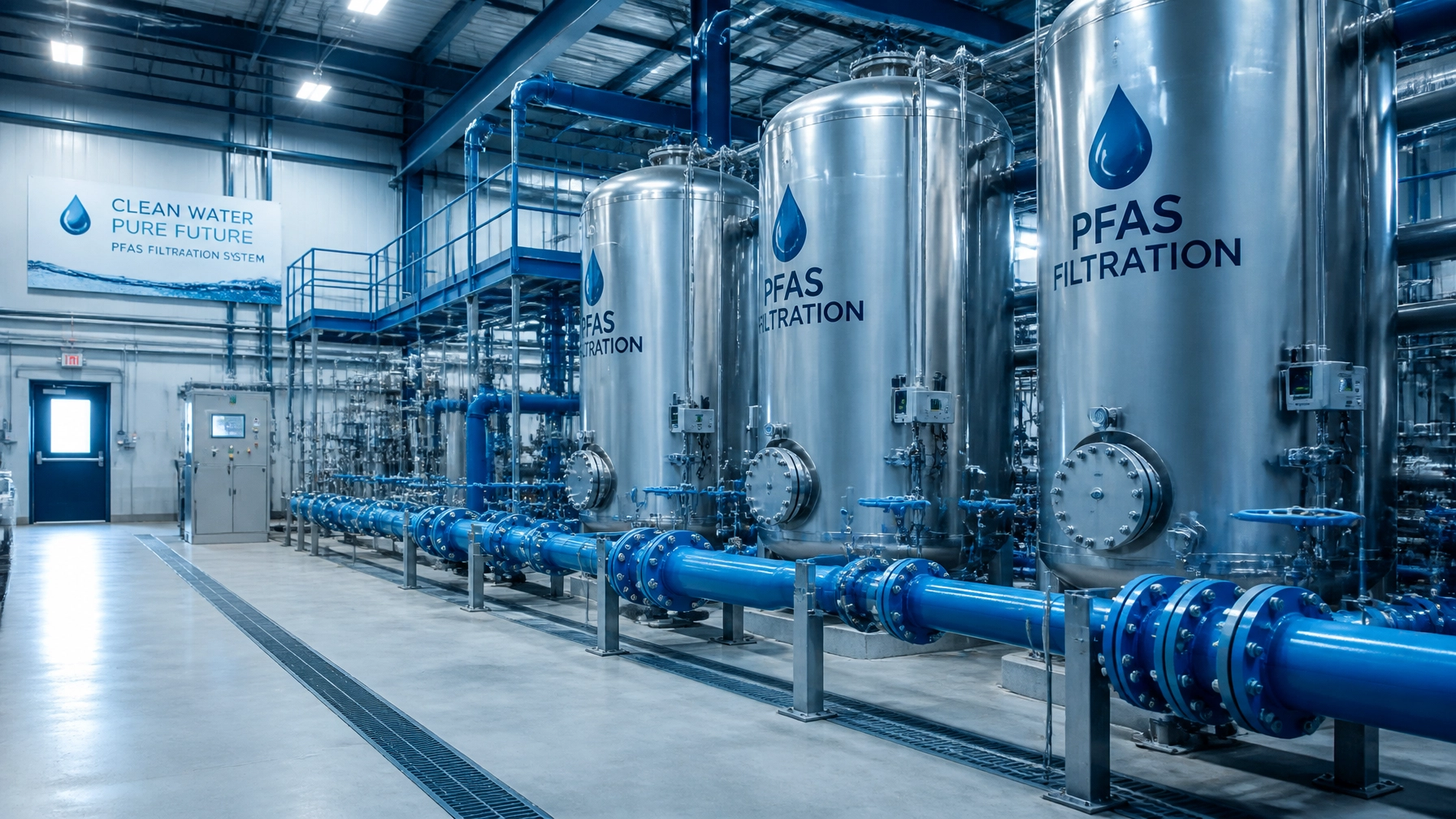
There is no “one-size-fits-all” for PFAS removal. The EPA identifies three primary technologies as feasible for meeting MCLs. Each requires a distinct approach to automation and control.
1. Granular Activated Carbon (GAC)
GAC is the most common solution. It works like a giant sponge, adsorbing PFAS as water passes through beds of carbon.
- Control Needs: Automation for GAC centers on flow pacing and pressure differential monitoring. As the carbon beds become saturated with “fines” or organic matter, pressure builds.
-
Automation Role: CCS can configure controls to monitor flow, differential pressure, bed operating time, and treated-water volume, with alarms and operating sequences tailored to the treatment-system design. These functions help operators manage treatment performance and maintenance. PFAS concentrations and breakthrough must be evaluated through appropriate sampling and laboratory testing; process measurements alone do not confirm PFAS removal or guarantee compliance. SCADA can organize laboratory results alongside operating data to support informed decisions.
2. Ion Exchange (IX)
IX uses specialized resins to “swap” PFAS ions for harmless ones. It typically has a smaller footprint than GAC but requires precise handling.
- Control Needs: IX systems are highly sensitive to flow rates and water chemistry.
- Automation Role: Precise PID (Proportional-Integral-Derivative) control is critical here. Our engineers leverage high-performance, modular I/O platforms designed for the reliability demands of critical water processes.

3. Reverse Osmosis (RO)
RO is the most effective but also the most complex and energy-intensive. It forces water through a semi-permeable membrane.
- Control Needs: RO requires sophisticated pressure management, membrane fouling alerts, and brine disposal monitoring.
- Automation Role: Robust SCADA integration is necessary to balance energy costs against treatment efficiency.
SCADA Integration: The Heart of PFAS Monitoring
Compliance is built on data. The EPA requires reporting based on “running annual averages.” If your data is trapped in manual logs or siloed in outdated hardware, compliance becomes a nightmare of spreadsheets and human error.
Modernizing your SCADA system is the most effective way to manage PFAS. For water systems across the Mid-Atlantic, where utilities in Pennsylvania, New Jersey, and Delaware are preparing for some of the strictest PFAS expectations ahead of 2029, that visibility matters even more. Platforms like Ignition or AVEVA can centralize certified laboratory results, track sampling history, calculate running annual averages, and display Hazard Index values derived from validated analytical data.
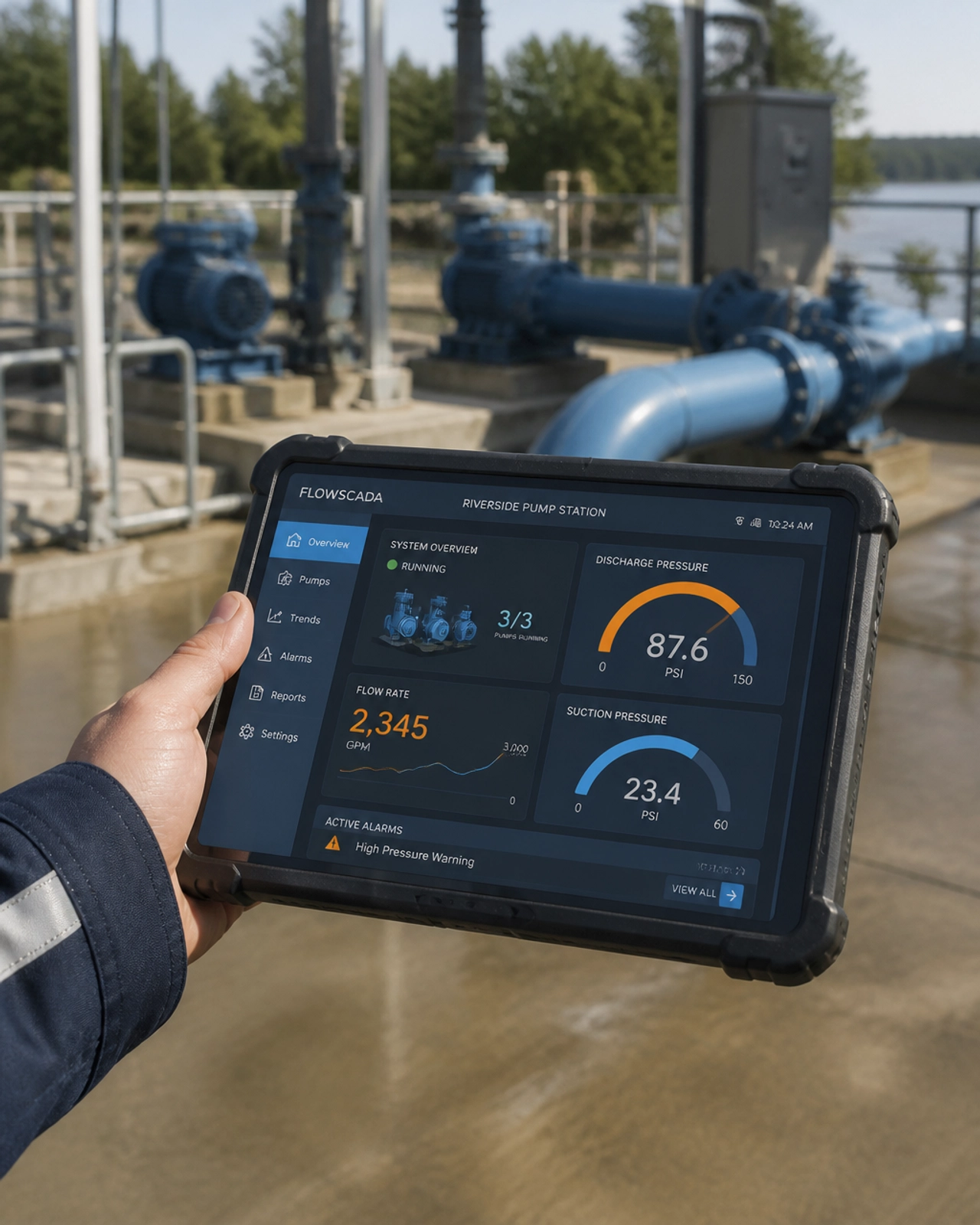
As a Credentialed Ignition Integrator, CCS can build custom interfaces that:
- Centralize Compliance Data: Display validated PFOA and PFOS laboratory results alongside applicable limits, sample dates, trends, and running annual averages.
- Support Reporting Workflows: Organize laboratory and operational records and generate consistent exports for review by utility personnel and regulators.
- Operational Alerting: Alert operators to changes in flow, differential pressure, turbidity, conductivity, bed volumes treated, membrane performance, and other process conditions that may indicate treatment problems. Confirmation of PFAS breakthrough still requires approved laboratory testing.

Data Logging and the “Hazard Index” Challenge
EPA’s 2024 rule established a Hazard Index limit of 1.0 for mixtures containing two or more of PFHxS, PFNA, HFPO-DA (GenX), and PFBS. In May 2026, EPA proposed rescinding this requirement, but that proposal is not yet final. While the requirement remains applicable, a SCADA or data-management system can calculate and track the Hazard Index after certified laboratory results are entered or imported. It should not represent the calculation as a continuous, real-time PFAS measurement.
Trying to calculate this manually for quarterly reports is prone to error. By integrating SCADA data management with validated laboratory results, utilities can automate the Hazard Index calculation, reduce transcription errors, and maintain a clear history for compliance review. This gives operators a clearer view of combined PFAS results and trends to support treatment and compliance decisions. Automated calculations improve data visibility but do not, by themselves, ensure that water meets applicable limits.
Planning and Budgeting for 2029
The biggest mistake a utility can make is treating the control system as an afterthought. Often, the mechanical treatment tanks are purchased first, and the automation is “bolted on” at the end. This leads to higher costs and integration headaches. For municipalities in Pennsylvania, New Jersey, Delaware, and nearby service areas, acting early is especially important if the goal is to avoid a compressed implementation schedule as 2029 gets closer.
Instead, we recommend a consulting-first approach. By involving automation engineers during the design phase of your GAC, IX, or RO system, you can:
- Optimize Equipment Sizing: Precise controls can sometimes allow for smaller, more efficient treatment footprints.
- Ensure Future-Proofing: Ensure your new controls can talk to your existing plant wide SCADA without expensive gateways or hardware replacements.
- Streamline On-Site Services: Our team provides on-site services to ensure that the transition from construction to operation is seamless.
Your Partner in the Race to 2029
The 2029 PFAS deadline is more than a regulatory hurdle; it is an opportunity to modernize your utility for the next generation. Whether you have a small specific programming job or require a full distributed control system for a new treatment plant, CCS provides the robust, state-of-the-art solutions you need to ensure precise quality control.
As a Rockwell Automation Bronze System Integrator, we combine the resources of a large integrator with a highly personalized, client-focused experience. We analyze your specific needs, initiate a custom engineering plan, and equip your utility with the tools to maintain open, fluent communication with your stakeholders and regulators alike.
Don’t wait until 2028 to start thinking about your data and control strategy. If your utility is navigating PFAS treatment planning in Pennsylvania, New Jersey, Delaware, or the broader Mid-Atlantic region, contact Complete Control Solutions today to begin your PFAS compliance roadmap. From consulting and engineering to custom control panel fabrication, we are here to support your mission of providing safe, clean water to your community.