
In the current landscape of industrial manufacturing, efficiency is no longer just a goal; it is a prerequisite for survival. Manufacturers throughout Pennsylvania and the Mid-Atlantic region are continually looking for ways to maximize production efficiency and improve Overall Equipment Effectiveness (OEE). This is where Overall Equipment Effectiveness (OEE) comes into play, serving as the gold standard for measuring manufacturing productivity.
To truly optimize OEE, manufacturers are increasingly turning to distributed control systems (DCS) that provide more than just basic logic. Rockwell Automation’s PlantPAx DCS has emerged as a premier solution, blending the flexibility of a traditional PLC-based system with the robust, plant-wide capabilities of a full-scale DCS.
At Complete Control Solutions (CCS), we specialize in control system integration that bridges the gap between hardware and high-level performance. In this deep dive, we will explore how PlantPAx serves as the engine for OEE improvement and why its specific capabilities are essential for modern industrial operations.
The Evolution of the Plant-Wide Platform
For years, the choice for manufacturers was binary: a traditional DCS for process-heavy applications or a PLC for discrete manufacturing. This often led to “islands of automation” that were difficult to integrate, secure, and maintain. PlantPAx changes this paradigm by utilizing a common Integrated Architecture that handles process, discrete, power, and safety control in a single infrastructure.
By moving away from siloed systems, our engineers can help you initiate a unified data strategy. When your entire plant speaks the same language: specifically EtherNet/IP: the flow of information from the shop floor to the enterprise level becomes seamless. This foundation is critical because you cannot improve what you cannot accurately measure.
Pillar 1: Driving Availability Through Reliability
Availability is the first component of OEE, representing the percentage of scheduled time that the operation is actually running. Unplanned downtime is the enemy of availability, and this is where the hardware capabilities of PlantPAx 5.0 and beyond truly shine.
High-Availability Hardware
Whether you have a mission-critical process that cannot afford even a millisecond of interruption or a production line where downtime costs thousands of dollars per hour, PlantPAx provides the necessary redundancy. By utilizing the ControlLogix 5580 redundancy controllers and the FLEXHA 5000 I/O platform, we can design a system that tolerates hardware failures without stopping production.
Predictive Diagnostics
Modern control system upgrades are moving from reactive to proactive maintenance. PlantPAx integrates advanced diagnostics that catch issues before they lead to failure. Our engineers analyze your system’s diagnostic data to equip your team with real-time alerts, ensuring that a failing power supply or a network glitch is addressed during a scheduled break rather than a catastrophic middle-of-the-night outage.
Pillar 2: Enhancing Performance via Optimized Throughput
Performance in OEE terms accounts for anything that causes the manufacturing process to run at less than the maximum possible speed. This includes both “micro-stops” and slow-running cycles.
PlantPAx maximizes performance through its high-speed control capabilities and streamlined control strategies. Because the DCS shares common technology across all automation disciplines, it eliminates the lag times often found when data must pass through complex communication gateways between disparate systems.
We often find that manufacturers struggle with performance because their operators lack the visibility needed to make quick decisions. PlantPAx addresses this with standardized object libraries and faceplates. These tools provide a consistent, intuitive interface that allows operators to quickly identify bottlenecks and adjust parameters to maintain peak throughput. By reducing the complexity of the interface, we empower your team to keep the line moving at its intended design speed.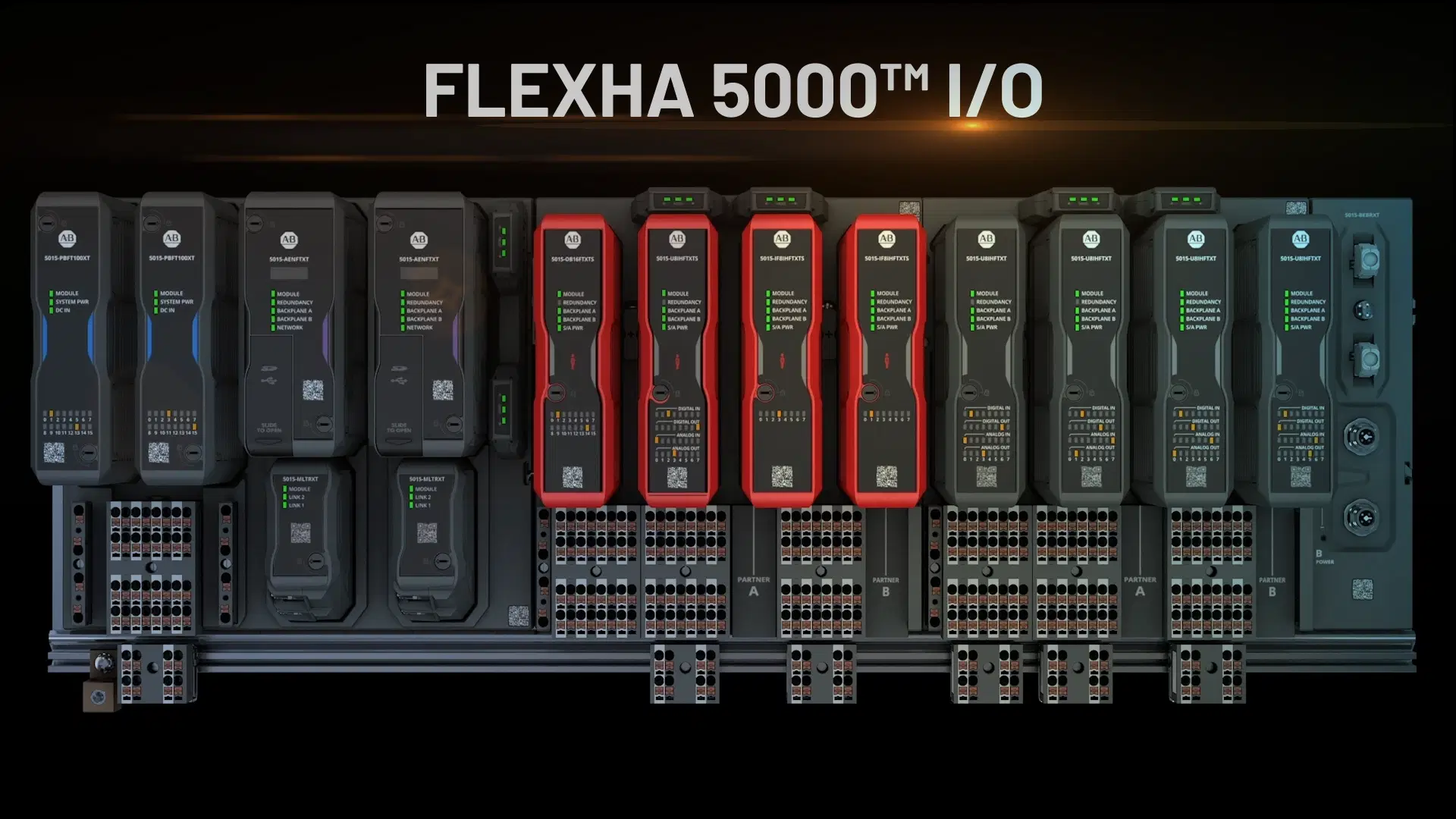
Pillar 3: Stabilizing Quality with Precision Control
The final pillar of OEE is Quality: ensuring that every unit produced meets specifications. Variability is the primary driver of scrap and rework.
PlantPAx provides the tools for precise, repeatable control. Features like Logix-based batch and sequence management ensure that every batch is produced exactly like the last, regardless of which operator is on shift. By utilizing standardized control strategies, we help you eliminate the “art” of manufacturing and replace it with the science of automation.
Furthermore, the DCS enables plant-wide process data management. By correlating real-time process conditions with quality outcomes, our team can help you identify the root causes of defects. This data-driven approach allows for tighter process control and a significant reduction in waste, directly impacting your bottom line.
Streamlining Integration with Expert Support
Implementing a system as robust as PlantPAx requires more than just high-end hardware; it requires a partner who understands the nuances of industrial control panels and the complexities of system architecture.
At CCS, our ability to combine the resources of a large integrator with a highly personalized experience is what sets us apart. We don’t just “install” a system; we collaborate with you to ensure the architecture aligns with your specific needs and long-term goals.
Simplified Engineering
One of the most significant advantages of the PlantPAx platform is the reduction in engineering and integration effort. With standardized templates and workflows, our engineers can initiate programming and configuration faster than with traditional, fragmented systems. This not only reduces the initial cost of integration but also ensures that future updates and expansions are straightforward.
Built-in Cybersecurity
In an era where industrial systems are increasingly connected, security cannot be an afterthought. PlantPAx 5.0 architectures are TÜV-certified to ISA-99/IEC 62443-3-3 standards. We incorporate these industry-leading security policies into every integration, ensuring that your data and your operations remain protected from external threats.
Scaling for the Future
The beauty of a Rockwell Automation-based DCS is its inherent scalability. You may start with a single station to address a specific bottleneck today, but the PlantPAx platform is designed to grow with you. It can scale up to large, multi-unit distributed architectures without requiring a full control system retrofit.
Whether you are looking to modernize a legacy system or build a state-of-the-art facility from the ground up, we provide the consulting and technical expertise to make it happen. Our mission is to provide robust, state-of-the-art solutions that directly impact your production efficiency and ensure precise quality control for years to come.
Conclusion
Maximizing OEE is a continuous journey of improvement, and Rockwell Automation’s PlantPAx DCS provides the map and the engine to get you there. By focusing on high availability, optimized performance, and stable quality, this platform serves as the backbone of a modern, data-driven manufacturing enterprise.
If you are ready to explore how a PlantPAx integration can transform your operations, contact us at Complete Control Solutions. Our engineers are ready to analyze your unique challenges and equip your facility with the precision-driven solutions it deserves.